Masks of Truth: Tachiya Bryant’s Journey Toward Bold, Unapologetic Power
Amongst the suave R&B beats echoing throughout her San Jose studio, Tachiya Bryant almost cries. She had been living with her acrylic portraits and sculptural cotton masks for months—stacked on tables, lining walls, works-in-progress that carried both her frustration and her hope. But when photographer Alex Knowbody captured them in high-resolution, she suddenly saw them differently: luminous, alive, commanding. “I’ve just been living with this work…not really thinking anything of it,” she recalls. “But just seeing it in a different light, I was like, wow, this is me.”
For Bryant, a self-taught multimedia creative, that moment didn’t just attest her talent. It was an affirmation, stepping into her power after years of shrinking herself in spaces where she didn’t always feel seen. Born and raised in San Jose, she describes her city as a place where Black representation was scarce. Her mother, determined to protect that identity, filled their home with Black art, music, and dolls. Still, outside the house, Bryant often felt the burden of trying to fit in. “I don’t think I had a clear understanding of who I was,” she says. “I was so busy trying to survive.”
Only after high school, distanced from those pressures, did she begin to fully embrace her Blackness—loudly, proudly, unapologetically. That shift marked the beginning of her intentional art practice, one that now spans collage, painting, illustration, and sculpture. Several years later, her work explores more than expression—it explores truth-telling, making space for the emotions and stories often ignored or misrepresented.
“More than ever, I just want people to feel seen. Being real is not always pretty. Sometimes it offends people. Sometimes it hurts. But it’s necessary.”
Bryant’s latest series, We Wear the Mask, represents her boldest turn yet. The project centers on Black women and the complicated terrain of anger, healing, and emotional expression. For Bryant, the project is both personal and political, a challenge to the stereotypes that have long silenced Black women. “I wanted to imagine a world where embodying the feeling of anger didn’t mean having it weaponized against you,” she describes. “What does it look like to speak up for yourself without worrying how society will perceive you?”
The masks and paintings she creates are vessels for emotions often denied or diminished. Many of the women in her work are faceless, intentionally so. They stand in for the countless women who, she argues, have been left to heal themselves, denied care by the very communities that depend on them. “I think Black women are often left to fend for themselves,” Bryant explains. “It’s painful to have to do all of those things by yourself. You just want to exist, to feel without judgment.”
Her journey to this point has not been straightforward. In her earlier years, she resisted the pressure to be labeled a “Black artist,” opting instead to create strange, experimental work—characters and sculptures that couldn’t be easily categorized. It was her way of pushing back against a narrow, palatable box the art world often reserves for Black creators. “I didn’t like being told what to be,” she declares. But with We Wear the Mask, Bryant has arrived at a new clarity. “This project feels like I actually have something to say,” she reflects. “And not only say, but say it in a way that reaches people authentically.”
What emerges from this body of work is authenticity. Bryant’s masks are mirrors, reflecting uncomfortable truths to the viewer. They are not meant to soothe. They intentionally insist. “More than ever, I just want people to feel seen,” she explains. “Being real is not always pretty. Sometimes it offends people. Sometimes it hurts. But it’s necessary.”
Stepping into her power has also meant learning how to sustain it. Bryant admits she has a habit of throwing herself entirely into projects, only to realize later that it isn’t sustainable. These days, she is practicing consistency over intensity, guided by wisdom passed down from her matriarch: “The only way to eat an elephant is one bite at a time.” For Bryant, it’s a reminder to stay present, to focus on what’s in front of her rather than getting lost in the next milestone. “The things I wanted back then, I have now,” she says. “I have my own studio space. I’m doing the kind of work I never imagined I’d be capable of. That in itself is a blessing.”
Affirmations also play a vital role in her practice. For years, she studied manifestation without fully embracing it. Now, repetition and faith fuel her progress. That mindset has carried her to achievements she once thought impossible—like working with the San Jose Sharks twice and seeing her artwork on a billboard in her hometown. “Once you get that confidence, like okay, now I know it’s going to happen—then you start asking yourself, ‘What do I really want now?’ ”
As Bryant continues to build her career, she remains committed to making art that tells the truth—even when it is uncomfortable. Her advice to young Black creatives reflects the same conviction: “It’s important to figure out what you have to say. Pull from your experiences before you speak for the whole community. Black joy is also resistance. There are so many more layers to what it means to be Black.”
Her masks and collages, her affirmations and rituals, all speak to a deeper philosophy, that visibility is a responsibility and authenticity is a form of power. “I think I’ve been used to shrinking myself,” Bryant reveals. “But at this point, I can’t shrink even if I want to. I have to show up, because there are people who could benefit from my story.”
In her work, and in her life, Bryant is doing just that—showing up, boldly, unapologetically, and in full view.
It’s been a minute, but we are officially back with the first podcast of 2026—and we’ve got some news to share. Founder Daniel Garcia and Production Manager David Valdespino Jr. sat down to catch everyone up on a big year ahead, including a transition within the team and a look at the projects currently hitting the streets.
The headline is a shift in Content’s roster. After founding the magazine in 2012 and serving as “The Cultivator” for over a decade, Daniel is preparing for a planned transition to focus on his personal art practice. He’ll remain a vital advisor through 2026, but he is handing over the keys to the Executive Editor role to David starting April 1st. David has managed production since early 2023, keeping the gears turning on the magazine’s execution, and this move marks a new chapter for the publication as we head toward our 74th issue.
The conversation also dives into Explore San Jose, a special edition produced in partnership with Visit San José. With 2026 bringing the “big games” and plenty of global attention to our hometown, we wanted to frame the city’s energy through the locals who live and breathe it. Featuring cover art by J.Duh, it’s a guide to the pulse of the city that goes beyond the typical visitor experience. Alongside this, we preview the regular February issue, which features a deep dive into the local scene—from musical composers and photographers to actors and County Supervisors.
In this conversation, we walk you through our 2026 Special Edition of Content, discuss what David’s expectations were when he first walked into the Production Manager role, and talk through what Content is looking for in the next Production Manager.
Join the Team. With David moving into his new role, we are officially opening the search for a new Production Manager. We’re looking for someone to manage the workflow between our editors, designers, and printers. You can learn more and apply here.
Find the Special Edition: Members will receive Explore San Jose in the mail with their February issue. Non-members can find free copies at The Locker Room (93 E. San Carlos)—the new SJ26 merchandise and visitor center—as well as local hotels and coffee shops around town.
The Next Pick-Up Party: Join us to celebrate issue 18.2, “Sight and Sound,” on Thursday, February 26.
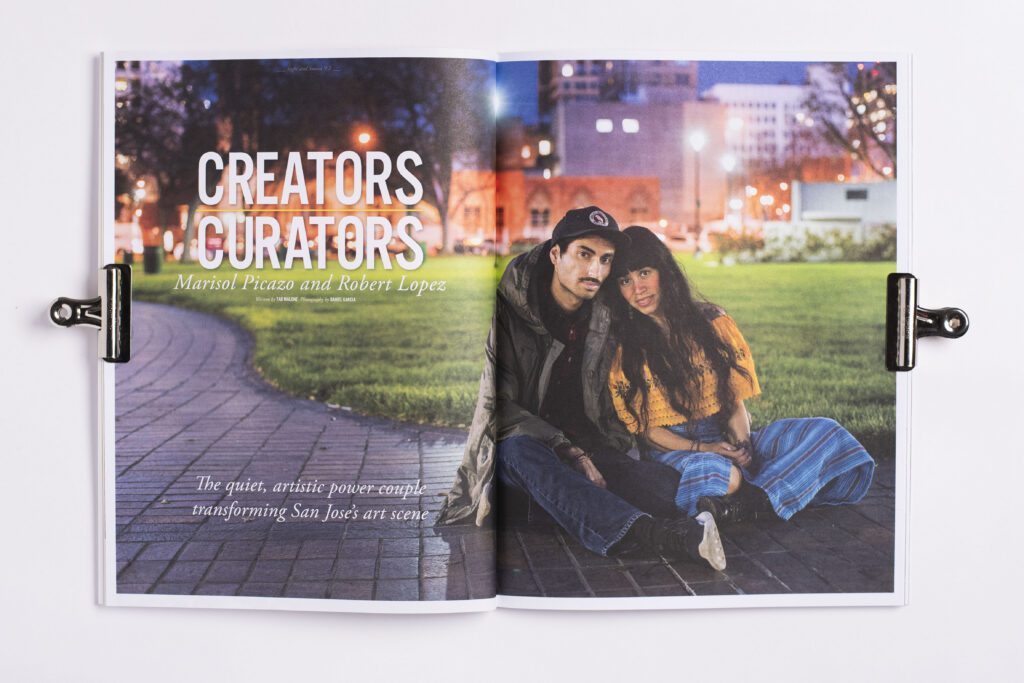
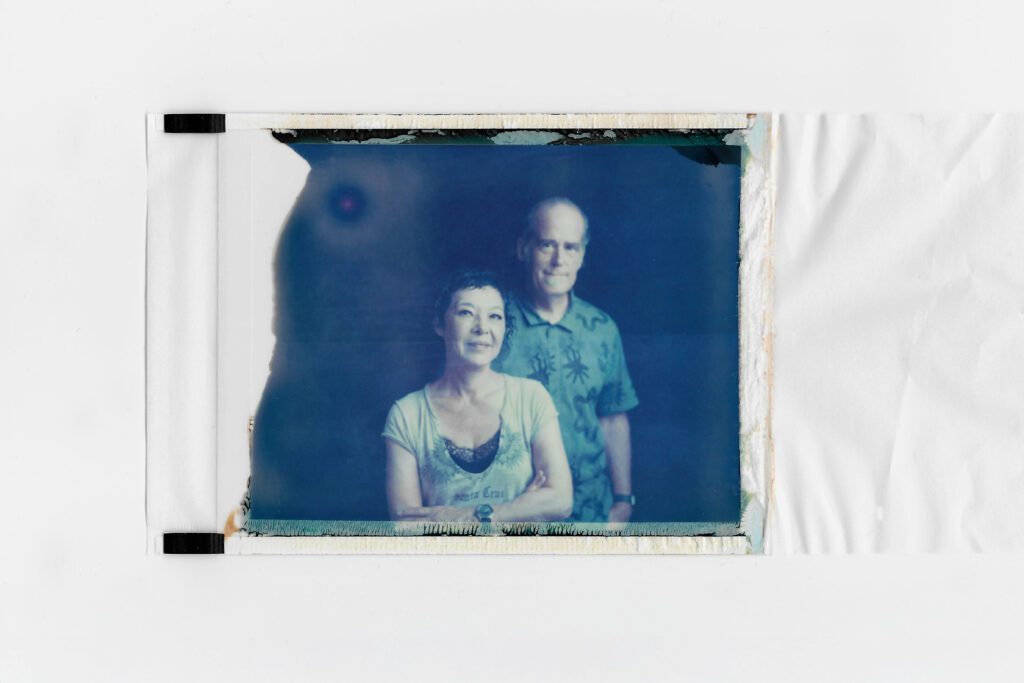
Marisol Picazo and Robert Lopez are the most unassuming power couple you’ll ever meet. From creating zines to curating art shows or featuring their own work in galleries, Marisol and Robert have been quietly establishing a young, ambitious, and deeply positive force in the San Jose art scene.
The pair met through a mutual friend in late 2009. After meeting up to take pictures together in Big Sur, they started hanging out every day. “We always chilled and took photos and fed off each other. I guess we just clicked,” Robert says. Their artistic collaborations began soon after they met, as both of them were bloggers and film documentarians.
As for how they got into art, the process definitely started early for each. “I’ve loved art all my life,” says Robert. “As a kid, I liked to look at pictures and either trace or copy them and make it in my own way.” This life-long infatuation led Robert to enroll in a four-year art program at his high school. It was during this time that he started getting into photography. From there, he went on to San Jose State University, graduating with a BA in design studies. Students could sign up for gallery time, and it was here that Robert got his first taste of curating.
Marisol has also been in touch with her artistic side from a young age. A photographer as well as a writer, Marisol graduated with a degree in creative writing from CSU Monterey Bay. Her personal writing and photography (which focus particularly on Chicano/a identities) have been published in various zines, literary journals, and online publications.
In recent years, they have found themselves becoming increasingly in demand as local curators. Though Robert already had some experience curating shows in the South Bay, it wasn’t until after managing a 52-person show in 2015 for the relatively cozy Chromatic Coffee that the couple’s curatorial work took off. That work caught the attention of the owners of Boba Bar in San Jose, who asked the couple to curate art in their own store. From this project they created Space B, a multimodal art exposition that puts on a show at least every two months. Their most recent show, “Tough Love,” was a blow-out success. For now the couple plans on taking a little breather, but Marisol and Robert will have another show up and running by April.
As for their more textual work, the idea of Paper Memory stemmed from an open-call zine that Marisol and Robert created and released in late 2015. They invited a group of photographers to share intimate portraits from their lives and titled the project Something Personal, a name derived from an old blog Robert and Marisol used to share called Memories on Paper. “When we first started doing it, it was only through our inner circle of friends,” says Robert of their newest project. “But we wanted to extend it and make a platform where we could reach out to a larger audience.”
Thanks to their artist connections and a little bit of networking on Instagram, Marisol and Robert received contributions from all over the world. One feature of Paper Memory included letting photographers primarily working in film take over Paper Memory’s social media account for four days each, as a sort of digital artist-in-residency program.
While they have been recently more focused on curating, the pair plans to revamp the site into a multimodal platform for photographic expression to include artist interviews, profiles, and photos of the day. “Attending art shows is cool and all, but they’re only once a month. You need to do stuff every day,” says Robert. “It’s good for artists to look forward to things that they’re a part of, not just events for other well-known artists.”
In terms of navigating and networking in the San Jose art scene, Marisol and Robert remain inspired by their local support. “There are separations in the local scene, but we have always been surrounded by really a positive art community,” says Robert.
Marisol echoes her partner’s sentiments. “I look forward to working with the San Jose community because I see the strong attachment in our own circle. I see a lot of support, which inspires me to work on my own art, as well as create zines or curate shows.”
Robert and Marisol joined Empire 7 Studio to curate and exhibit a celebration of the support Henry Change and Foto Express have provided to the San Jose Photography scene. Exhibition on display until Feb 28th.
Blog artwork images by Robort Lopez and Marisol Picazo
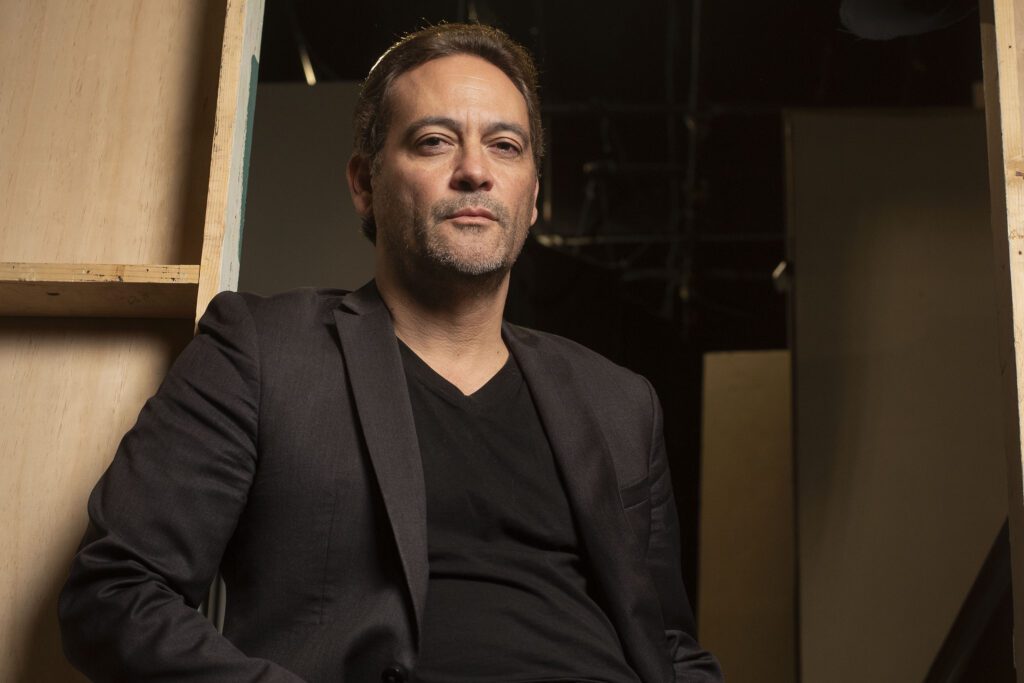
Johnny Moreno is an award-winning San Jose-based actor, associate artistic director at the San Jose Stage Company, and theater professor at San José State University. He has worked with the Stage since 1999 and has advocated for cutting-edge plays that spark new ideas and thoughtful dialogue with audiences. “I love the daring selection of plays at the Stage. I played Jacob McNeal in McNeal. It’s a very heavy show about AI and the future of humanity. Last year, we did Enemy of the People, a play about capitalism and ambition,” said Johnny. The Stage balances heavy hitters with productions like Million Dollar Quartet, a musical about the time Elvis Presley, Johnny Cash, Jerry Lee Lewis, and Carl Perkins came together for a legendary jam session.
The diversity of plays at the Stage reflects San Jose’s diverse community. When reimagining classics, Johnny advocates for more diverse representation and storytelling. It’s one of the most important concepts he teaches in his courses at SJSU. He said,“I encourage my students and anyone I work with: ‘Don’t let anyone tell you what stories you should tell. What stories do you want to tell?’ ”
The Stage 490 S. 1st Street (408) 283-7142 thestage.org IG: sanjosestage
Goodtime Bar in downtown San Jose’s Fountain Alley was co-founded by Ann Le and Steven Huynh, inspired by Portuguese natural wine bars, to create a community-focused “third space.” This ethos attracted local chef Alex Whiteman.
Born and raised in San Jose, Chef Whiteman grew up in a “food-positive” family. His mother reinforced this foundation by ensuring family dinners and hosting blindfolded games of “guess the spice,” which cultivated his keen sense of aroma. This combination of comfort and curiosity led him to New York for culinary school, then to kitchens like Momofuku. He worked alongside Chef Calvin Eng at the Brooklyn-based Taiwanese-American restaurant, Win Son, where Eng taught him that success can stem from strong principles and organization, not just skill.
Chef Whiteman’s philosophy centers on cooking food he himself enjoys, working with the seasons, and sourcing ingredients locally. The resulting menu is constantly evolving and designed to complement the exciting, eccentric profiles of natural wine, offering flavors that are both comforting and bold.
Goodtime Bar is part of an emerging collaborative culinary community in San Jose. Chef Whiteman values the knowledge shared amongst local chefs, believing they are “much stronger together.” He hopes the menu, paired with a glass of natural wine, can provide some comfort after a long day.
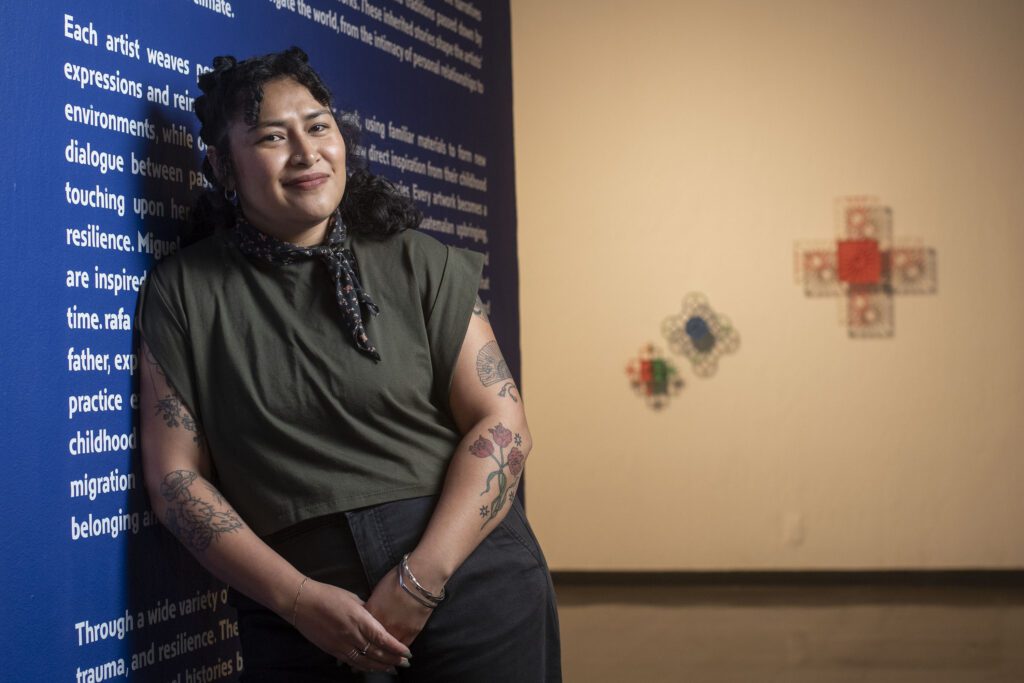
San Jose-born fiber textile artist Alyssarhaye Graciano has stitched herself into the heart of the city’s creative ecosystem. As curator for MACLA (Movimiento de Arte y Cultura Latino Americana) in the SoFA District, she balances her own textile practice with the responsibility of shepherding new artistic voices into the public eye. Her creative reach also extends beyond the gallery walls: She’s the author of Chunky Knits: Cozy Hats, Scarves and More Made Simple with Extra-Large Yarn, a book that champions accessibility in knitting.
At MACLA, Graciano continues the organization’s legacy of elevating Latino artists, helping them connect with audiences across the Bay Area. “At MACLA, we pay artists when they’re exhibiting their work or if they’re doing some sort of program or workshop because we believe in trying to create a sustainable art career,” said Graciano.
Graciano’s vision threads together art, access, and belonging in the SoFA district as well as the community at large. “I would like to see more folks being able to stay in San Jose, being able to afford to stay as creatives, as artists, and [see] how we can all give back to the community that helped raise us,” said Graciano.
Movimiento de Arte y Cultura Latino Americana (MACLA) 510 S. 1st Street (408) 998-2783 maclaarte.org IG: macla_sanjose
Local Color SJ is not an arts organization; it’s an artists’ organization. Founded in 2015 as a nonprofit 501(c)(3) by San Jose-based artist Erin Salazar, Local Color is for artists, by artists. This ethos drives their mission to build equitable pathways for artists to thrive. “I care about supporting local artists getting paid equitably for work that beautifies and signifies the community that they live in,” Salazar shares.
Their public art program has brought together a community of local artists to celebrate San Jose’s cultural diversity. Vital to their program, Salazar shares, is “the ability to have your community represented back at you and to ensure that artists have the things that they need to thrive.” She adds, “Because we work with such a diversity of artists—we work with artists who have a variety of different backgrounds, cultures, histories, and lived experiences—when people come to San Jose, they see themselves reflected in their public spaces, too.” From celebrating 100 artists in 100 Block SJ to bringing the community together to paint the Threads Woven street mural, Local Color has redistributed over $1.8 million back to creatives, demonstrating its commitment to nurturing San Jose’s artistic community.
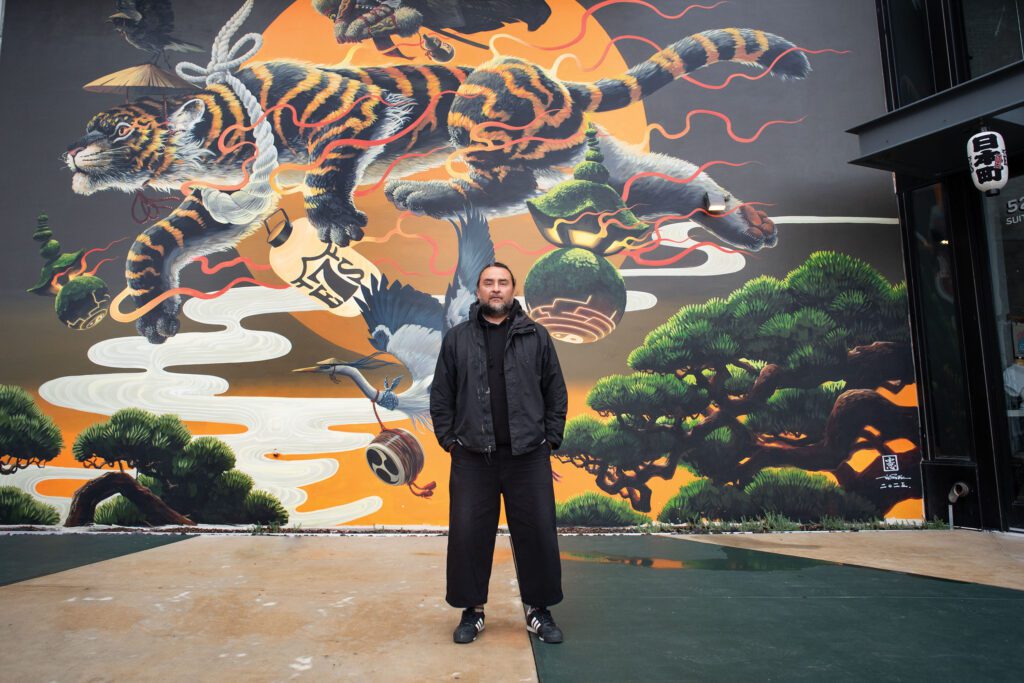
“There are so many artists who just want to express themselves,” shares Juan Carlos Araujo, founder and creative director of Empire Seven Studios and SJ Walls. Araujo, an artist who grew up in San Jose, first painted on walls doing graffiti. He founded Empire Seven Studios, an independent small business that includes a gallery and creative studio, in 2008. In 2013, the studio began to bring art to public walls—a DIY movement at a time when street art began to take off. “I was traveling a lot and saw what was happening in other cities, specifically cities that might not have had a lot of public art but began to embrace it, and it became this explosive movement that started to really take off. I wanted to bring that to San Jose,” Araujo reflects.
In 2017, Empire Seven founded SJ Walls (formerly POW! WOW! San Jose), an annual mural festival as part of the larger international cohort of public art festivals, Worldwide Walls. The festival has brought dozens of murals to downtown San Jose, including the largest mural in the city. For Araujo, the festival has provided artists with the opportunity to play and express themselves: “Even if they are getting some of the best commission work at the biggest companies, artists still want an opportunity to come to an event like SJ Walls where they can be themselves and express themselves as freethinkers.”
Cherri Lakey and Brian Eder have played a pivotal role in shaping and energizing the art culture in downtown San Jose’s SoFA district. Their gallery openings often mark a starting point for art-goers exploring the neighborhood, making the couple a recognizable face of the local scene.
In 2000, they created a home for street art, subculture, counterculture, and activism when they launched their first art space, Anno Domini, in a warehouse. “We wanted to be a place to bring people together to celebrate, participate, and support those artists we felt were important voices of our time,” said Cherri.
Six years later, they took a leading role in developing the South FIRST FRIDAYS artwalk, and two years after that, the SubZERO Festival was born. “When we moved into the SoFA District, we knew our Anno Domini friends would be coming for our First Friday openings, and we didn’t want to just send them into a bar afterwards. So we called up a couple of our friends at Works/SJ, MACLA, and the Quilt Museum and told them that if they would stay open late and be free admission, we would send our friends to them,” said Cherri. “It’s a great event because it has so many ripple effects for artists’ recognition, gallery attendance, and our small businesses that benefit from the community coming out.”
Chef duo Maria Belzunce and Jason Venters cut their teeth in Los Angeles kitchens before bringing their upscale culinary experiences back to Venters’ hometown. They opened Milk Belly Bakery to combine their passions for family and food staples from their Filipino and Japanese upbringings. Head baker Belzunce grew up in her family’s Filipino restaurant and bakery in Southern California, and Venters grew up in San Jose’s Japantown.
They opened their downtown brick-and-mortar storefront to be closer to family and balance time with their young children. They set out with limited funding and no investors, relying purely on the belief in their bread. Their philosophy is centered on quality and attention to detail. Venters, inspired by his time as a sushi chef, believes the “vehicle is just as important as the cargo,” stressing that the bread is as essential as the filling.
The menu reflects their blended heritage with items like the Longanisa sandwich with Japanese-style bread and Filipino pork sausage. Milk Belly’s approach extends to the broader community, actively supporting other small businesses by hosting pop-ups. They hope to inspire others by proving that significant capital isn’t necessary for success—just passion and a smart, tactical approach. They join other downtown eateries in bringing a new, elevated, chef-driven experience to San Jose’s food scene while maintaining a welcoming, homey feel.
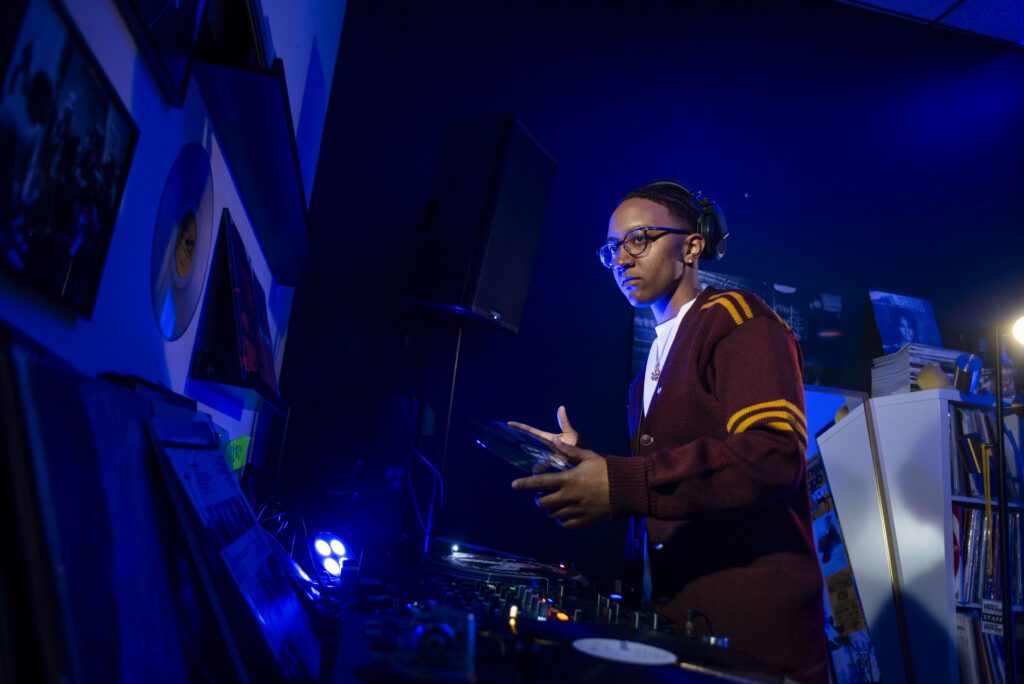
Zuri Alexa is a DJ and experience curator known for bringing good vibes to any function. Her DJ sets are multifaceted and blend genres like R&B and house. You can find her spinning at all types of events and places throughout San Jose and the greater Bay Area—including Tech at Nite at the Tech Interactive, local coffee shops like Academic Coffee, the Silicon Valley PRIDE Parade, and even more low-key block parties.
She is also a producer at Universal Grammar, a music event production company that highlights emerging artists and fosters communities around soul, R&B, jazz, and electronic music. In the past, Universal Grammar has brought artists like the Internet, Omar Apollo, Snoh Aalegra, and Kaytranada to San Jose years before they started to play larger venues. Universal Grammar tends to put on small intimate shows of about 150 people—the kind of show you look back on and can’t believe you were there before the artist blew up. “Talent and culture has always been here in San Jose, just underground,” said Zuri. “San Jose is an ‘if you know, you know’ kind of place. We have a lot of hidden gems.”
There’s a reason why Wendy Neff and Felipe Bravo named their space Fox Tale Fermentation Project. A sip of a sour ale might include tamarind, candy cap mushrooms, or Asian pear. Elderberry, sage, grapefruit, and jasmine transform into effervescent kombuchas. Stout-like sodas feature vanilla, honeybush tea, wild cherry bark, molasses, and fermented cacao bean syrup.
Drawing from Felipe’s experience in electrical engineering and production brewing and from Wendy’s background leading Facebook’s superfoods and fermentation initiatives, the pair experiment with fermentation processes and ingredients for their eclectic menu of beers, kombuchas, mocktails, and vegan cuisine. “A big part of Fox Tale is that experimentation—trying new things and sharing them to keep people inspired and excited about food, agriculture, and what’s around us,” says Wendy.
Fox Tale’s ethos of co-creating, tinkering, and fostering community involves centering locally grown produce, collaborating with other breweries, and providing performers and artists a space to show their work. Wendy says, “It’s not just about what we’re making and doing, but it’s a space where everybody gets to do it together […] Everybody can get a little bit playful and creative with it. I think San Jose deserves to be a space where other people are doing that. It just needs to be recognized.”
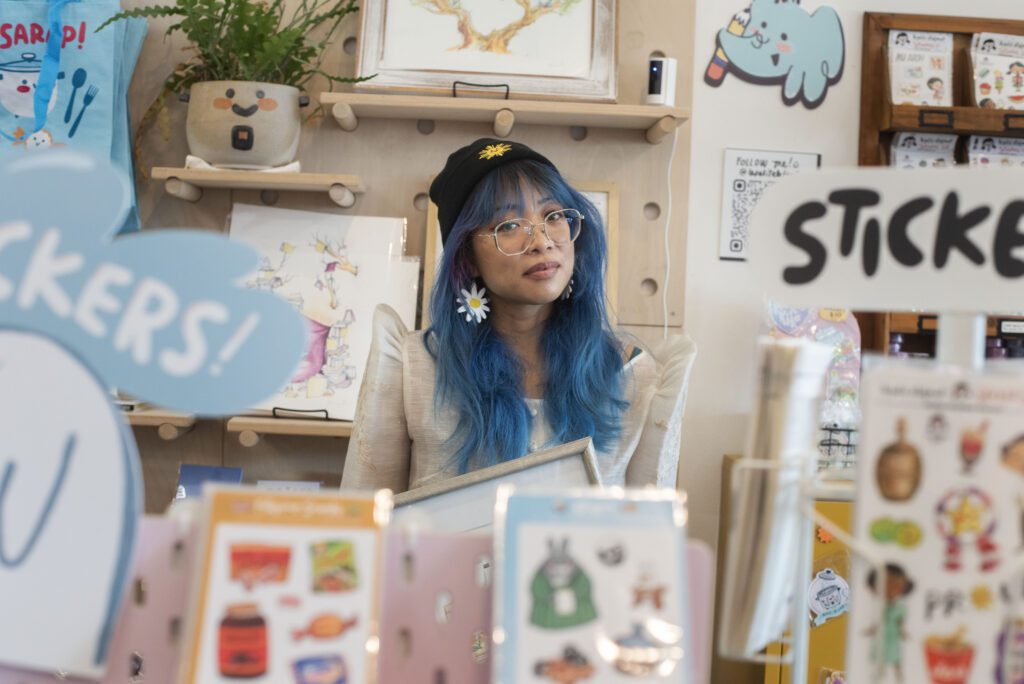
A growing industry in San Jose is the creative retail world. Largely supported by San José Made and its sister company MOMENT, many local artists have turned their craft into thriving business ventures. Genevieve Santos, owner of the stationary shop Le Petit Elefant, is one of them. Deeply inspired by travel, she makes watercolor illustrations that explore themes of culture and heritage, food as a love language, and the power of place. When she’s not traveling to BTS concerts or reconnecting with her culture in the Philippines, she’s painting and making ceramics in her Japantown studio, housed just behind the MOMENT JTOWN storefront.
Genevieve credits her business’s growth to working with San José Made, a local company aimed at growing small businesses through curated craft fairs, pop-ups and micro-retail storefronts, maker meet-ups, and social media campaigns. Genevieve testifies to their impact: “[Working with them] is an incredible marketing opportunity and learning experience. We have such a vibrant artists scene because SJ Made is there to guide the growing process.”
MOMENT has multiple locations downtown, but for Genevieve the JTOWN location is a special place. She describes the neighborhood as “this beautiful blend of old and new,” where you can simultaneously discover new artists, appreciate multi-generational restaurants and businesses, and learn local history in one of the few remaining Japantowns in the United States.
Santa Cruz artist Sarah Bianco’s work can be found at the intersection of fine and commercial art. As the owner of Painting by Bianco, her contract work includes interior painting and color consultations involving work from rolling paint and plaster to fine detail and murals. Her current studio practice at the Tannery Arts Center is quite literally built from her commercial practice, where she uses old drop cloths from her painting business as the foundation for her fine art. The cloth material retains a canvas-like texture and incidental marks, which Bianco views as abstract landscapes, guide her compositions.
Bianco views her studio process as meditative. She approaches the work intuitively, playing with color and imagination to develop ethereal worlds, allowing the paint and canvas to lead. Bianco describes, “I’m essentially trying to get out of my own way and allow what the painting wants to be shown to me”. She often combines open acrylics for fluid movement with oil-based paint bars to add a distinct, chunky texture to her pieces.
Bianco’s process often results in airy dreamscapes, some of which depict floating figures, jumping, and suspended in space. In many ways, this motif represents her artistic approach, taking risks and leaping into the unknown. That liminal space, the moment between when you jump and when you land, is also echoed in the ‘in-between” concept of Apricity, for which she named her gallery, which means the warmth of the sun in winter. She holds that once a piece is created, the magic is in its own relationship with everyone who sees it.
Bianco will be featured along with over 340 Santa Cruz County artists in the 2025 40th annual Santa Cruz County Open Studios Art Tour.
Featured in Content Magazine Issue 18.1, “Discover”
Artwork 1. Her Flowers Still Bloom, mixed media on wood, 18“x18“ 2. Feel, oil on used painters tarp, 30“x39.75“ 3. Respect What You Love, mixed media on wood panel, 32.75“x24.5“
Ann Watts
In 2000, a local school received a seed donation to grow an arts program. The school put out a request for applications and proposals, looking for a bright mind to guide its vision. Enter Ann Watts, a bubbly professional dancer with experience teaching and a scrappy tech startup attitude. Watts continues the story. “I applied, and I came in with the idea that we could do so much more than one art discipline at this one school. I wanted to bring in all the arts, provide for professional artists, and service the entire industry.” Watts’ proposal laid the groundwork for what is now Starting Arts.
Starting Arts is a hands-on, multidisciplinary arts program that implements art classes within public schools across the Bay Area. These classes are standards-based, aligned with Common Core, taught by skilled professionals, and take place during and after school. Watts grew Starting Arts with a combination of experience and an eager team of supporters. That growth further developed when she joined Mindshare.
This is what makes me want to get up every morning— meeting all of these creative folks and supporting them by just getting out of their way. They have so much to give; I just have to facilitate.”
“The nonprofit world can feel so siloed and isolating. Mindshare created a network and gathered a large group of people from different arts disciplines within the nonprofit sector,” says Watts. “We could ask each other anything; nothing was off the table.” These connections with arts leaders allowed Starting Arts to foster tangible partnerships with other Santa Clara County–based arts organizations such as Chopsticks Alley Art, Los Lupeños, and San Jose Taiko. “Those partnerships were really impactful for the community of kids and families that work with us,” shares Watts. Mindshare also included a one-on-one coaching program that further developed these leaders’ skills and knowledge. Watts’ coach helped her establish workflows for an expanding organization. In 22 years, Starting Arts grew from one school to 125, and six to 15 employees. “The number of contractors we worked with tripled. It was crucial for me to learn how to manage the growth of the organization’s infrastructure to remain sustainable.”
Today, Starting Arts provides art classes for thousands of students, and their schedule is booked through next year. Watts shares, “This is what makes me want to get up every morning— meeting all of these creative folks and supporting them by just getting out of their way. They have so much to give; I just have to facilitate.”
Artists and students gathered on the campus of West Valley College in Saratoga to showcase their work at the college’s annual STEAM’D Fest. 2025 marked the fourth year of collaboration between Content Magazine and The Cilker School of Art & Design in producing The Cilker Grad EXPO and Pick-Up Party 17.3, “Perform,” which celebrated the latest issue of the magazine.
Before the main event and Pick-Party began on May 16, 2025, college students attended a networking event. With portfolios in hand, they practiced their elevator pitches and shared their coursework with industry professionals from various fields, invited by Content Magazine. Adding to the pre-party festivities, a mobile screenprinting press run by OaxaCali Studio supplied visitors with commemorative tote bags and shirts with the Cilker School of Art and Design’s logo. Attendees lined up excited to receive their EXPO swag.
At 7p, nearly everyone on campus made their way down an incline led by string lights to the college’s visual arts building; they followed the sound of a music duo, MindFi, comprised of guitarist Mark Arroyo and vocalist Kia Fay Donovan, and were greeted The Content Magazine check-in table, guest received food and drink tickets, and picked up their copy of the new magazine.
Art lovers cycled in and out of the glass facades of the visual arts buildings, enjoying student work in one gallery and a pop-up exhibition featuring artists from the pages of the magazine in the other. The blend of magazine members and college supporters made the event feel like a party hosted for the city, as all ages enjoyed the artwork and snacks on a crisp Friday evening.
Mild Monk, previously featured in Issue 12.0, “Discover,” performed a rare live performance in front of a massive 12 ft wide King157 backdrop featuring the magazine’s name and his iconic graffiti characters. The piece, produced in partnership with 1Culture Gallery for the Winter 2025 edition of Content, was hauled in and built for the event. At the same time, attendees snacked on ice cream and churros from food trucks.
In the theater behind the stage, students practiced their sales skills at booths set up like an art fair, selling stickers, ceramics, crochet pieces, and art prints.
After Mild Monk wrapped their half-hour set, attendees migrated upstairs to a beautiful second-story courtyard to experience the annual Cilker Fashion Design fashion showcase, which began fashionably late and had more attendees standing than sitting. As models strutted down and around the square catwalk, the designs were met with complete attention and applause.
Student designs brought a wide variety of wardrobes to the show, with some resembling those from the set of Dune and others looking red-carpet ready. With thick eyeliner and confident strides, the models presented themselves to an enthusiastic crowd, some sporting trailing capes and knit face masks, as the designers concluded the scheduled portion of the evening with a bow.
Join us on Thursday, August 21, 2025, at CURA Contemporary gallery in Morgan Hill for Pick-Up Party 17.4, “Profiles”. The party will celebrate the artist featured in the issue, including the 2025 Content Emerging Artist Awardees, and feature a pop-up gallery, live music, and food and drink from Véra restaurant and its master chef’s curated menu. The party will be produced in partnership with CURA contemporary, The Gilroy Foundation, Heritage Bank, and The City of Morgan Hill.
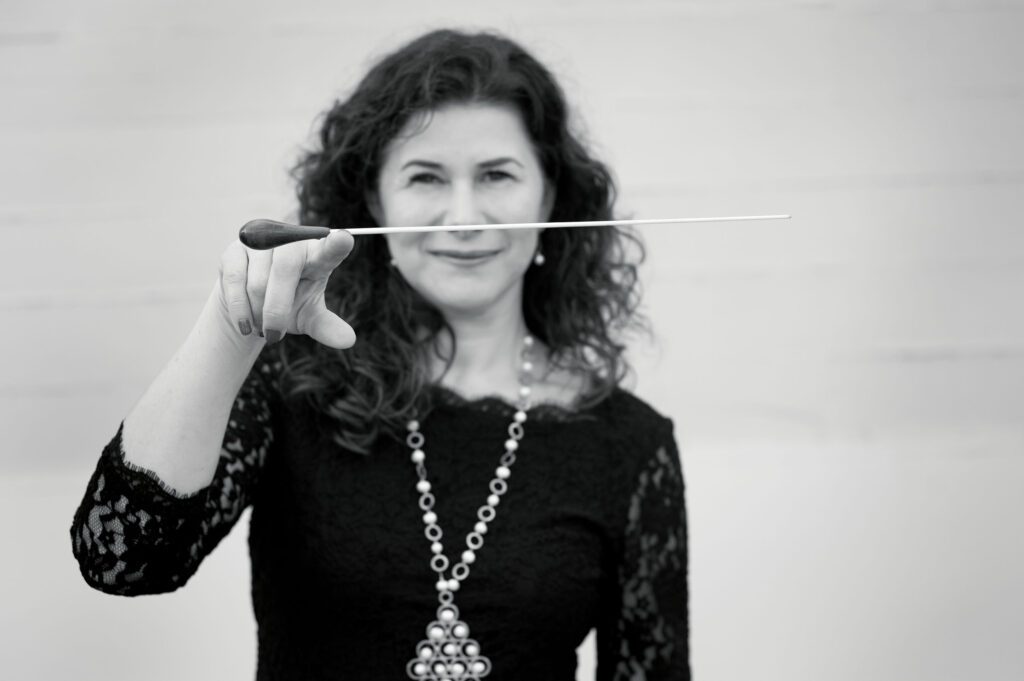
Elena Sharkova balances her baton deftly on the tip of her finger, demonstrating the balancing act that is her life. “I consider myself fearless,” she says. “I’m not aggressive, I just roll my ‘R’s.”
Ever since she emigrated to the U.S. from her hometown of St. Petersburg, Sharkova has been learning how to juggle her expectations and her enthusiasm. Coming from a world of subsidized art performed only by highly educated professionals, she needed to learn to temper her approach to suit American choruses. Sharkova felt that she had lost that balance when she taught at San Jose State. Telling students that they could teach orchestra, band, and choir simultaneously felt disingenuous—quality demands time.
As she explains to her singers at Symphony Silicon Valley Chorale, where she serves as Chorale Director, “Mozart did not write one requiem for amateurs and another for professionals. There is only one.” Sharkova knows that her singers have families and demanding jobs, “but half of them sing 90 minutes of Verdi by heart. Can you imagine how much they practice?”
Breaking through the glass ceiling as a female conductor was not easy, especially behind the Iron Curtain. Because her career options were so limited in Russia, Sharkova now feels compelled to talk with children, their parents, and teachers about music and reaching their potential. As an inspirational speaker, she tells people not to “just marinate in your own mediocrity.” Too many of her audiences consider the arts to be just the ‘cherry on the top’ of an education.
Sharkova is also artistic director for Cantabile Singers of Silicon Valley, a youth chorus with 300 singers aged four to eighteen. Although it is challenging to accomplish her goals in just one rehearsal per week, the children rise to the level of her high expectations, despite their heavy academic schedules.
Curiosity drives each facet of her life and she has no patience for singers that do not share her thirst for knowledge. In Russia, “you took a train to the public library and you dared to ask for a dictionary. The librarian would follow you and ask what you are translating.” She gestures at her phone and says,” Now it takes 0.2 seconds on Google. I timed it.”
Ultimately, Sharkova admits, her balance is found in the music. “Musicians are explorers of the human heart. Nobody cares what you do from 9 to 5. You have a two-minute chance for the audience to fall in love.”
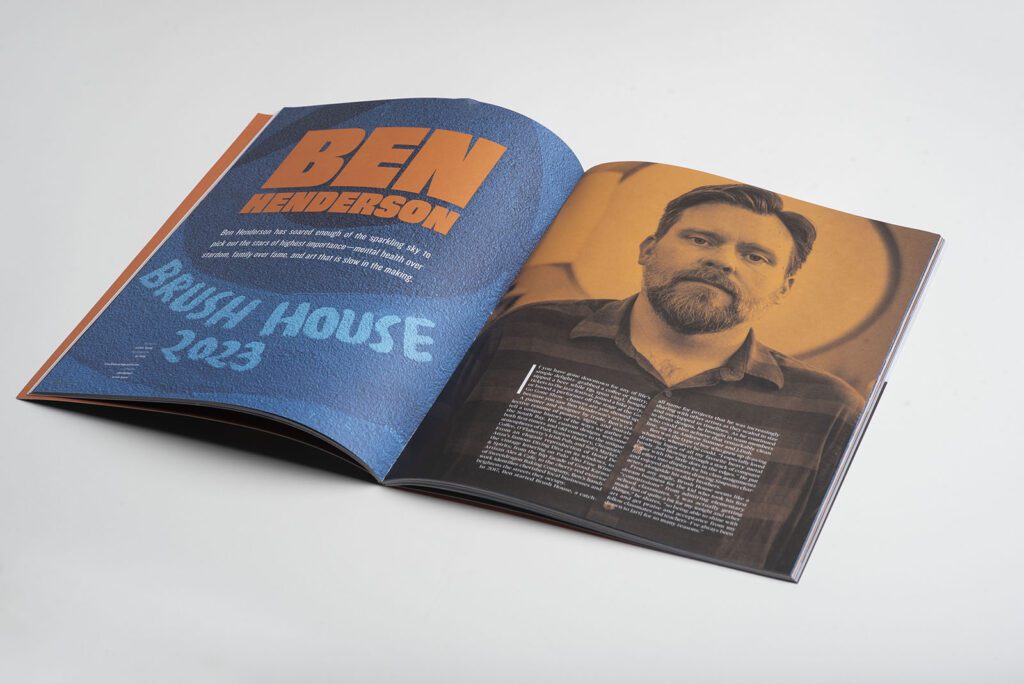
Ben Henderson has soared enough of the sparkling sky to pick out the stars of highest importance—mental health over stardom, family over fame, and art that is slow in the making.
If you have gone downtown for any of life’s simple delights—grabbed a coffee or pastry, sipped a beer while DJs spun vinyl, bought tickets to the jazz festival, joined a bike party, or booed a performer off the stage at the Go Go Gone Show—chances are you showed up because you saw Ben Henderson’s artwork.
A painter and designer by trade, Ben’s collective resume of posters, signs, and murals tell a unique history of the ways we gather in the South Bay. His custom designs welcome both first-timers and old-comers to the unique atmospheres of Park Station Hashery, Chromatic Coffee, O’Flaherty’s Irish Pub, and SoFA Market. From an elegant reproduction of Hotel De Anza’s famous Diving Diva on its windows, to the vintage lettering on Palo Alto Fine Wine & Spirits; from the hip facade of Good Karma Artisan Ales & Cafe, to the cherry-red exterior of Sweetdragon Baking Company, Ben’s handiwork identifies cherished local businesses and brightens the streets they occupy.
In 2017, Ben started Brush House, a catchall name for projects that he was increasingly sharing with other artists as they scaled in size and overlapped in timelines. As he continued to direct designs, he brought in team members who could also achieve that remarkably clean line, such as Andrew Sumner and J.Duh.
Ben was the type of boy who grew up drawing whatever, whenever he could. “I especially loved drawing logos of all my favorite heavy metal bands—just blowing through a stack of computer paper with the little dots in the edges.” He put full effort into displays for his class assignments and enjoyed afternoons drawing Simpsons characters alongside his older brothers.
From any angle, Brush House seems like a dream business for the kid who took his first “commissions” from admiring elementary school classmates. “I was actually getting made fun of quite a bit for my weight and other things,” he shares, “so being able to shine with art and get praise and acceptance from my fellow classmates and teachers—I’ve always been drawn to [art] for so many reasons.”
But by middle school, he found himself devoting hours to playing guitar or jamming on drums and bass. “I was always such a ham, and I wanted to perform for my friends, my family, my community,” he says.
In this way, music became the impetus of his artwork. “I was making a ton of graphics in the way of band merch and promotion for my band and my friends’ bands,” he recalls. Between playing with one of his first bands, Delta Activity, and working at Coffee Society, he took on his first gig as a graphic designer.
Funny enough, that commissioned art piece traveled the world before his music did. While touring with newer band Good Hustle, Ben spotted his “Make Coffee Not War” design, modeled after a wartime propaganda poster, on a T-shirt he didn’t recall printing. He asked the wearer how she’d gotten it. “She’s like, ‘I just ordered it from some guy in Australia.’ ” His poster had risen into paper virality, appearing in bastardized versions of itself on T-shirts, mugs, and wall decals sold globally.
And not soon after, his music followed. Ben’s first band, Delta Activity, toured with alternative metal band Dredg. His duo, Brother Grand, supported indie-folk band the Wild Reeds. In 2012, Ben quit a job designing graphics for the county to join a nationwide tour with indie rock band River City Extension as their bass player.
For 15 years, Ben’s music career was on constant rise, as he and his bands accepted invitations to play bigger shows, festivals, and tours. In his life’s nebula, performing was at the center—stardom was likely, but it meant having to endure the collapse in other parts of his life. And some of it couldn’t be earned back.
“I realized that being out on tour as much as I was, I was missing weddings, funerals, birthday parties, baby showers—all for people I really love and care about.” Additionally, the economic demands of performing had changed the experience for him. Whereas he once reveled in the endless possibilities of one line in one song, his mind was now more of a calculator. He habitually concerned himself with what the next concert would pay or how the band’s merch would sell.
And he wasn’t alone in the anxieties. From his vantage point, Ben noticed the struggles of even more established performers with record labels, booking agents, and sponsorships. “They were struggling to pay their bills, take care of their health, be happy, be satisfied, and grateful,” he says. “I realized, it’s going to take me a long time to get where they are. And they’re not even stoked.”
The joy of live performance dwindled. “People could come up to me after a show in tears and be like, ‘That was so amazing. Never stop what you’re doing. You touched so many people’s hearts tonight,’ and inside I would just feel like, ‘I wish you were right.’ ” It was a far cry from the way he played music through junior and high school, jamming for hours on guitar, every single day, hopping from drums, to bass, to the mic, all because it was fun and brought people together.
So Ben made a deal with himself. “I said, ‘For the next year, I’m going to focus on art only.’ ” The commitment was quiet—Ben told no one—but the change was clear: he simply stopped performing in public. He turned down shows and put all the touring and recording on hiatus.
Only a few weeks in, he realized it was the best decision. “For the first time in a while my bills were paid. I was not falling behind. I was getting so much done.” Ben soaked it all in: time with the people he loved, space to reflect on his relationships, and the inner peace that a younger version of himself lacked. “It took me identifying my values,” he explains. “Before, I didn’t have any of that. It was just like, whatever the next biggest thing is, that’s what I wanted.” Those closest to him—especially his wife, Erin—share his values of health, family, and friends. “We’re just remarkably mellow and happy together,” he says.
Freed from the need for his musicianship to generate money or sense of self-worth, Ben states, “I have reclaimed my music as my fine art.” It looks like coming right back to the beginning, when he composed without an agenda. “I will sit there and play with one song idea for months on end, overly obsessing about the minutiae of one song—because I’m allowed to, and because I allow myself to. And that’s exciting,” he says.
That’s fantastic news for anyone who’s heard Ben perform, whether 20 years ago or just last month on a stage somewhere downtown. He’s also planning to record this winter. We can look forward to definitive versions of beloved Ben Henderson classics, as well as newer experiments reflecting this phase of his life. “I’m going to be still performing whenever I want, whenever I can, and have fun with it,” he promises himself, “and be relentlessly creative and experimental with it because I can and because I should.”
Don Hardy is an award-winning filmmaker known for his powerful documentaries that shed light on diverse societal topics. As a director, producer, and cinematographer, Hardy has worked on impactful films such as Citizen Penn, Linda Perry: Let It Die Here, and most recently, Bar. His cinematography explores themes of resilience, social justice, and the human experience, earning him six regional Emmys and significant film festival awards from Cinequest, Woods Hole Film Festival, Seattle International Film Festival, and Sonoma International Film Festival. Hardy’s career has been defined by following dreams, taking risks, and making connections. His documentaries reflect a deep desire to understand human experiences and share complex, nuanced stories that might otherwise go untold.
Hardy Grew up in Upstate New York, in a household where the news was always on the television. He had an early interest in journalism, which led him to do radio in high school before getting his foot in the door at a local TV station, typing stories in a teleprompter. Hardy followed jobs in TV, from sports in South Florida to NBC in San Jose, California. The connections he made along the way and his acquired approach to elevating news storytelling through artful, character-driven narratives helped propel his career toward film. He found a like-minded storyteller in former NBC journalist Dana Nachman when they collaborated on their 2002 television documentary, Close to Home. The duo would go on to produce five more independent documentary feature films.
Hardy’s latest film, Bar, will premiere at the California Theater in Downtown San Jose on March 14 and 23 as part of the 2025 Cinequest Film Festival. Bar was filmed on-site during a five-day intensive bartending training program at the Culinary Institute of America in New York City. Graduates of this program have gone on to run top bars and spirits brands and lead the non-alcoholic beverage revolution. The film provides insight into the hospitality industry by focusing on five main characters in the high-pressure environment of learning complex skills.
In this conversation, award-winning filmmaker Don Hardy discusses his journey to following his dreams, his connections throughout his career, and the Cinequest world premiere of his newest film, Bar.
Join Don Hardy at the Cinequest Film Festival for the world premiere of Bar, and stick around after the showing for an in-person Q&A session.
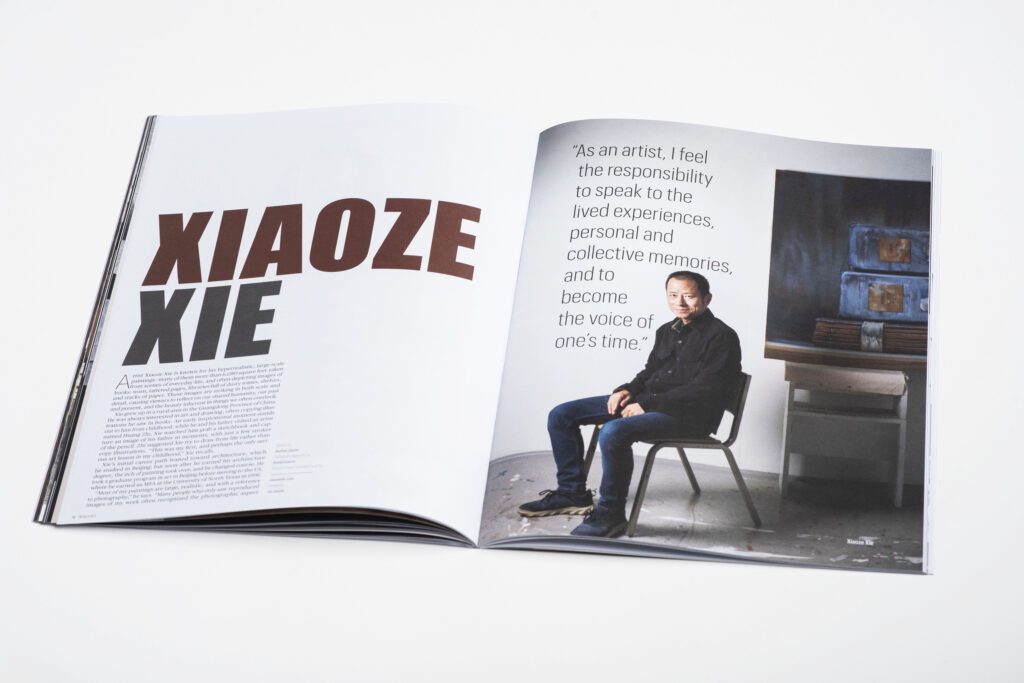
“As an artist, I feel the responsibility to speak to the lived experiences, personal and collective memories, and to become the voice of one’s time.”
Artist Xiaoze Xie is known for his hyperrealistic, large-scale paintings—many of them more than 6,080 square feet–taken from scenes of everyday life, and often depicting images of books: worn, tattered pages, libraries full of dusty tomes, shelves, and stacks of paper. These images are striking in both scale and detail, causing viewers to reflect on our shared humanity, our past and present, and the beauty inherent in things we often overlook.
Xie grew up in a rural area in the Guangdong Province of China. He was always interested in art and drawing, often copying illustrations he saw in books. An early inspirational moment stands out to him from childhood: while he and his father visited an artist named Huang Zhi, Xie watched him grab a sketchbook and capture an image of his father in moments with just a few strokes of the pencil. Zhi suggested Xie try to draw from life rather than copy illustrations. “This was my first, and perhaps the only serious art lesson in my childhood,” Xie recalls.
Xie’s initial career path leaned toward architecture, which he studied in Beijing; but soon after he earned his architecture degree, the itch of painting took over, and he changed course. He took a graduate program in art in Beijing before moving to the US, where he earned an MFA at the University of North Texas in 1996.
“Most of my paintings are large, realistic, and with a reference to photography,” he says. “Many people who only saw reproduced images of my work often recognized the photographic aspect while overlooking the nuanced painterly treatments, such as the layers of color and texture, and brushwork. A painting is not just an image, it is also an object with a sense of scale, weight and touch, an object that invites our physical involvement.”
The large-scale canvases bring visual impact to each of his images, allowing for details and textures that keep the eye lingering on a painting for far longer than it might on the photographs the paintings reference or on smaller-sized works. The result gives what are often ordinary-looking scenes a feeling of importance and power.
After experimenting with different subjects for his paintings, books became a frequent part of his works starting in the early 1990s. “I was fascinated by both the potential meanings and forms of the subject,” he says. “For me, books are the material form of something abstract, such as thoughts, memory, and history. Over the years, I have painted Western volumes, Chinese thread-bound books, museum library collections, and eventually newspapers. I see this ongoing body of works as one project growing out of a simple idea.”
While exploring these books and libraries, he also became captivated by the topic of banned books—what they mean, the political circumstances around a given book, and what these bans have meant for our history and collective understanding of the world. His many paintings of books and libraries fed into this fascination. “As I continued to paint books,” he explains, “I was also interested in what people have done to books. I have made installations based on specific historic events of book destruction. All these led to the project on the history of banned books in China. The books in my Chinese Library paintings are all closed and stacked; however, in the photographs of banned books, their pages open for the first time. The pursuit of freedom of expression often comes at a cost, and should not be taken for granted.”
All of this speaks to Xie’s interest in using his art to explore the shared history of modern society. “As an artist, I feel the responsibility to speak to the lived experiences, personal and collective memories, and to become the voice of one’s time. The juxtaposition of historical and modern styles, and images from the past and the present have opened new possibilities.”
Today, in addition to his wide range of gallery exhibitions, he teaches art at Stanford, where he is not only able to mentor young artists, but also find inspiration in their work and ideas. “I love working with MFA graduate students. It is always exciting to learn about their innovative ideas and watch the development—sometimes radical changes—of their work.”
“Looking back, you realize that life is full of dilemmas and detours, and it takes a long time to figure out what you really want to do,” he muses. Ultimately, where Xie has landed is exactly where the artist Huang Zhi pointed him when he was a boy: capturing images from life. He’s done it in large scale, with impeccable detail, and has had the opportunity to share his work with the world.
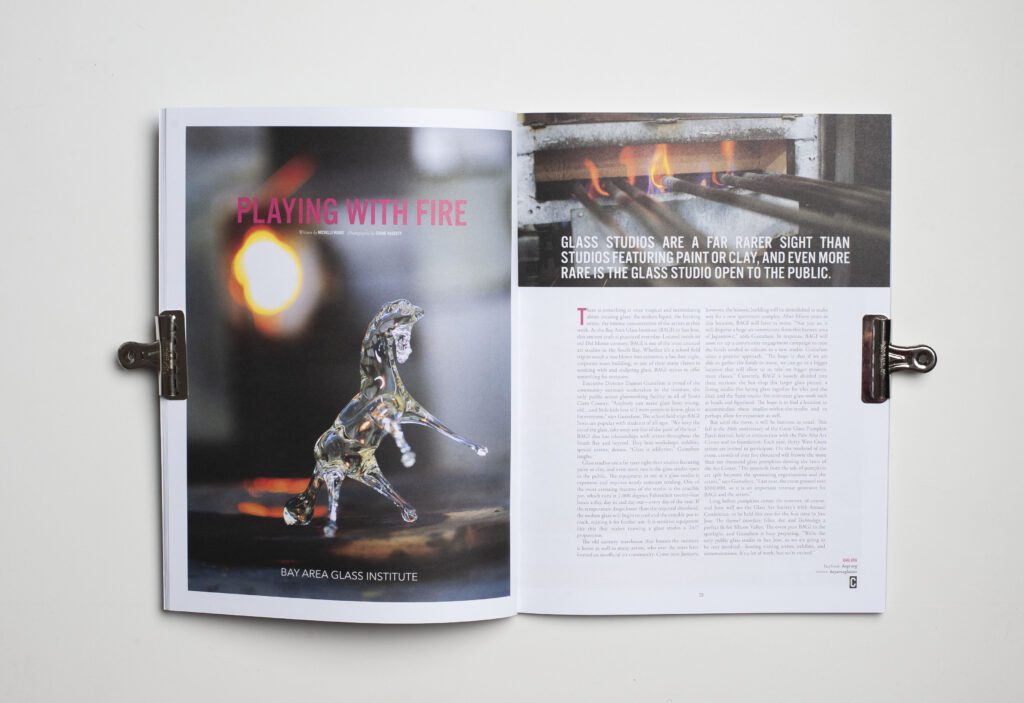
There is something at once magical and intimidating about creating glass: the molten liquid, the burning ovens, the intense concentration of the artists as they work. At the Bay Area Glass Institute (BAGI) in San Jose, this ancient craft is practiced everyday. Located inside an old Del Monte cannery, BAGI is one of the most unusual art studios in the South Bay. Whether it’s a school field trip to watch a vase blown into existence, a fun date night, corporate team building, or one of their many classes in working with and sculpting glass, BAGI strives to offer something for everyone.
Executive Director Damon Gustafson is proud of the community outreach undertaken by the institute, the only public access glassworking facility in all of Santa Clara County. “Anybody can make glass here: young, old…and little kids love it! I want people to know, glass is for everyone,” says Gustafson. The school field trips BAGI hosts are popular with students of all ages. “We keep the joy of the glass, take away any fear of the ‘pain’ of the heat.” BAGI also has relationships with artists throughout the South Bay and beyond. They host workshops, exhibits, special events, demos. “Glass is addictive,” Gustafson laughs.
GLASS STUDIOS ARE A FAR RARER SIGHT THAN STUDIOS FEATURING PAINT OR CLAY, AND EVEN MORE RARE IS THE GLASS STUDIO OPEN TO THE PUBLIC.
Glass studios are a far rarer sight than studios featuring paint or clay, and even more rare is the glass studio open to the public. The equipment in use at a glass studio is expensive and requires nearly constant tending. One of the most arresting features of the studio is the crucible pot, which runs at 2,000 degrees Fahrenheit twenty-four hours a day, day in and day out—every day of the year. If the temperature drops lower than the required threshold, the molten glass will begin to cool and the crucible pot to crack, ruining it for further use. It is sensitive equipment like this that makes running a glass studio a 24/7 proposition.
The old cannery warehouse that houses the institute is home as well to many artists, who over the years have formed an unofficial art community. Come next January, however, the historic building will be demolished to make way for a new apartment complex. After fifteen years in this location, BAGI will have to move. “Not just us, it will disperse a huge art community from this historic area of Japantown,” adds Gustafson. In response, BAGI will soon rev up a community engagement campaign to raise the funds needed to relocate to a new studio. Gustafson takes a positive approach, “The hope is that if we are able to gather the funds to move, we can go to a bigger location that will allow us to take on bigger projects, more classes.” Currently, BAGI is loosely divided into three sections: the hot shop (for larger glass pieces), a fusing studio (for laying glass together for tiles and the like), and the flame studio (for miniature glass work such as beads and figurines). The hope is to find a location to accommodate these studios-within-the-studio and to perhaps allow for expansion as well.
But until the move, it will be business as usual. This fall is the 20th anniversary of the Great Glass Pumpkin Patch festival, held in conjunction with the Palo Alto Art Center and its foundation. Each year, thirty West Coast artists are invited to participate. On the weekend of the event, crowds of over five thousand will browse the more than ten thousand glass pumpkins dotting the lawn of the Art Center. “The proceeds from the sale of pumpkins are split between the sponsoring organizations and the artists,” says Gustafson. “Last year, the event grossed over $300,000, so it is an important revenue generator for BAGI and the artists.”
Long before pumpkins comes the summer, of course, and June will see the Glass Art Society’s 44th Annual Conference, to be held this year for the first time in San Jose. The theme? Interface: Glass, Art, and Technology, a perfect fit for Silicon Valley. The event puts BAGI in the spotlight, and Gustafson is busy preparing. “We’re the only public glass studio in San Jose, so we are going to be very involved—hosting visiting artists, exhibits, and demonstrations. It’s a lot of work, but we’re excited.”
It’s tempting to say that Blaise Rosenthal has moved from his professional snowboarding career to being an artist, but it is more accurate to say that Blaise, who has been drawing since childhood, is merely now devoting his creative energies to his paintings.
How would you describe your work? I would say it’s more environmental. My experiences of a certain place during a certain period, and the physicality of that place, it’s very archetypal for me. It’s like, “This is water. This is Earth. This is heat. This is foliage.”
It’s very much like it’s like my own personal Garden of Eden, except not necessarily so serene. It has more adversity than obviously a paradise would have, but it still is my own kind of primal experience, and so in that way, I relate back to that. Then the physicality, all of my work has a certain physicality to it.
There’s a real earthy or elemental aspect to your work. Right. Charcoal is a totally natural material. It’s also one of the first mark-making media that humanity ever probably used—probably charcoal from the fire, boom—on the ground, or on the wall, or on a rock, or whatever.
Is that something that you intentionally did, or is that just a byproduct? I use the charcoal because it was something I was doing a long time ago, and I realized there was another way I was using it. A lot of what I do is that I do something, and I go, “Ooh, that works. Why does it work?” And then I reverse-engineer it. “Why does the geometry work for me? Why does the repetition work for me?” and so it’s like that.
Your earlier work was very colorful. What was the transition to the current work? I was making the underpainting for one of the paintings I was working on. I had just finished a show, and I was starting to work again. I made this piece, and I had all of the underpainting done, and made an outline for what I wanted to do, and when I finished doing that, I saw it, and I was like, “What am I doing? This is what I want to make.”
I had been creating these underpaintings, and then looking at it and going, “That’s really beautiful, but it doesn’t fit the idea I have.” I would complete an idea in a painting to express some concept that I didn’t even necessarily believe in five minutes later. I was trying to have all this conceptual importance in the work, or have some theoretical underpinning to the paintings. But then, I gave in to beauty, and I was like, “Why am I going to cover something that I like up?”
Do you think with that earlier work, then, you were trying to almost prove yourself in a way? I wanted an excuse for the paintings. I wanted to be like, “OK, I’m making the paintings because I need to investigate the meaning of life or whatever.” I kept trying to think about it, and it was a very weak topic. There was nothing else. I see people make paintings about all kinds of things. It seems like a really inefficient medium for that purpose, whereas a documentary or podcast, whatever, you can get a point across.
With painting, I think it’s touching on something that isn’t necessarily explainable. To have a concept before you even start to make the painting, and then adhere to that concept, then it’s the painting to potentiate that concept. Fortunately, I stopped working and paid attention. That has been foundation of everything I’ve made since.
You’ve said you want your paintings to be about nothing, or something like that? I don’t want them to be about nothing at all. I actually want them to be everything all at once, but I just don’t want them to be too specifically something, because that limits their potential to be everything else.
Is that because you want the viewer to bring in more of their own emotion or a feeling, and their thoughts to it, than a “story” you are trying to tell? I would like it to be holistically experiential in the sense that when you see my art, people want to touch it. With my larger pieces, people really respond to the texture of them. To touch them on that sensory level: I want it to stimulate your mind. I just don’t necessarily want to dictate to you what to think, because I think people’s life experiences are so subjective, and the potential is then infinite.
What I try to do is to create a moment of sincerity in regards to my painting, where this painting comes as close to a hundred percent being from a place that I feel is true, and that I have a license to speak from, as far as my experience growing up, my influences in art making. Then I put it there, and people bring whatever they have to the table, and they look at it, and whatever it does for them, I don’t know.
As much as I’m trying to maybe downplay the whole idea of dictating, I at least do think there are universal themes or potentials for human experience. And if I can touch on those, then I’m doing really well. There’s a final kind of singular moment at which the whole becomes greater than the sum of its parts.
Not to focus on your snowboarding life, but are there any similarities in the sense of having a career in snowboarding, and then having a career in painting? What would you say is the connection, what’s the commonality? Snowboarding was something that worked for me because it was an extension of skateboarding, and skateboarding was something that worked for me because it was physical, and yet it also had the potential for expression.
It was performance art, in a way, and it was also satisfying in so many ways. Skateboarding is a pretty highly refined—almost to a fault at times—but a highly refined subculture, where the possibility for meaning through artistic expression is totally inherent in the act.
What color shoelaces you have can be a way of expressing an aspect of personal identity, and I would say that snowboarding is an extension in the same way. The way in which you would do something, the way in which you wouldn’t do something, there were decisions that I made that were definitely calculations not based on athleticism, but based on expressiveness or identity.
In that way, snowboarding and painting are related, because they’re both places where I can be the person that I am. I just seem to be the type of person that has this need to do this thing and share it with other people.
It’s not a song if it was never sung, right? Right. I’m not just entertaining myself. I am, but I’m entertaining myself with a deep-seated hope that someone else is going to be affected by what I’m doing, too, and I’d be lying if I said otherwise, so I love the idea that I am autonomous sometimes, and my work could be autonomously beautiful, but it still needs to be seen.
The Bellarmine High and Santa Clara University grad returns home from New York to star on The Stage.
The acting profession is a rewarding and trying one. The joy of being an integral part of the storytelling process is peppered with the continual fear of having to audition for your next job. And how many of us feel the need to list Burp on Command, Double-Jointed Shoulder Blades, or Possessing a Driver’s License as skills on our LinkedIn profile? For actor Jeffrey Adams, such is life. Adams recently returned home to the Bay Area from The New School for Drama in New York to appear in the productions of Death of a Salesman and The Addams Family at The Stage.
How did you get into acting and performing?
It started out when I was eight years old, doing children’s theater at this summer camp, at Milpitas Rainbow Theater. My brother and I both sang. Growing up, we were in choirs and stuff like that. It was something we enjoyed doing. We thought, “All right. We’ll sign up for this.”
The first play we did was Music Man. It was something to do during the summer and to make friends. But it was really fun, and it developed into a passion. I kept going back every summer.
As I got older, I started to appreciate the technique of taking on different characters and the academic side of it as well. And once I got into high school, really studying plays and digging deeper into what it means…from there, it just took off.
You chose to pursue this path pretty early on.
I did. Definitely in high school, I really, really fell in love with it. Obviously, you’re in an academic setting where you’re constantly reading different plays and literature. That was a big focus for me in high school. In my senior year, I was taking four English electives. My passion was there.
Was there somewhat of a defining moment where you said, “Yeah, I’m going to pursue this along the way.”
There was, actually. I was a sophomore in high school in 2003. I was fifteen years old. I had the opportunity, at the Milpitas Rainbow Theater, to play Don Quixote in Man of La Mancha.
Which is really [a role] for a man of 50 to 60 years old, but being in a children’s theater, I was able to portray this guy. I think that was really it for me. I was able to not only transform into a 50-, 60-year-old man, but also [the character’s] story is one that is incredible.
Being able to transform into another person and take on these characteristics and be a man who’s full of hope and tragedy and sorrow, and has this whole mantra of dreaming the impossible dream, it was a metaphor for acting as well.
It was the first time I got lost in a character. Jeffrey was gone. I was able to fuse everything I knew as an actor into just totally being this other person, which for me was fascinating and really wonderful. To be able to share that with an audience is always just incredible. I think that was probably the moment.
So, when I applied to different colleges, I absolutely looked at the theater programs, that was important. I knew that was the path I was going to take. It’s a whole different process. You have to go on college auditions, as well as the application process and all that.
What is it you like about acting?
Two of my passions are acting and teaching. I taught for a year after Santa Clara. I think both of those professions are admirable and very important. I think that acting, at its finest, is also teaching. I think that’s part of why I enjoy it so much. I think there are so many important stories, about just the human experience, that are out there.
Being able to share that in a creative, artistic way is something I love. I think if it’s done well, audiences and people who see your performance will learn something from it, want to talk about it. It will either make them feel in some way or bring awareness to something that is important on a larger level. I really love that.
What have you learned from some of those characters you portrayed that has affected your personal life?
I think that’s also one of the reasons I love acting. I get to learn more about myself through the characters I play. Aldous Huxley has this great quotation that I use all the time. It’s “The more you know, the more you see.” The more I know about these characters, the more I see in myself and the world around me.
In order to play somebody else, you have to ask yourself, “What would you do in this situation?” or “If you were to be this person, how would you go through what they’re going through?”
Those are questions that not everybody gets to ask themselves a lot in their profession. I get to do that every day, which is great. I’m constantly searching myself and finding out who I am and what I would do in certain situations.
I think acting, at its finest, is self-discovery. It’s finding out who you are by being these other people. Every character does that on some level. You could be playing a clown, or you could be playing a murderer. I’m not going to be a clown. I’m not going to kill anybody. But you have to ask some pretty human questions, in terms of finding out how you would play those people.
It must be difficult, too, because in some ways, you can’t help being yourself. You need to bring that in order to inform the character, but at the same time, you’re not playing yourself. You never really can not bring yourself in some way.
I think that’s the beauty of it, too. I think that’s why people respond to certain actors. It’s because there always has to be a little bit of yourself. That’s what makes you unique. Stella Adler, this wonderful acting teacher, always said, “Your talent is in your choices.”
Any actor can take on a role, but what makes it unique is what you, yourself, the actor, bring to the table. That’s important.
You’re going to see tons of Happys if you watch Death of a Salesman over the course of however many years. Every Happy is going to be different, which is also exciting too.
I think the perfect fusion is a little bit of you, a little bit of the character, and always the story overriding all of that.
Long-term for you, what’s the vision? What’s the goal? What’s the North Star?
The political answer to that is working regularly. Buy a house, have a family, things like that.
In terms of my career, I would love to get involved in film and TV more, absolutely. I’m looking at, potentially, a move down to LA at some point and just pursuing that and auditioning for things out there.
If I got a regular TV show, it’d be great. That is probably the closest thing, on camera, to the theater experience, as opposed to film, because there is an audience component. It’s a play that’s being filmed.
You get to work on a character for an extended period of time. That would be a dream come true. It is more regular work for an industry that doesn’t really thrive on job stability. I would love to pursue that.
What’s it like then to go on a casting call, sit there with 50 other people who resemble you in many ways?
It’s miserable. It’s terrible. You sometimes drive for an hour, two hours to be seen for a two-minute period of time. You never know. You can go in and feel like you nailed the audition and never hear back. You can go in and feel like you did a terrible job and you get the part. You never know. The more you do it, obviously, the more it becomes part of the job.
I tell people all the time. It’s like I’m an actor, but I’m really a professional auditioner. You’re constantly lining up the next gig. You have to get over yourself and sweep your pride under the rug and just do your work. You have to go in and say, “Today, this is about this goal. I’m going to go in and accomplish that.”
You have to be going in for you and your work. You can’t be going in to get the job, if that makes sense. You can’t be going in for the people on the other side of the table. You have to be going in for you and say, “You know what? Regardless of the choice they make, I’m doing this today. I’m going to do my work, and then I’m going to leave the room.”
What you’re doing is, you’re bringing your professionalism, in that, whatever it is that you’re doing, even if it’s for the audition, you’re going to do it to the best of your ability, rather than “What can I do to make them want to hire me.”
Right, I think if you go in the room with that mentality of “I want to please you,” number one, they’re not going to see the best version of yourself. You’re probably not going to be doing the work you should be doing. Your intention should be the task at hand and not necessarily getting the job. Nine times out of ten, you’re not going to.
[laughs] Not good odds...
It’s not based on talent a lot of the times. A lot of the times, it’s just based on, you’re not tall enough or we want somebody blonde because we have… Or it’s already been cast and you’re just filling some space in the room.
If you were not to pursue acting, what do you think you would be doing?
I think I would be teaching, for sure. From elementary school to the collegiate level or beyond, I would absolutely love to go back to that at some point. There’s no question. At some point, I will go back to that.
Both my parents have been teachers. My dad actually taught at Santa Clara University. My mom taught me and my brother at St. John Vianney in San Jose as our music teacher and coach for years.
There’s a lot of history…
Lot of education in my family.
What subject do you think? Would it probably be literature or acting?
Yeah, it would probably be. If it wasn’t in the acting world, it would probably be in the English or literature side of things. I would love to do that.
I talked about being a doctor for a long time because I enjoyed that or thought I was going to go down that path. Pediatrician. I enjoyed working with kids and stuff like that. The math and science that it involves is just not…it’s not me.
Rather than be a real one, it’s better to just play one on TV.
San Jose rapper, songwriter, producer, and chess master
Not every day, you come across a song that name-checks world-chess champ and eccentric recluse Bobby Fischer.
In fact, by my nonscientific count, there are only two. It’s even more remarkable than that one of that pair would be a hip-hop single performed by a tribally tattooed rapper from downtown San Jose. (Buy me a drink sometime and I’ll tell you about the other song.)
Rey Resurreccion is a rapper, songwriter, and producer. He is also a chess master and a chess teacher. Today, with seven EPs and full-length releases to his name and his first major tour behind him, supporting Oakland stars the Hieroglyphics, the 28-year-old is coming into his own as an artist.
As you might expect of a rapper and a (chess) player, Rey’s lived a life of contrasts. When he was four, his parents divorced. Weekends were spent at his mother’s house in middle-class Blossom Hill. He lived with his father the rest of the week near Monterey Road, a neighborhood Rey describes as being “the rougher side of San Jose.”
“Yeah, I’d spend my time getting into trouble with all the bad kids,” he says, laughing.
I laugh too. Soft-spoken, focused, and palpably exuding a work ethic (coffee is his drug of choice, like a student trapped perpetually in finals week), it is difficult to imagine the man in front of me ever having the time to get into trouble.
Monterey Road is the subject of Rey’s 2010 song, “The Hometown,” performed with DJ Cutso of the Bangerz. The backing is a Mexican banda, an almost drunkenly maudlin wailing of brass, over which Rey conjures idyllic images of urban life: ice cream trucks, cookouts, flea markets, first crushes, gang bangers. If you replace the mariachi oompah with the jangle of the music-hall, “The Hometown” is uncannily similar to Madness’s “Our House” – both bittersweet and unabashedly sincere love letters to homes that many would find neither so homey nor so lovable.
In one of the fleeting shadows that cross the piece, Rey alludes to being a member of the only Filipino family in a Hispanic neighborhood. It is just another example of the artist as anomaly. But far from the alienated rock-and-roll rebel he might have become, Rey Resurreccion is more a bridge builder and cultural interpreter, someone who moves easily between the contradictions of his life and has a knack for bringing people together. He has often collaborated with Bay Area hip-hop act The Bangerz and producer Nima Fadavi and has ties to local clothiers Cukui and Breezy Excursion.
Beneath his good-natured diplomacy, however, there is steel. “With the business side of music, I’m very strategic. It’s always a battle. It’s always about going to war and having that state of mind to come out on top.” So speaks the voice of a chess master.
Rey became a chess fiend when his father taught him to play at seven. That was before he started rapping in junior high school – but not too much before. For almost ten years, Rey has taught chess to elementary school kids as a volunteer with the nonprofit organization Academic Chess.
“This is my way to connect with kids, and to keep me grounded,” he says. “It’s cool to be with kids. You can be a goofball, and they will still appreciate you.”
Yes, the man who boasts “I’m a killer on the beat, leave your family in anguish,” just called himself a goofball.
For all its sonic experimentalism, hip hop, like chess, is a game of restraints. It is a highly conventionalized art form, where time-tested tropes of insult and self-assertion are mixed and matched to build on familiar themes, like player hating, microphone grabbing, and good-life living.
So the blend of rap and chess is closer than chalk and cheese. In Rey Resurreccion’s compositions, you can hear the mind of a master strategist at work, laying down rhymes like gambits on the board.
If there is one, the typical Rey Resurreccion song has two parts in tension: smooth, understated vocals over a backing of strong electric beats with rhythms that often pull against the flow, introducing a bracing element of discord. Rey’s compositions could easily veer off the tracks with samples ranging from mariachis to kitschy lounge arrangements to off-kilter jazz. But they never do. His voice never loses its calm measure, and the songs never escape a mood of confident control—the sign again of a strategic mind.
Rey grew up steeped in hip hop, but he does cop to the influence of his father’s musical taste, which can be broadly classed as “quiet storm”: Sade, Hawaiian reggae, even Frank Sinatra. This legacy is shown in Rey’s delivery, which is a smooth R&B croon. It also shows in his taste for retro samples.
In the untitled first track of 2012’s To the Top, Rey raps over a threadbare foxtrot that sounds like it’s by the house band in a lounge lost somewhere in purgatory. The rapper’s honey voice purrs with a gravely edge that, in this setting, can’t help but evoke Tom Waits’ drunken loser persona, but amped up and muscular, like the cocaine-inflected monologues from Super Fly.
Rey’s earliest public appearances were at the now-defunct Voodoo Lounge. “That was like our central hub,” he recalls. “They would have touring acts stop through there all the time.” He says the hip-hop scene dispersed when the lounge closed last year. “We don’t have a performance venue anymore.”
The scene has had to get creative without a steady venue for live music. It has been the clothing stores that have stepped into the cultural gap. Rey explains, “San Jose has gotten to the level where the street-wear companies are doing very well. That’s taken over what the music scene was doing when the Voodoo Lounge was open.”
A longtime friend of Danny Le, aka Dandiggity, one of the forces behind Cukui Clothing & Art Gallery, Rey and Cukui have formed a sort of informal confederacy. They sync the releases of new songs and new T-shirts, which they then cross-promote online. In his videos, Rey struts the streets of San Jose togged out in Cukui designs, and he has even recorded two CDs for the shop, “Old Rust, New Bang! parts 1&2.”
“Cukui is practically my label,” he says. “Wherever they ship their clothes, they’re shipping my music.”
People of a certain age may read this and think of an infamous haberdasher named Malcolm McClaren, who used to boast that he invented something called punk rock merely to help him sell bondage T-shirts.
But, while San Jose hip-hop acts may compete as fiercely as the London punk bands ever did, exploitation seems genuinely absent in this milieu.
“The scene is very supportive,” Rey says. “Cukui and I have grown together, you know? And as we grow, we help each other out. We’re very much equals.”
In Rey’s estimation, San Jose’s diffuse hip-hop scene may be on the verge of coalescing in the space they are carving out on their own.
Brought together by adversity, musicians perform where and when possible, playing galleries, art festivals, and daytime parties. “We pack Cukui. We pack the warehouses.”
“This city is just not set up…” he hesitates judiciously, “in a way that’s friendly to the arts scene. So we’ve been taking it into our own hands and doing what we can.”
Rey implies – OK, more than implies – that San Jose has taken an antagonistic stance toward its hip-hop community – a hostility that it doesn’t show to rock acts. “They see how everyone is dressed, and…” he trails off. “You know that’s just how they’ve been conditioned: to be afraid of something that’s different. The city needs to understand that what we’re doing is positive.”
In support of his point, Rey cites Oakland’s Hiero Day, a free outdoor festival sponsored by local hip-hop stars, the Hieroglyphics, the band he has been touring with. It occurred on Labor Day, the day Rey and I spoke.
“They shut down three city blocks, thousands of people were there, and it was an extremely peaceful event. People took their kids and everything. I was talking to a bunch of people there, and we were all saying, ‘When will we ever see something like this in San Jose?'”
Before our conversation is over, Rey answers his own question: “The first thing is to be established and for people to take you seriously. But right now, who am I to be like, Hey, we’re going to shut down the street and bring everybody out. One day, when someone has the resources and the power to do something like, maybe it’ll happen.”
And maybe it’ll take someone with the cunning and the drive of a chess master to do it.