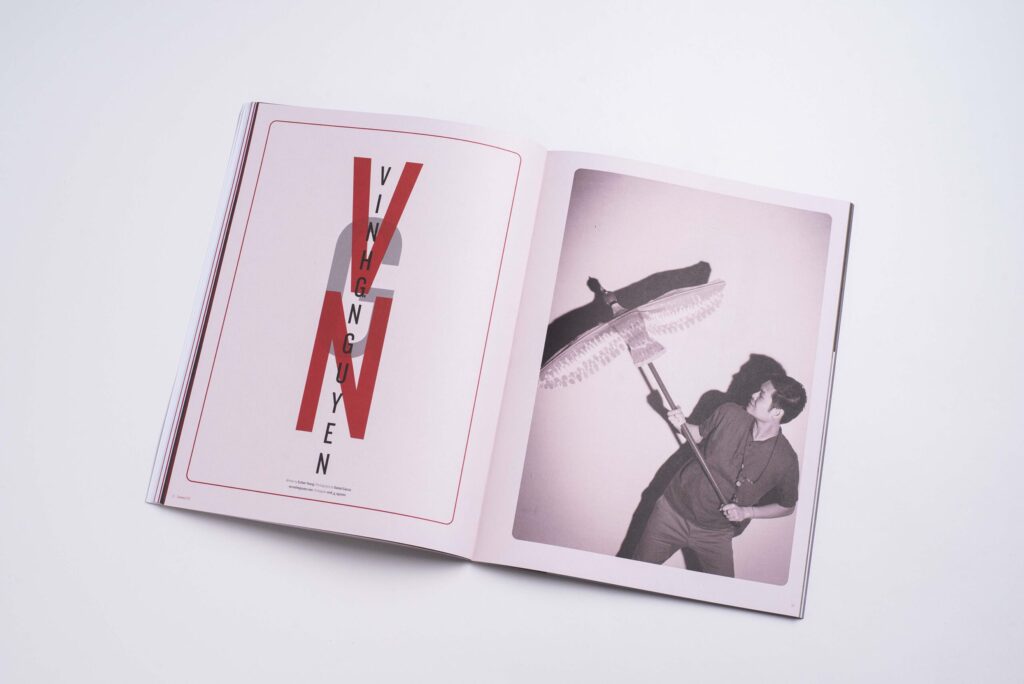
Growing up in Saigon—now Ho Chi Minh City—Vinh G. Nguyen was the kid who preferred to be alone. He cherished his time painting with watercolors and oils and sketching fashion ideas. When he was 10, he immigrated with his parents to the United States. Despite the challenge of learning English late in elementary school, his daily routines were sweetened by afternoons at the library, where he gathered books on arts and crafts. In the evenings, while his cousins played video games, Vinh drew deeper into his inner world, making sense of it with just a pencil and paper. The desire to develop his artistry was instinctual.
In high school, he participated in choir and drama for the first time. That’s where he found friends—some of whom he stays in touch with to this day. Yet while at San José State University, Vinh found he was a late bloomer in the world of theater.
He remembered talking to a friend and sharing, “I always felt like I’m one step behind all of my peers in the audition room who had been training since they were like two.” But Vinh’s friend pointed out that his passion to catch up was what drove Vinh’s career forward.
And his friend’s words were true. Vinh took enough classes in the musical theater department that he was only a few upper-division courses from majoring in it. So, along with his major in hospitality, Vinh graduated with a BA in musical theater.
“I feel like my cultural identity is now my superpower.” -Vinh G. Nguyen
For a few years afterward, Vinh worked as a freelance actor and an elementary school drama teacher. His discovery of theater informed his approach. Growing up in an Asian household, making a living as an artist had never been in the picture. But his goal was clear. He stated: “Number one, do more of this art stuff, and then two, share it with the world.”
He continued to share that he wanted to do whatever he could “to spread that joy with the next generation.”
He wanted to take his passion further. Showing his family that he could make a living while also making a big impact, he pursued an MFA in musical theater at San Diego State University and then taught collegiate-level drama. When the pandemic pushed everyone online, his unique pathway became vital.
In 2020, as the world contended with injustice and change, the theater community pushed for better practices as well. “The We See You White American Theater movement came out of the Black Lives Matter [movement],” Vinh explained. “We called out all the white theater companies that [were] not doing the work.”
To support the changes for anti-racist theater systems, Vinh became an equality, diversity, and inclusion (EDI) consultant and helped local theaters rebuild from the ground up. These initiatives informed how companies should treat actors, pay their staff, and facilitate conflicts.
Vinh also worked as a casting director. “That’s where I felt I was able to go in and make a direct impact in my community,” he emphasized. He sat on plenty of boards and EDI committees, but casting allowed him to influence the process directly. “Instead of bringing in what the director [wanted], I would also present three other actors whom they wouldn’t even think of,” he explained. “You challenge the director with, ‘Well, they did great. Why didn’t you pick them?’ ” He set specific goals for each show, aiming to have a certain percentage of the cast be from marginalized communities.
As live theater returned, Vinh continued his EDI consulting work, which was in high demand. But the downside was being pigeonholed and losing out on work as an artist. So Vinh adjusted his strategy. He marketed himself as a director with EDI experience. “If you want me for my EDI [experience], then just hire me as a director and everything will come with it,” he said.
Leading with that intention, Vinh began to direct for local theaters. Directing was as fulfilling as he had hoped, because it was relational and relied on a clear vision. He shared, “All the theaters that I have directed for are theaters that I have acted for. And it has to be a show that I have a very strong artistic vision for, where I come in and say, ‘This is why I want to do the show now and at your theater.’ ”
In 2023, Vinh became the managing director of Chopsticks Alley Art, which is a southeast Asian arts organization that commissioned him for the play Tales of Ancient Vietnam. This play examines the ideal of cultural authenticity through the lens of a second-generation Vietnamese American and debuted as a staged reading in 2024.
This was not just about his success as a playwright, but also as an artist taking power in his identity. As a young actor, he used to intentionally stray away from “cultural” work such as this play. “I wanted to prove that I could do the ‘normal work,’ ” he remembered. “I had to fight to be in the same room as five other white actors to read for a role that I didn’t even care much for.” The stories he did care about were being told by the wrong people in the American theater landscape, well-intentioned as they may have been.
At this point in his career and life, Vinh has the triplethreat ability to tell these stories himself through his vision as the director or through his own creation as a playwright. In his own words: “I feel like my cultural identity is now my superpower.”
Born in 1977, Binh Danh was among the many refugees who fled Vietnam after the fall of Saigon and the rise of communism. With the hope of escaping the new regime, his family made the dangerous journey by boat, crossing treacherous seas before being rescued by Malaysian authorities. They were taken to the Pulau Bidong Refugee Camp in Malaysia, where they spent nine long months waiting for asylum. Binh’s father, skilled in television repair, leveraged his technical background to secure asylum for his family in the United States. In 1979, they resettled in San Jose, where they began a new chapter in their lives.
Growing up around TVs always on, Binh was fascinated by the screen’s moving images. He would also lose himself in calendars, catalogs, and magazines, playing with these images to transcend time and space. For most people of his generation in Vietnam, photography was not a big part of life; photos were taken only on special occasions.
It wasn’t until the fifth grade that Binh found his interest in photography. He brought a camera on a school camping trip, and from then on, he knew how to create strong images that narrated a story and touched on a viewer’s emotions. For Binh, photographs were different—a powerful fabrication of memories, pieces of time hand-picked and preserved. This early passion led him to pursue art during high school and later receive his BFA in photography at San José State University. “I didn’t learn about traditional photography and the big names until I went to college, but I knew when I was looking at these pictures of landscapes, I was just falling in love with them,” recalled Binh.
Early into his studies, Binh knew commercial and fashion photography was not the path for him; instead, he believed himself to be an artist who uses photography as a means to find deeper themes and ideas. One of Binh’s first experimentations using photography to explore deeper themes and ideas began with his BFA thesis show, inspired by the time he spent in his mother’s garden. It was there that he perfected his famous chlorophyll prints, which is a process of printing images directly onto plant leaves. These prints bring back memories of Binh’s travels to Vietnam, where, even decades later, the scars of war were still etched into its landscape. “Photography and art keep me going and even if the recognitions that I have received weren’t there, I would still do what I do. I am fortunate to have a job as an artist that allows me to teach making art, while having an income through it, allowing my studio practice on the side too,” Binh said.
Binh attended Stanford University for his MFA, continuing to perfect his craft and artistic voice. From 2004 to 2012, Binh taught as an adjunct professor at a few different community colleges while continuing to exhibit his photographs. In 2012, Binh’s hard work put into teaching and art began to pay off when he landed his first tenure-track position at the University of Arizona. In 2018, he returned to San José State University, where he continues to teach and create.
As a professor, Binh encourages his students to embrace the wide and multifarious possibilities of photography, including the use of artificial intelligence as a creative tool. Rather than viewing AI as some sort of threat to traditional photography, he sees it instead as a new extension of the medium that offers new ways to enhance and manipulate images. Binh doesn’t put tight constraints on his students—instead he lets them play with AI, believing only freedom can give the fertile ground needed for their artistic development and experimentation.
Binh’s expectations for his students are to not be afraid of, or discouraged by, the uncertainty of an art degree, but to see it instead as a part of the beauty of following a creative path. In the end he is trying to instill in them a commitment to creativity for the sake of using it to give back meaningfully to their own communities. Binh wants his students to have pride in their work, give the best they can, and graduate with the confidence in knowing they have grown as artists, ready to take on the world with a truly unique creative vision.
Binh’s relationship with Vietnam plays a big role in his life and artistic view. It wasn’t until the 2000s that he returned to his country of birth, and the experience was completely incomparable to those who had grown up in it. As a Vietnamese American, the country was both proximal and distal to him. “I didn’t think that I was coming home. I am Vietnamese, but I didn’t really connect to the land the way my parents did. Of course, I am connected through being a Vietnamese American and learning about the history of the war from which the influence is seen in my photography,” Binh said.
Binh’s notion of Vietnam was one of war—an idea that followed him all his life and into his career. While others drew upon personal recollections of the country, his knowledge of Vietnam emanated from the collective memory of conflict, loss, and survival through stories provided in photographs and history books. When visiting places such as the War Remnants Museum, where the history of the war is told through a government lens, Binh was struck by narratives of survival and rebirth. These stories deeply changed his art, building layers on top of his identity as both an American and Vietnamese artist.
“I feel like my work is about history, memories, and trauma. When you think of history you think of something in the past, but I think of it as something in the future.”
Simultaneously, it is not easy to address these themes of war, death, and trauma in his work, but Binh thinks that discomfort with history is necessary. For Binh, history is not simply confined to the past but is a living agent shaping the present and future. The combination of nature and history within his work reflects Binh’s ongoing exploration of the themes of memory, trauma, and the passage of time. “I feel like my work is about history, memories, and trauma. When you think of history you think of something in the past, but I think of it as something in the future,” Binh said.
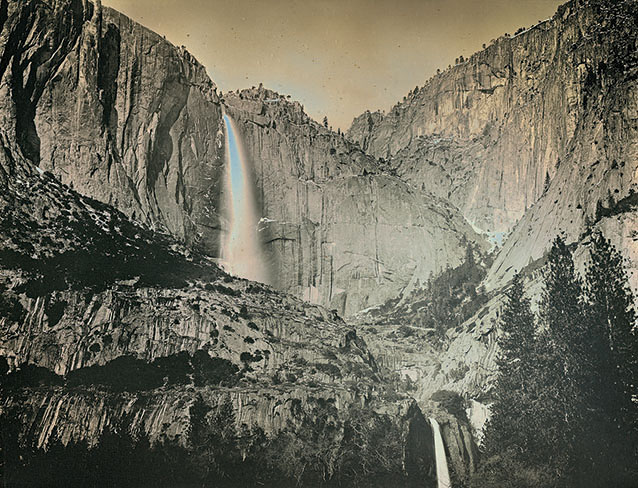
The artistic practices of Binh vary from digital photography using film, to the daguerreotype. The daguerreotype is a 19th-century photographic process that prints images on silver plates, offering an extremely tactile and reflective quality. With his mix of historical techniques through modern technology, Binh offers work that feels timeless, in which past and present blend into one frame. This innovative approach he extends to his students. Blending historical techniques with the most modern technologies, he allows his students to practice photography without restrictions in its ever-changing landscape.
Photography for Binh is also a journey of always discovering and reflecting. Fresh from a trip to the Grand Canyon and about to embark on another one to Alabama, Binh has loads of work to process and research to perform. In Binh’s view, his legacy revolves around his photographs of national parks, which showcase the beauty of nature they preserve. From the scars of war and the beauty of national parks, to the delicate imprint of nature itself, his work speaks to the deep connections between memory, history, and the present. For Binh, photography is more than a profession; it’s a lifelong journey of discovery, storytelling, and reflection.