We have to be able to do something musically that speaks to people that don’t speak the same language. –Jason Eckl
Every year, the San Jose Jazz Summer Fest pushes musical boundaries by booking diverse acts that break the mold of what listeners know as jazz music. The 2016 lineup is no exception. Soul, blues, and hip-hop artists add variety to a lengthy list of heavyweight jazz performers and rising stars. In spite of the seemingly vast genre gap between some of the artists, the San Francisco Bay Area’s own Dirty Cello is proof that all performers at the Summer Fest share a common respect for the jazz tradition.
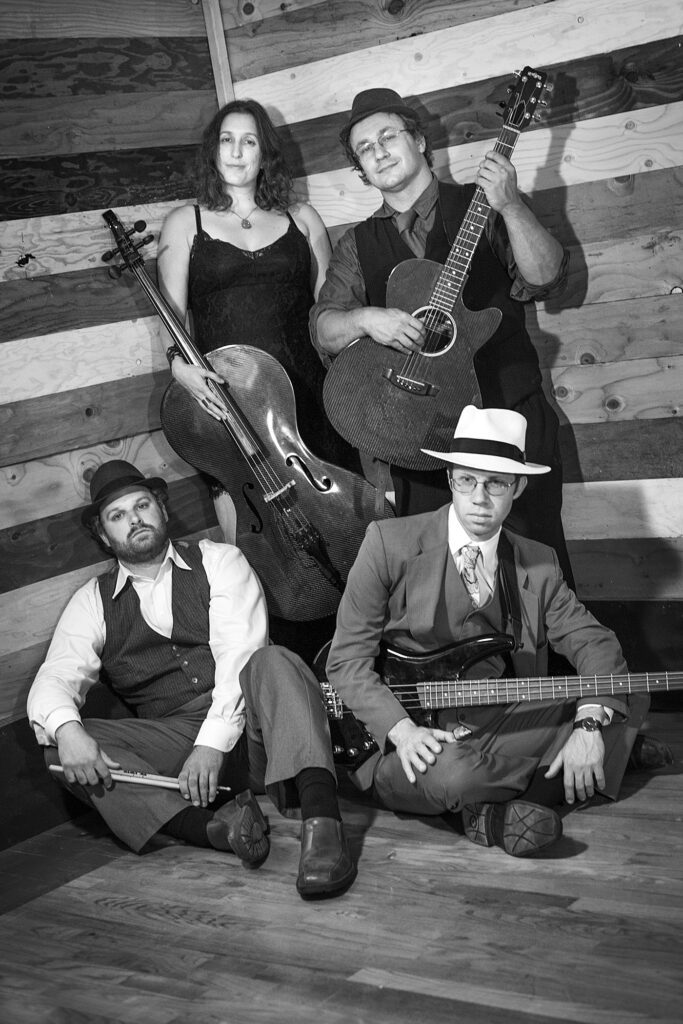
Founding members Rebecca Roudman, cello, and Jason Eckl, guitar, have both established themselves as accomplished classical musicians in the Bay Area, playing and writing for the Santa Rosa and Oakland symphonies. As proficient as they are with classical music, the couple’s true passion lies in American folk and blues traditions. In 2011, they decided to channel their creative unrest into an experimental collaboration.
“We played around with all sorts of ideas,” Eckl recalls, “but now we’ve happened upon this whole mix of blues, jazz, a little bit of bluegrass—all featuring lead cello. Hence the name Dirty Cello.”
In addition to cello and guitar, Dirty Cello features Colin Williams on bass and Anthony Petrocchi on drums. The band, however, isn’t always limited to the quartet. Following the jazz and blues tradition, the couple believes in handpicking local players to supplement the quartet’s live shows. Whether these musical mercenaries consist of a few horn players or an entire orchestra, the couple makes sure they find people who “aren’t only great players, but nice people.”
Five years after Dirty Cello’s inception, the band has traveled as far as Europe and China. After experiencing a language barrier between the audience and the stage in other countries, Eckl learned, “We have to be able to do something musically that speaks to people that don’t speak the same language.” The band members’ expressive body language and the universality of the blues help them connect with both international and American audiences.
As Bay Area natives, the band has already graced multiple San Jose music hubs, including Café Stritch and the SoFA Festival. “We feel like we owe a lot to the Bay Area,” Eckl reflects. “There are still new horizons and new things to do.”
One way Dirty Cello gives back to their audience is their sensitive approach to their set list. At the drop of a dime, they can change their set based on audience response. “It’s not about us; it’s about sharing [the experience] with the audience,” says Roudman, who recognizes the need to adapt on the fly. This concept of a “flexible set list” will be put to the test during their August 14 performance at the Jade Leaf Lounge.
Their set promises to embrace the familiar sounds of blues and folk with an unfamiliar instrumentation. Listeners will leave saying, “I didn’t know a cello could do that!”
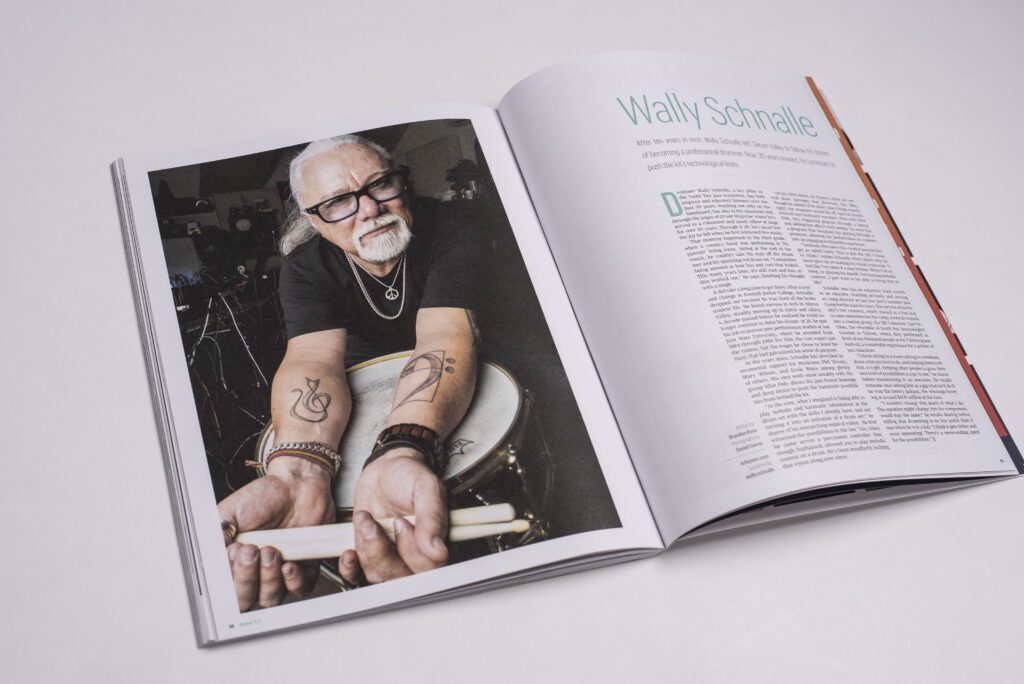
Drummer Wally Schnalle, a key pillar in the South Bay jazz ecosystem, has both inspired and educated listeners over the past 30 years, teaching not only on the bandstand but in the classroom and through the pages of Drum! Magazine, where he’s served as a columnist and music editor at large for over 20 years. Through it all, he’s never lost the joy he felt when he first witnessed live music.
That moment happened in the third grade, when a country band was performing in his parents’ living room. Sitting at the end of the couch, he couldn’t take his eyes off the drummer and his sparkling red drum set. “I remember being amazed at how fun and cool that looked. This many years later, it’s still cool and fun, so that worked out,” he says, finishing his thought with a laugh.
However, it did take a long time to get there. After a year and change at Foothill Junior College, Schnalle dropped out because he was tired of the broke student life. He found success in tech in Silicon Valley, steadily moving up in status and salary. A decade passed before he realized he could no longer continue to defer his dream—at 28, he quit his job to pursue jazz performance studies at San Jose State University, where he attended from 1984 through 1989. For him, the cost wasn’t just the tuition, but the wages he chose to leave behind, galvanizing his sense of purpose.
In the years since, Schnalle has provided instrumental support for Phil Woods, Mary Wilson, and Ernie Watts, among plenty of others. His own work—most notably with the group Idiot Fish—shows his jazz fusion leanings and deep desire to push the harmonic possibilities from behind the kit.
“At the core, what I imagined is being able to play melodic and harmonic information at the drum set with the skills I already have, and not turning it into an imitation of a drum set,” he shares of his overarching musical vision. He first witnessed the possibilities in the late ’70s, when he came across a percussion controller that, though haphazard, allowed you to play melodic content on a drum. He’s been steadfastly inching that vision along ever since.
On his 1994 debut, (it rhymes), there are several short passages that showcase this idea, though he admits if he didn’t play things exactly right, the sequence would be off. Special drums evolved into keyboard vocoders. Now with Idiot Fish, he’s triggering plug-ins through a laptop and adding live effects with pedals. He even has a program that visualizes his playing through a projector, allowing the performance to coalesce into an engaging multimedia experience.
“Anybody who takes this creative journey has got an uphill battle. This is just the hill I chose to climb,” replies Schnalle when asked why he never gave up on making his vision come true. “I feel like I’ve taken it a step further. When I’m soloing, or playing by myself, I’m hearing melodic content…I just want to be able to bring that to life.”
“I think sitting in a room talking to somebody about what you love to do, and helping them to do that, is a gift. Helping other people to grow their own level of possibilities is a joy to me.”
Schnalle also has an extensive track record as an educator, teaching privately and serving as camp director at San Jose Jazz’s Summer Jazz Camp for the past six years. The success of his faculty’s live concerts, which started as a fun way to raise awareness for the camp, has evolved recently into a touring group, the SJZ Collective. Last October, the ensemble of South Bay heavyweights traveled to Taiwan, where they performed in front of ten thousand people at the Taichung Jazz Festival, a remarkable experience for a quintet of jazz educators.
“I think sitting in a room talking to somebody about what you love to do, and helping them to do that, is a gift. Helping other people to grow their own level of possibilities is a joy to me,” he shares before transitioning to an anecdote. He recalls someone once asking him at a gig what he’d do if he won the lottery jackpot, the winnings hovering at around $400 million at the time.
“I wouldn’t change that much of what I do. The equation might change, but the components would stay the same,” he recalls sharing before adding that drumming is no less joyful than it was when he was a kid. “I think it gets richer and more interesting. There’s a never-ending quest for the possibilities.”