Masks of Truth: Tachiya Bryant’s Journey Toward Bold, Unapologetic Power

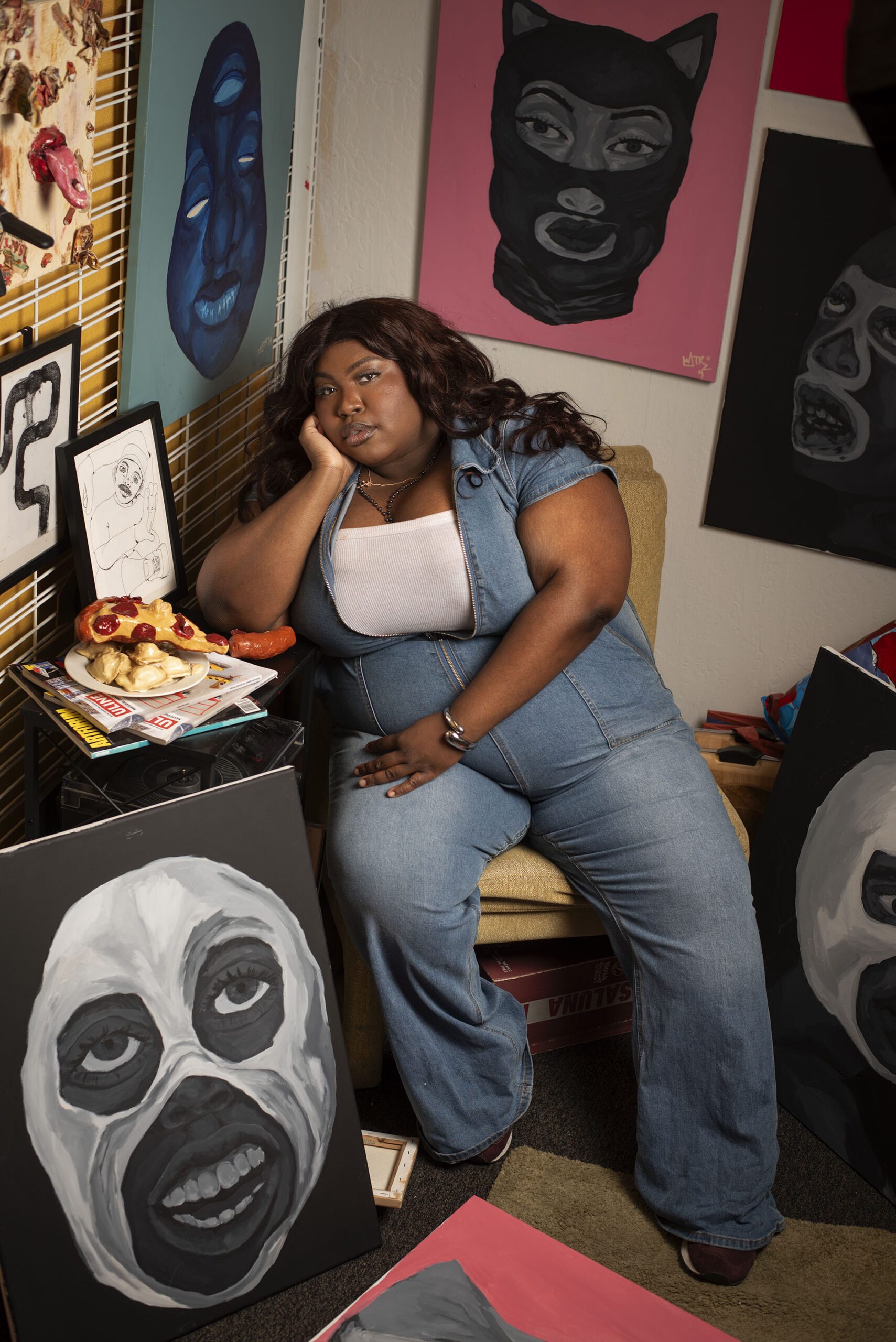
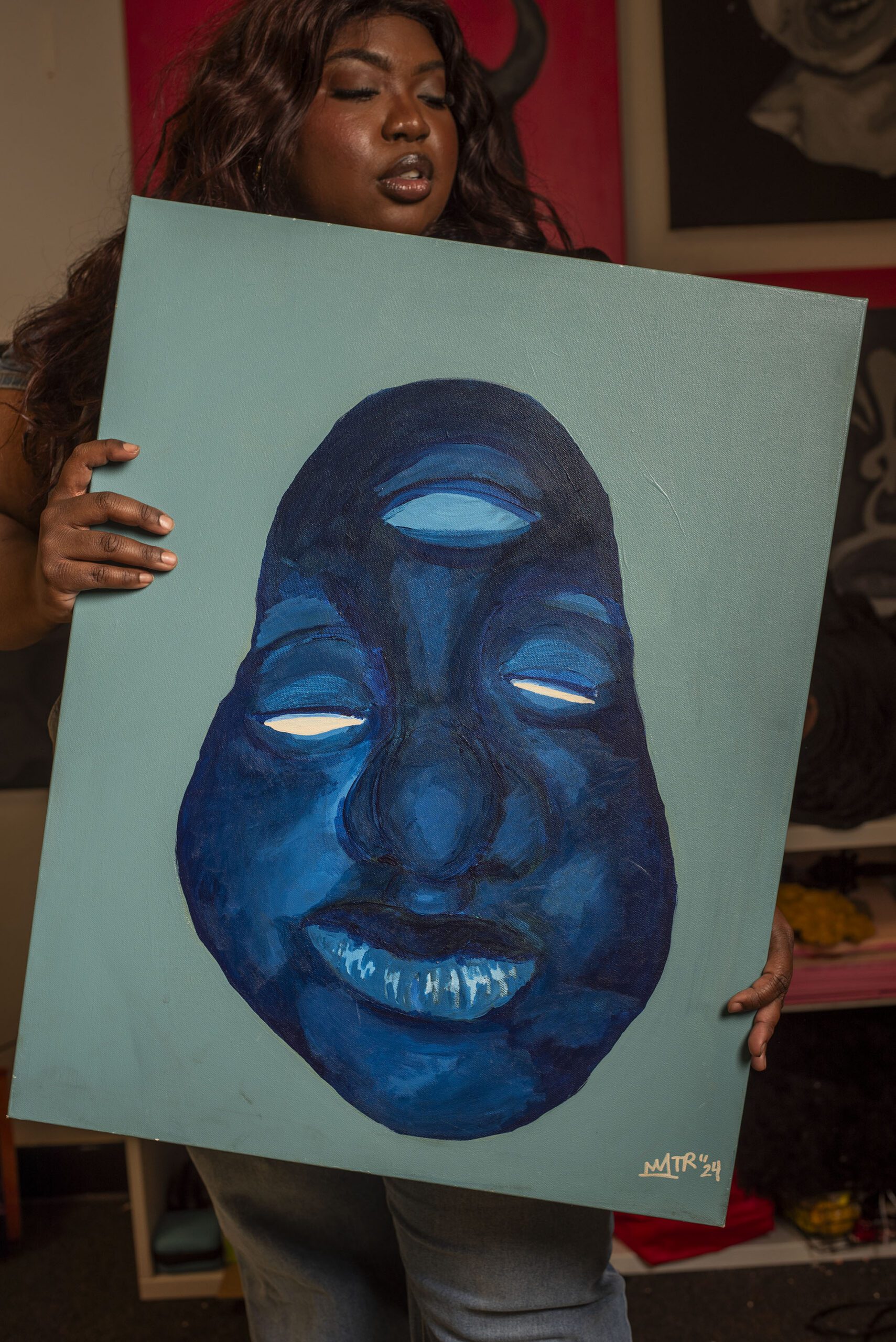
Amongst the suave R&B beats echoing throughout her San Jose studio, Tachiya Bryant almost cries. She had been living with her acrylic portraits and sculptural cotton masks for months—stacked on tables, lining walls, works-in-progress that carried both her frustration and her hope. But when photographer Alex Knowbody captured them in high-resolution, she suddenly saw them differently: luminous, alive, commanding. “I’ve just been living with this work…not really thinking anything of it,” she recalls. “But just seeing it in a different light, I was like, wow, this is me.”
For Bryant, a self-taught multimedia creative, that moment didn’t just attest her talent. It was an affirmation, stepping into her power after years of shrinking herself in spaces where she didn’t always feel seen. Born and raised in San Jose, she describes her city as a place where Black representation was scarce. Her mother, determined to protect that identity, filled their home with Black art, music, and dolls. Still, outside the house, Bryant often felt the burden of trying to fit in. “I don’t think I had a clear understanding of who I was,” she says. “I was so busy trying to survive.”
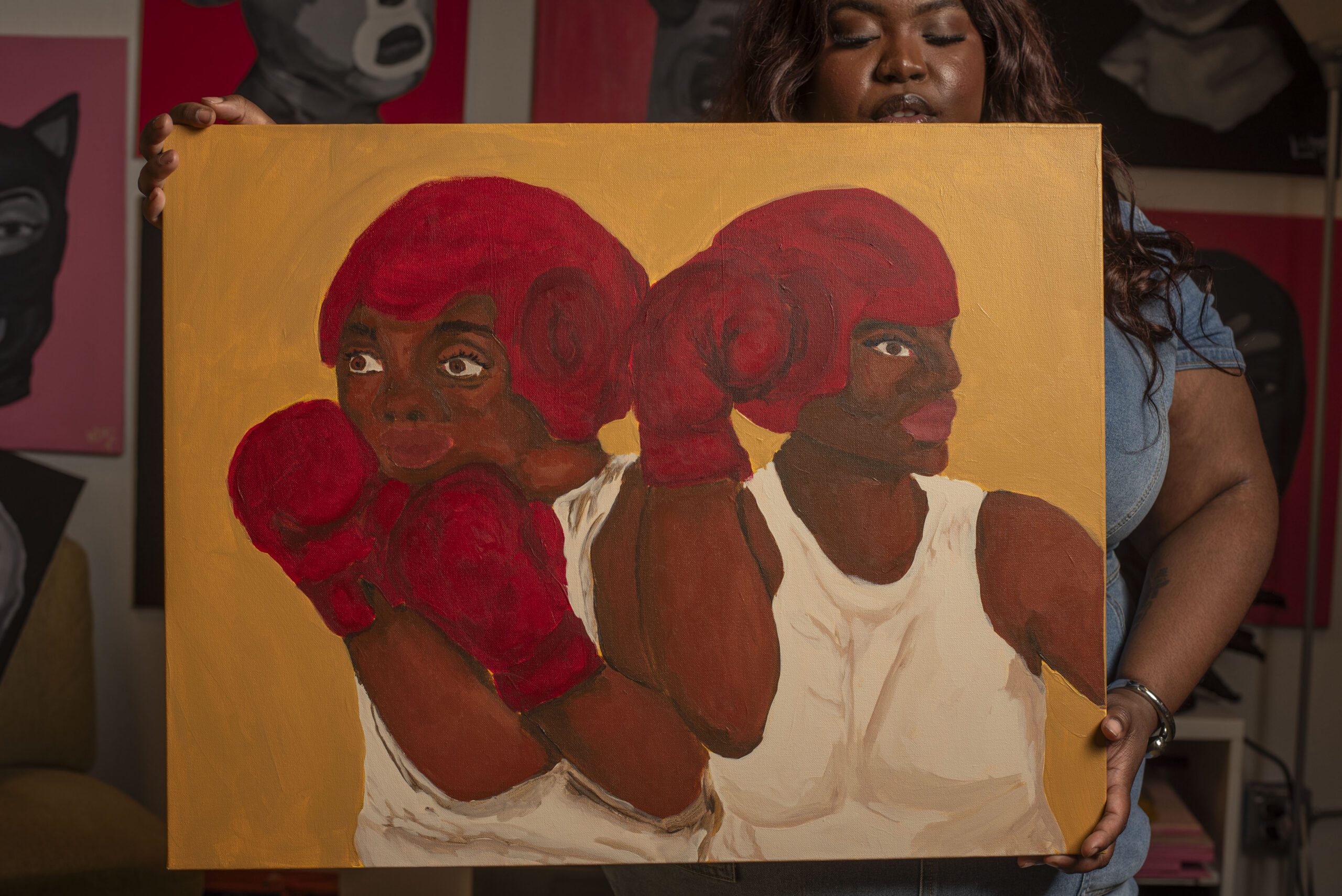
Only after high school, distanced from those pressures, did she begin to fully embrace her Blackness—loudly, proudly, unapologetically. That shift marked the beginning of her intentional art practice, one that now spans collage, painting, illustration, and sculpture. Several years later, her work explores more than expression—it explores truth-telling, making space for the emotions and stories often ignored or misrepresented.
“More than ever, I just want people to feel seen. Being real is not always pretty. Sometimes it offends people. Sometimes it hurts. But it’s necessary.”
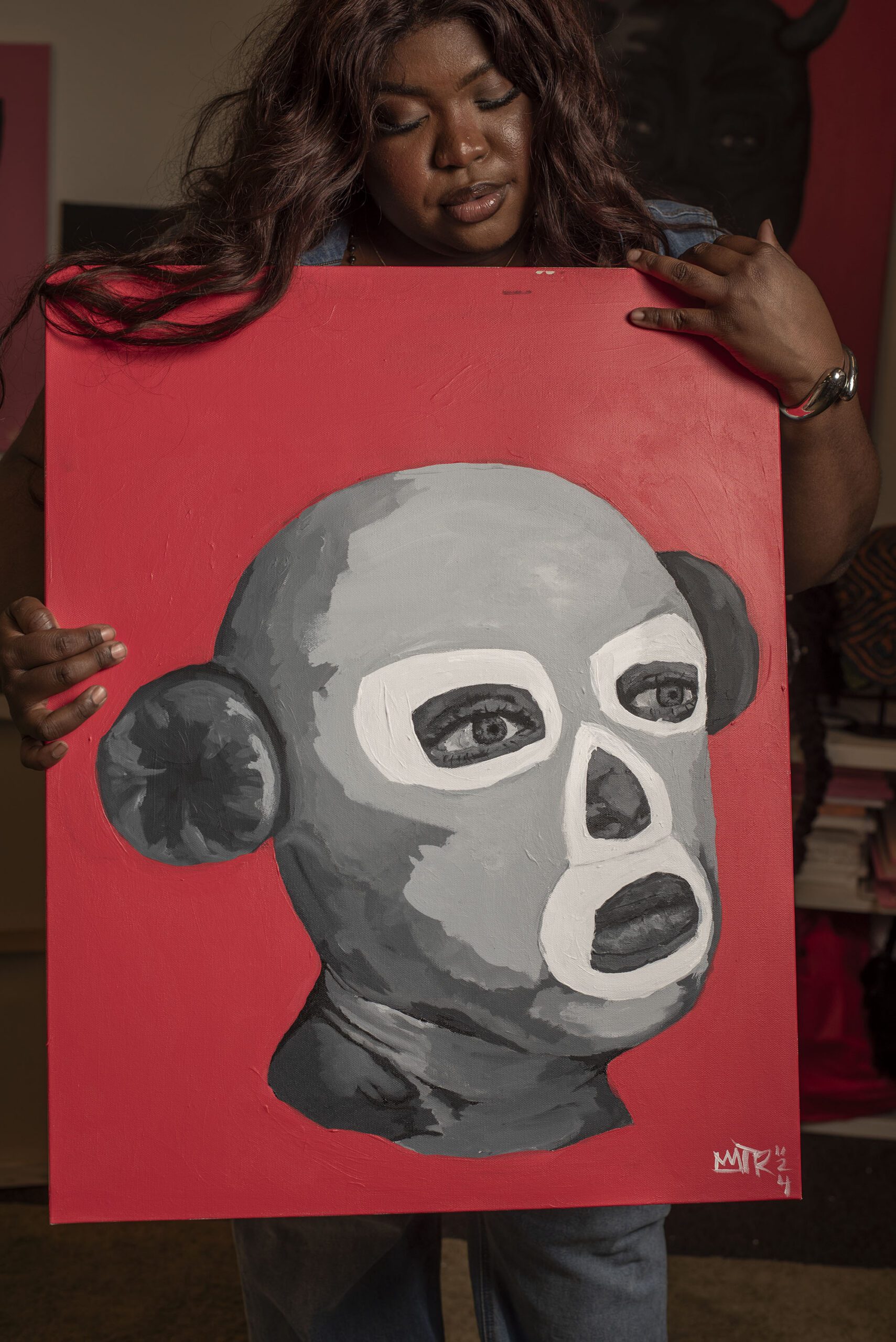
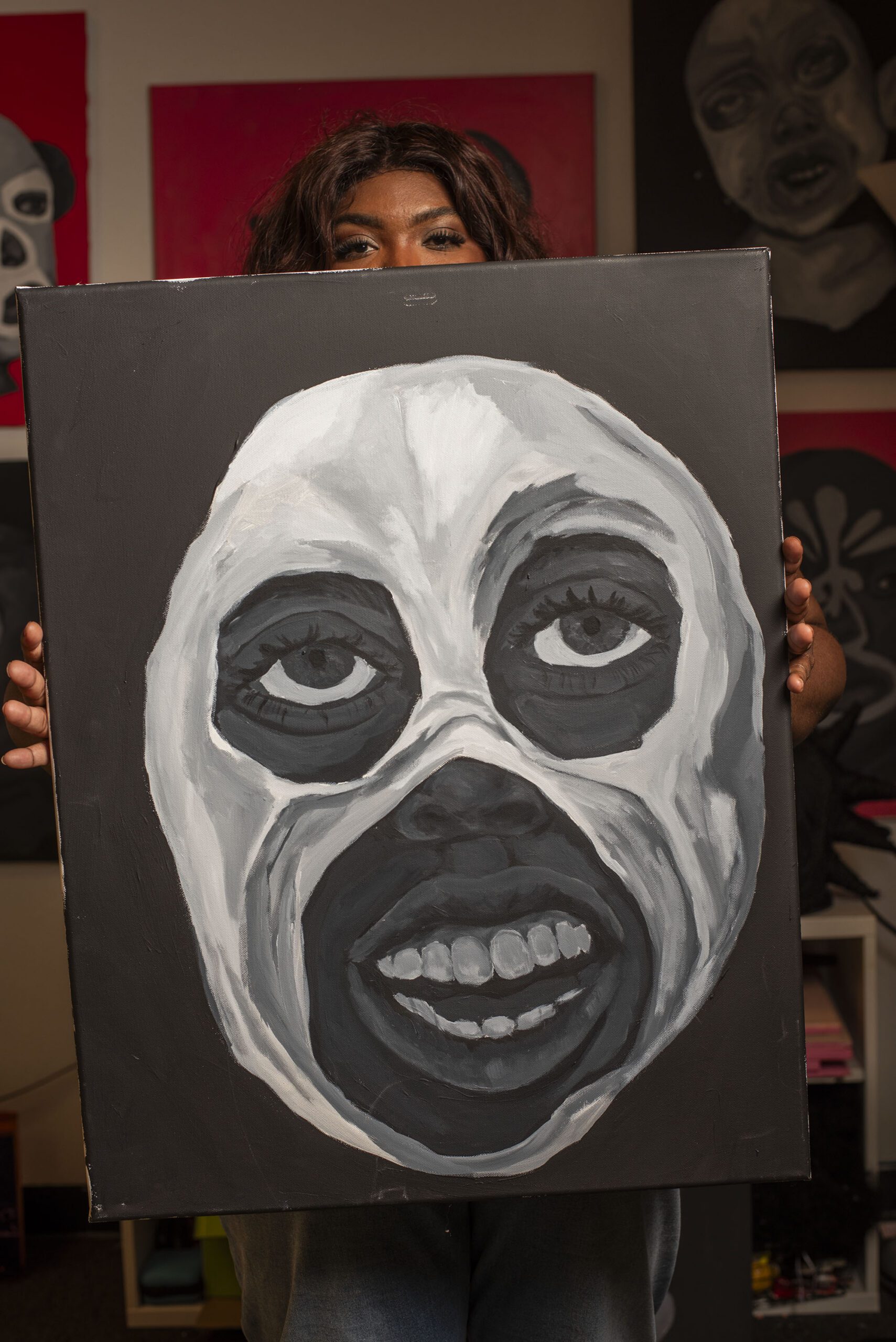
Bryant’s latest series, We Wear the Mask, represents her boldest turn yet. The project centers on Black women and the complicated terrain of anger, healing, and emotional expression. For Bryant, the project is both personal and political, a challenge to the stereotypes that have long silenced Black women. “I wanted to imagine a world where embodying the feeling of anger didn’t mean having it weaponized against you,” she describes. “What does it look like to speak up for yourself without worrying how society will perceive you?”
The masks and paintings she creates are vessels for emotions often denied or diminished. Many of the women in her work are faceless, intentionally so. They stand in for the countless women who, she argues, have been left to heal themselves, denied care by the very communities that depend on them. “I think Black women are often left to fend for themselves,” Bryant explains. “It’s painful to have to do all of those things by yourself. You just want to exist, to feel without judgment.”
Her journey to this point has not been straightforward. In her earlier years, she resisted the pressure to be labeled a “Black artist,” opting instead to create strange, experimental work—characters and sculptures that couldn’t be easily categorized. It was her way of pushing back against a narrow, palatable box the art world often reserves for Black creators. “I didn’t like being told what to be,” she declares. But with We Wear the Mask, Bryant has arrived at a new clarity. “This project feels like I actually have something to say,” she reflects. “And not only say, but say it in a way that reaches people authentically.”
What emerges from this body of work is authenticity. Bryant’s masks are mirrors, reflecting uncomfortable truths to the viewer. They are not meant to soothe. They intentionally insist. “More than ever, I just want people to feel seen,” she explains. “Being real is not always pretty. Sometimes it offends people. Sometimes it hurts. But it’s necessary.”
Stepping into her power has also meant learning how to sustain it. Bryant admits she has a habit of throwing herself entirely into projects, only to realize later that it isn’t sustainable. These days, she is practicing consistency over intensity, guided by wisdom passed down from her matriarch: “The only way to eat an elephant is one bite at a time.” For Bryant, it’s a reminder to stay present, to focus on what’s in front of her rather than getting lost in the next milestone. “The things I wanted back then, I have now,” she says. “I have my own studio space. I’m doing the kind of work I never imagined I’d be capable of. That in itself is a blessing.”
Affirmations also play a vital role in her practice. For years, she studied manifestation without fully embracing it. Now, repetition and faith fuel her progress. That mindset has carried her to achievements she once thought impossible—like working with the San Jose Sharks twice and seeing her artwork on a billboard in her hometown. “Once you get that confidence, like okay, now I know it’s going to happen—then you start asking yourself, ‘What do I really want now?’ ”
As Bryant continues to build her career, she remains committed to making art that tells the truth—even when it is uncomfortable. Her advice to young Black creatives reflects the same conviction: “It’s important to figure out what you have to say. Pull from your experiences before you speak for the whole community. Black joy is also resistance. There are so many more layers to what it means to be Black.”
Her masks and collages, her affirmations and rituals, all speak to a deeper philosophy, that visibility is a responsibility and authenticity is a form of power. “I think I’ve been used to shrinking myself,” Bryant reveals. “But at this point, I can’t shrink even if I want to. I have to show up, because there are people who could benefit from my story.”
In her work, and in her life, Bryant is doing just that—showing up, boldly, unapologetically, and in full view.
tachiyabryant.com
Instagram: tachiyaroolz