The Father of Silicon Valley’s Modern Transit Service
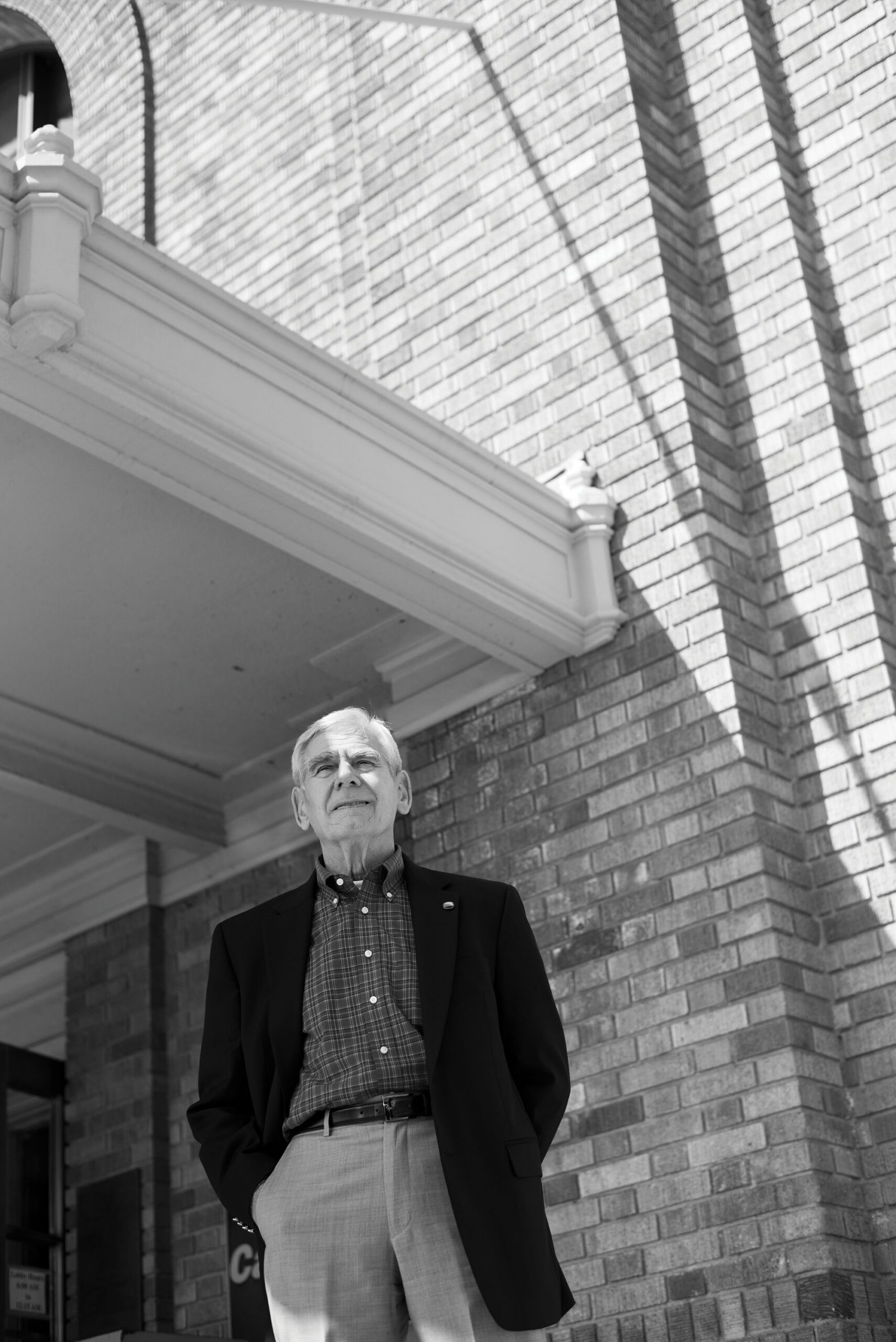
No one has more experience than Rod Diridon Sr. with moving car-centric Silicon Valley to more cosmopolitan transportation options, but his accomplishments aren’t limited to improving public surface transit. He’s an Eagle Scout that served two tours of combat duty in Vietnam in the Navy. When he served on Santa Clara County’s Board of Supervisors, from 1974 to 1995, he modernized the county’s public transportation system and grew its parks from 800 acres to 43,000 acres. He cofounded the Mineta Transportation Institute, an internationally renowned research organization with a transportation workforce development program at San Jose State University. He’s the only person to have chaired all three of the San Francisco Bay Area’s regional planning agencies: the Association of Bay Area Governments, the Bay Area Air Quality Management District, and the Metropolitan Transportation Commission. He’s chaired over 100 nonprofit governing boards. He’s recruited hundreds to join the Rotary Club of San Jose and support its philanthropic projects. He’s happily married, and his grandkids and his friends’ kids call him “Poppa.”
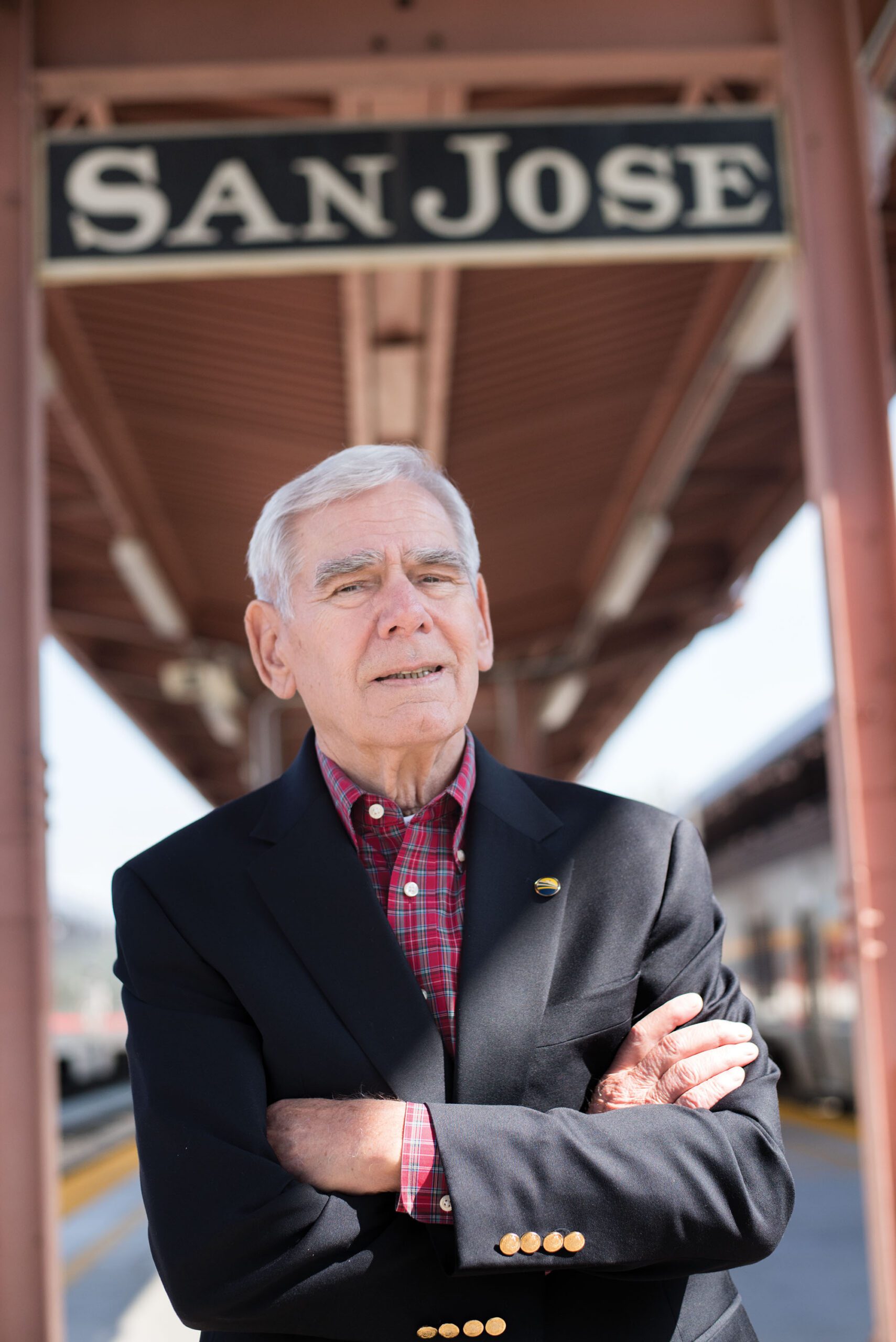
His achievements are so great that San Jose’s main train station is named after him. The San Jose Diridon Station is served by Caltrain, Amtrak’s Altamont Corridor Express, Amtrak’s Capitol Corridor route, and the Santa Clara Valley Transportation Authority’s (VTA) light rail. It’s also the hub for VTA busses and Amtrak’s Highway 17 Express bus. Without Diridon’s work attracting these services, this station would likely have closed.
He came to San Jose State College in 1957 from Dunsmuir, California, which was a Southern Pacific Railroad hub. Diridon’s dad was a railroad brakeman. His mom was a school teacher and concert pianist. In those days, Diridon says, Caltrain ran poorly and lost money, public buses were operated by private companies that provided unreliable service, and there were no routes that enabled travel throughout the county.
If we’re going to survive as an economy—let alone as an environment—we have to finish the mass transportation system.” – Rod Diridon Sr.
Diridon kicked off public transit’s modernization when he championed a bill making the county a transit agency and providing permanent sales tax dollars for county public transportation. This
enabled the county to start what is today’s VTA. The success of this project marked him as a smart leader who could drive complicated public works projects to completion.
Diridon can solve difficult problems because he’s a critical thinker. “When I’ve reasoned through the variables of a decision,” says Diridon, “my head just automatically comes out with the best course; that’s the skill of a dyslexic.” Diridon claims childhood failures drew him to a life of public service. Dyslexia handicapped his early years until an elementary school teacher noticed Diridon’s intelligence and taught him how to read. “I grew up thinking that I was not very smart,” says Diridon, “so, whenever I’ve seen a challenge, I’ve had this compulsion to do well at it.”
Another best course and challenge was the county’s first master transportation plan. It was approved by voters in 1976, along with a half-cent sales tax to fund it. Under Diridon’s direction, it has birthed 42.2 miles of VTA light rail service with 62 stations. It has two major routes and connects San Jose to Mountain View. This plan, says Diridon, calls for about 150 miles of light rail and a 5,000-bus feeder and distribution system. It will enable commuters to travel from home to work using BART and the California High-Speed Rail. Diridon was instrumental in getting the High-Speed Rail routed through San Jose when he chaired the California High-Speed Rail Authority’s first governing board. He’s passionate about the Bay Area’s need for an integrated public transit system like Japan’s and Europe’s.
Diridon says the valley’s congested highways will worsen and eventually won’t be viable for commuters. “If we’re going to survive as an economy—let alone as an environment—we have to finish the mass transportation system,” Diridon says, “and cluster high-density housing near transit stations, like they do in other parts of the world.” The San Jose Diridon station is slated for BART service by 2025 and high-speed rail service by 2026. Looking forward, Diridon says, “We’re going to be looking a little more like Paris, France, and a little less like LA.”