“If someone gives me ‘no’ as an answer, I find a different way.” -Josie Lepe
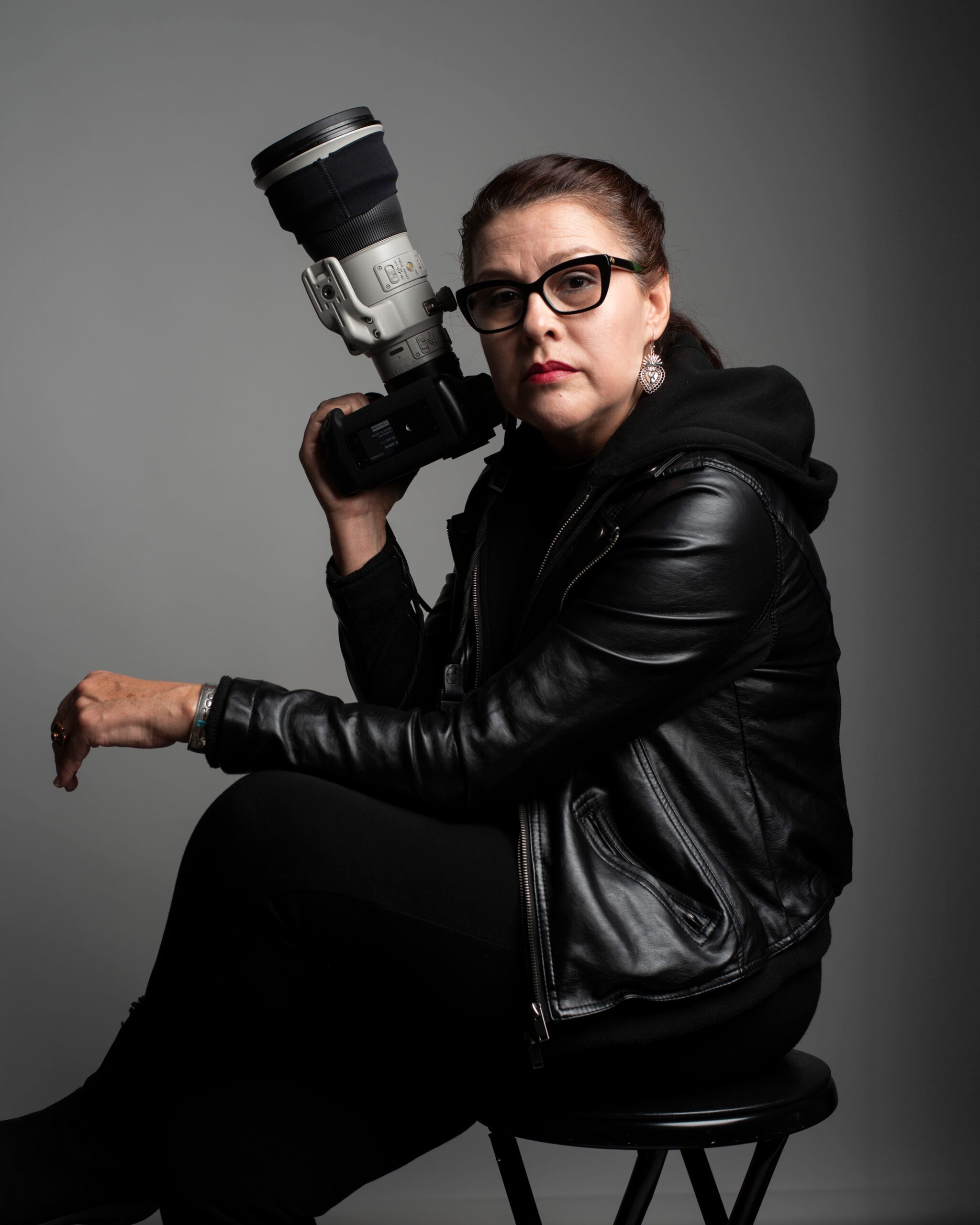
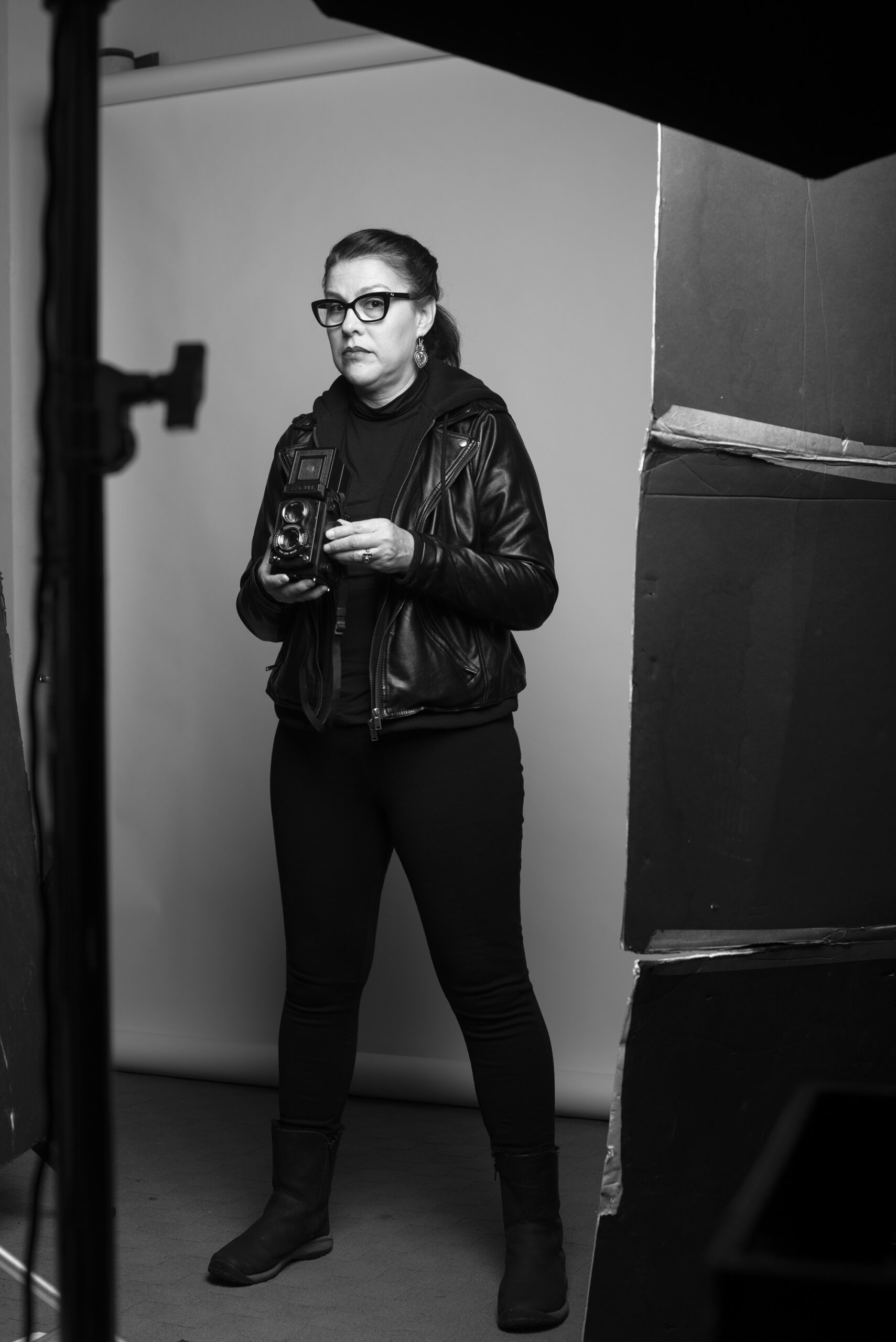
Whether it’s capturing the drama of a touchdown at a football game or the intimacy of a family at their dinner table, Josie Lepe is on a mission to tell stories through photos. An award-winning independent photojournalist, Lepe has worked in the newspaper industry for the past 22 years, with experience ranging from taking digital photos with the latest high-tech cameras to developing traditional film in labs and darkrooms.
While Lepe has deep roots in the Bay Area, her journey was not easy. She crossed the border from Mexico as an undocumented immigrant twice: first as an infant and then later at nine years old. The second time, she was with her cousin and sister and was later reunited with her mother in San Jose. Although she’s moved a few times, Lepe has always found her way back to San Jose. “I identify [San Jose] as my home, even though I’m from somewhere else. I feel like I’m a native of San Jose. It’s kind of like it’s my city. I’m proud of it,” she said. Initially, as an English learner with dyslexia, she struggled in school. Yet that’s where her career path started. “I was able to take an elective for photography, and there I found my passion through photography and the dark room,” said Lepe. “It opened my eyes to a different way to communicate, and it was also my escape.” In those early days, she went to Coyote Creek in San Jose to practice taking photos. She shared, “I would create images that were beautiful in black and white, and even though we were like, ‘It’s the creek, it’s the ghetto,’ it was a way to escape to this fantasy with creating images.”
While Lepe was told she could never go to college due to her dyslexia, she ended up graduating from San Jose State University with a BFA in photography. “I didn’t want to be a waitress, and I knew education was a path to change that,” said Lepe. “Being an immigrant, being poor, I knew that education was going to open the doors to something new.”
More recently, Lepe went back to school for her MFA and graduated in December 2022. “No matter what, I always try to keep moving. Even if there was something where they said ‘No, the door is shut,’ then I’ll try again. If someone gives me ‘no’ as an answer, I find a different way,” said Lepe.
Over the years, Lepe worked odd jobs to help contribute to the family income. At one point, she worked full-time at The Mercury News. Now she splits her time between freelance work— often for The Associated Press and covering sports pieces—and her own projects. She had work featured at the de Young Museum’s 2023 de Young Open and at the San Jose gallery Chopsticks Alley Art (through January 2024).
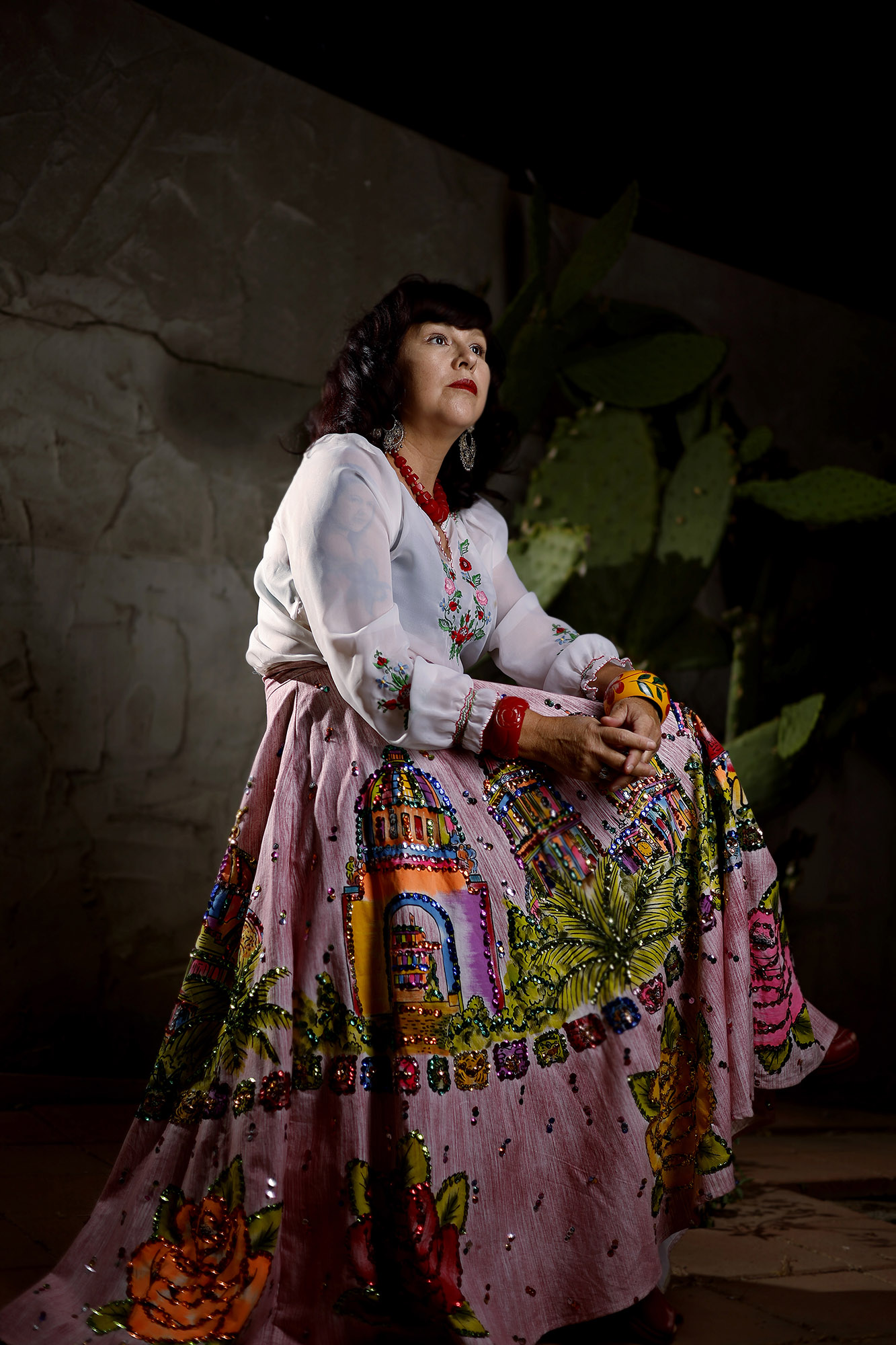
For her personal projects, La Cena (Supper) is one that is a series of portraits that capture the diversity within the modern-day “Latine” community’s families. “There’s that whole image of the brown people being in a dump, or your house is falling apart, or whatever it is, but not all of us are in that. There are different variations of us. It’s a spectrum,” described Lepe. “Also, we all come from different countries. There are Latin Americans, there are Afro Latinos, there’s indigenous people— everybody is part of that ‘Latines’ group.” Lepe uses the term “Latines” for her work instead of “Latinx,” as “Latinx” always sounded more like a label for an experiment rather than an inclusive term. “ ‘Es’ is basically ‘we.’ It makes us, us. So to me, ‘Latines’ became more of a proper use of the term,” explained Lepe.
Lepe has always found herself documenting subcultures that she sees have not historically been fairly represented. She specifically focuses on women’s empowerment and the story of the immigrant in a positive way. “We always see visual images like the famous images of the drunken guy in Mexico or the prostitute at a bar. But there’s two sides of the story there. There are positive people that are working that are part of society, and we should show that more. I’m more about the positive visual representation,” Lepe said. She previously did a story on women passionate about their cars. “It wasn’t about being the trophy wife or the trophy in the car. It was more about them and their passion about [car] culture,” explained Lepe.
Today, Lepe works with graduate students at Stanford with photography lab work. She hopes that this job will give her more flexibility to spend less time freelancing and more time on her own series and projects.