Episode #151 | Carlos Velazquez
This podcast is also available on Spotify, Apple Podcasts, Vimeo, and YouTube.
Single-story homes, quiet cul-de-sacs, and wide residential streets made up the suburban grid of West San Jose, where Carlos Velazquez came up. Carlos was a shy kid who spent most of his time with family and weekends at his abuelita’s house on the East Side. Even then, he was fascinated by the pile of records at home and the sounds of rancheras and groups like Rigo Tovar, Los Rockin’ Devils, and Los Moonlights. His parents, from Mexico, grew up around Tijuana’s music scene in the 60s before eventually settling in San Jose, where they met.
In his early teens, new cultural discoveries began drawing Carlos outward to downtown and different parts of the Bay Area. In 1994, at 13, Carlos knew nothing about hockey until he tuned in to the San Jose Sharks’ improbable first-round playoff upset, an extraordinary run that instantly inspired a lifelong obsession with the local team. Around the same time, he discovered the Bay Area’s third-wave ska scene and began bringing his younger brother to all-ages shows, using live music to explore the local arts community.
Those cultural experiences shaped Carlos’ path. Ready for a change of scenery for college, Carlos headed south to San Diego State University, where he immersed himself in Chicano studies, MEChA, reggae sound systems, and the culture of Chicano Park in Barrio Logan. That time away strengthened his appreciation for his roots and his hometown. When he returned, he applied those experiences and his communications degree to a career in the arts—first at Teatro Visión inside the Mexican Heritage Plaza, then through the Multicultural Arts Leadership Institute (MALI), where he learned community-building under mentors like Raúl Lozano, Roy Hirabayashi, and Tamara Alvarado.
That foundation eventually expanded through a fellowship with the National Association of Latino Arts and Cultures (NALAC). The opportunity took him to Chicago, where Carlos embedded himself in Pilsen’s tight-knit Mexican arts scene, living at the National Museum of Mexican Art’s artist house under the guidance of Carlos Tortolero, serving on staff at the Illinois Humanities Council, and serving as board chair of a local Latino arts nonprofit. He also immersed himself in Chicago’s vinyl and DJ culture, broadening his perspective before bringing those skills home.
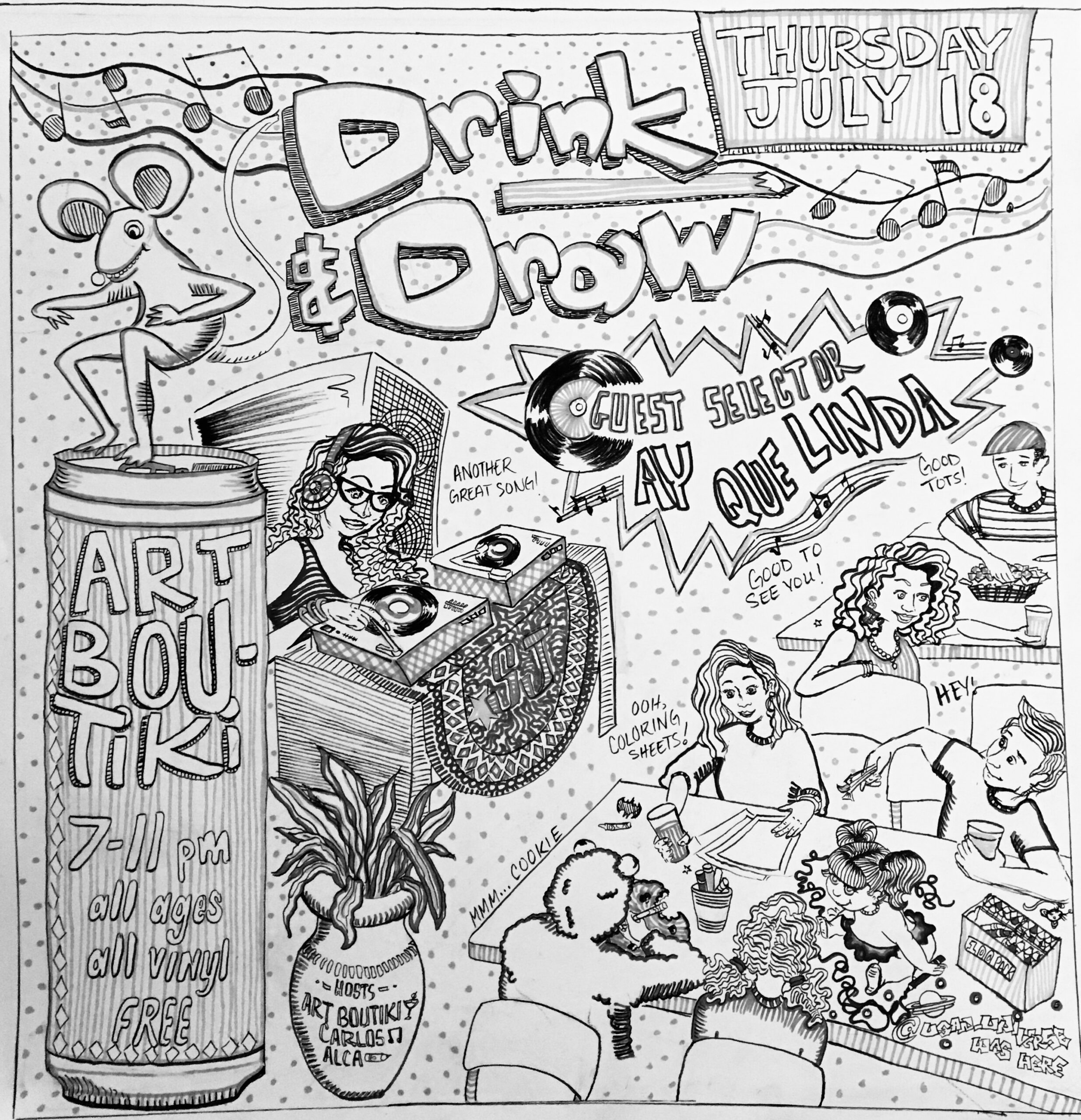
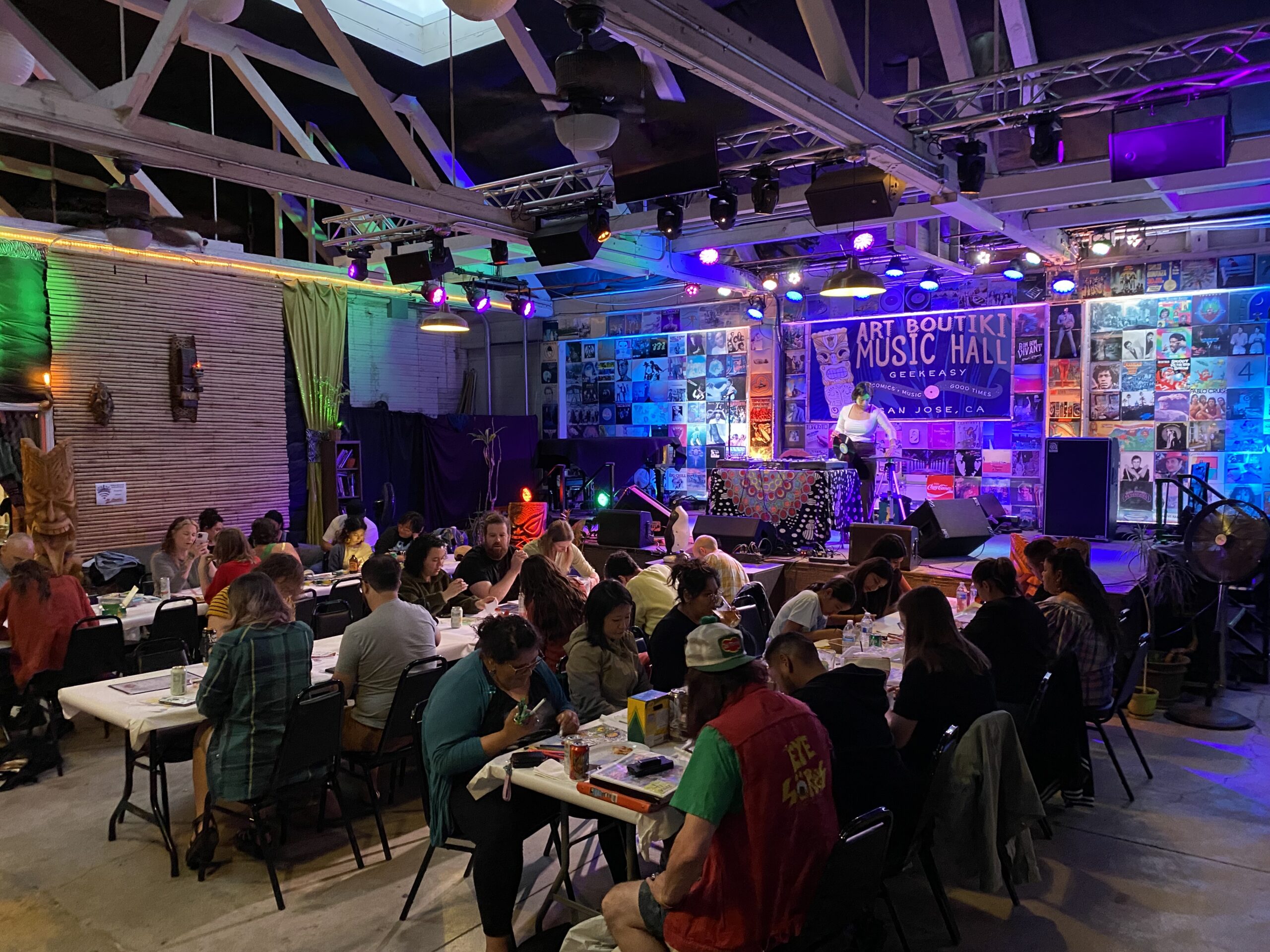
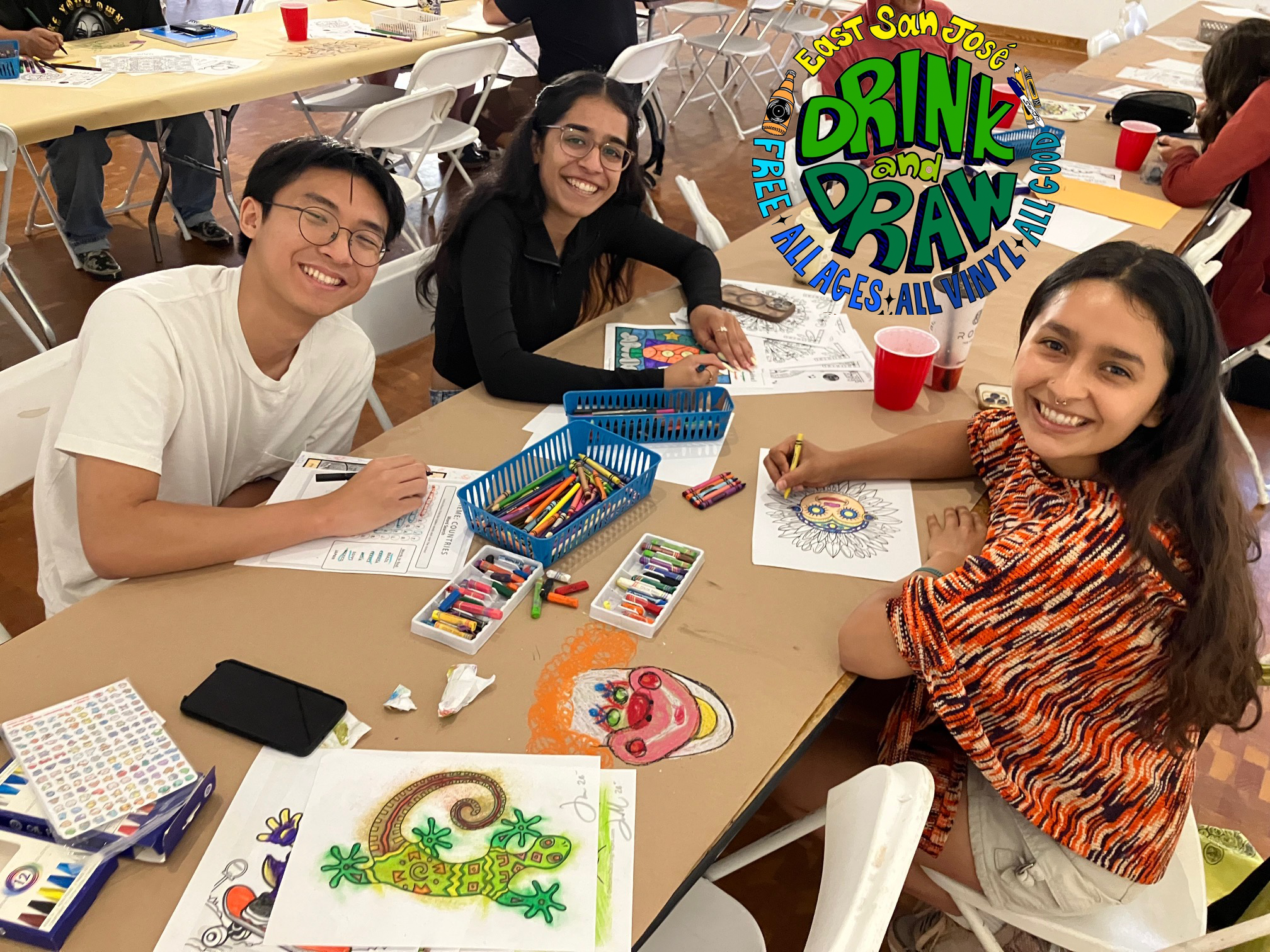
Carlos returned to San Jose with his partner, artist and educator Alca Usan, reconnecting with his old friend Dan Vado at Art Boutiki. When the venue’s weeknight Drink and Draw went on hiatus, Carlos and Alca stepped in to help host. Carlos curated vinyl-heavy soundtracks and brought in guest selectors. At the same time, Alca created hand-drawn posters and coloring sheets that became central to the event’s visual identity—rebuilding the gathering into a packed, community-centered staple until Art Boutiki closed its doors.
In the spirit of keeping Drink and Draw alive for the community, Carlos and Alca partnered with the Mexican Heritage Plaza to bring the event to the East Side, tweaking it into a family-friendly weekend gathering featuring familiar rows of paper-covered tables, supplied crafts, and vinyl selectors. It’s also where Carlos now brings his own young son, bringing a new generation into the kind of multigenerational arts space that once helped draw him out of his shell.
In this conversation, Velazquez talks about growing up in West San Jose, what drew him out and back to his city, and the origins of the Drink and Draw he and his partner host at Mexican Heritage Plaza.
The next Drink and Draw takes place Sunday, September 20, 2026, from 1 to 4p at the Mexican Heritage Plaza, featuring guest selector Cristal Chains spinning 1970s and ’80s cumbias.
Website: mhplaza.org/allevents
Instagram: mhplazasj | carlos_de_sj
Event Images provided by Carlos Velazquez