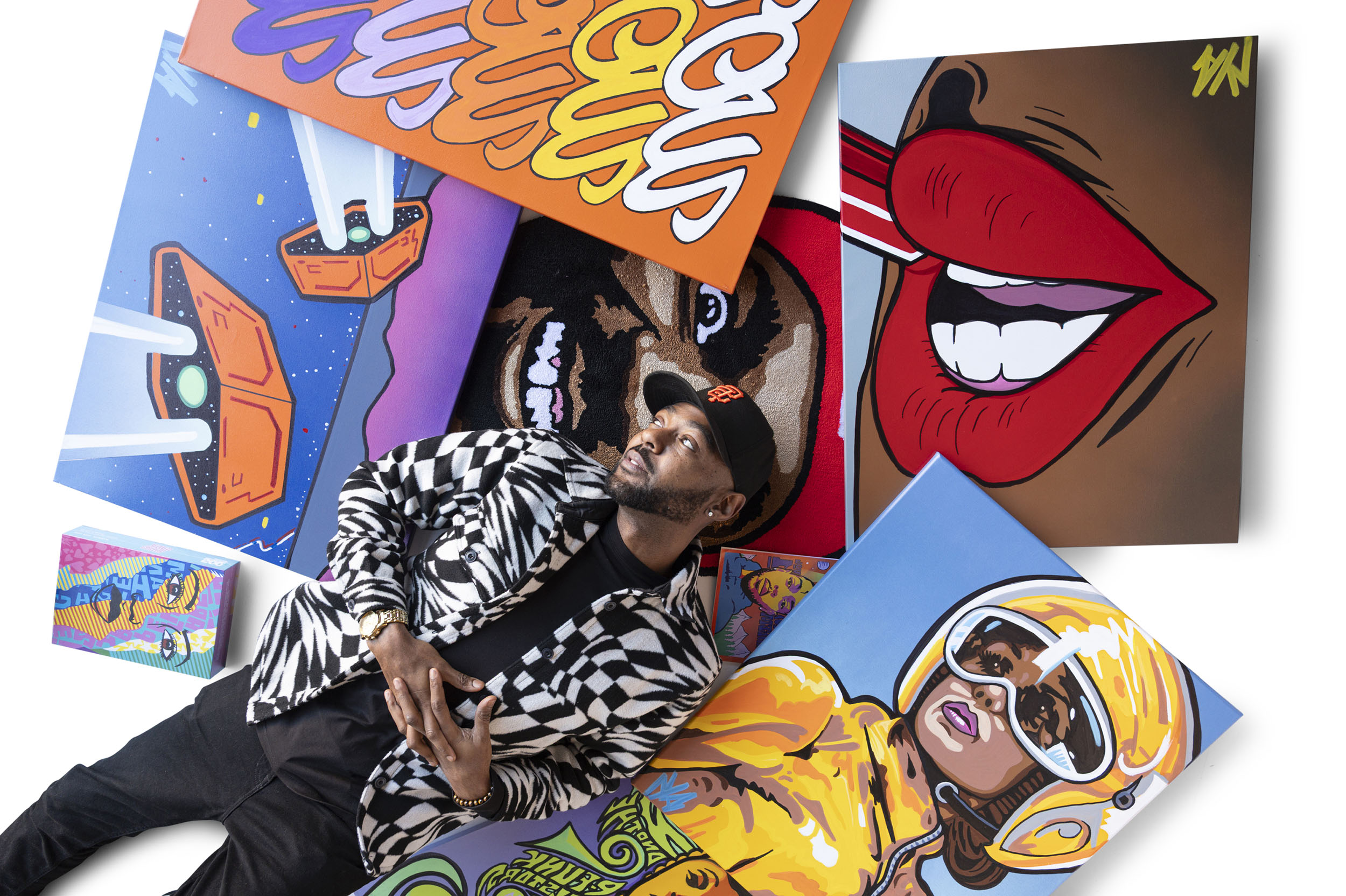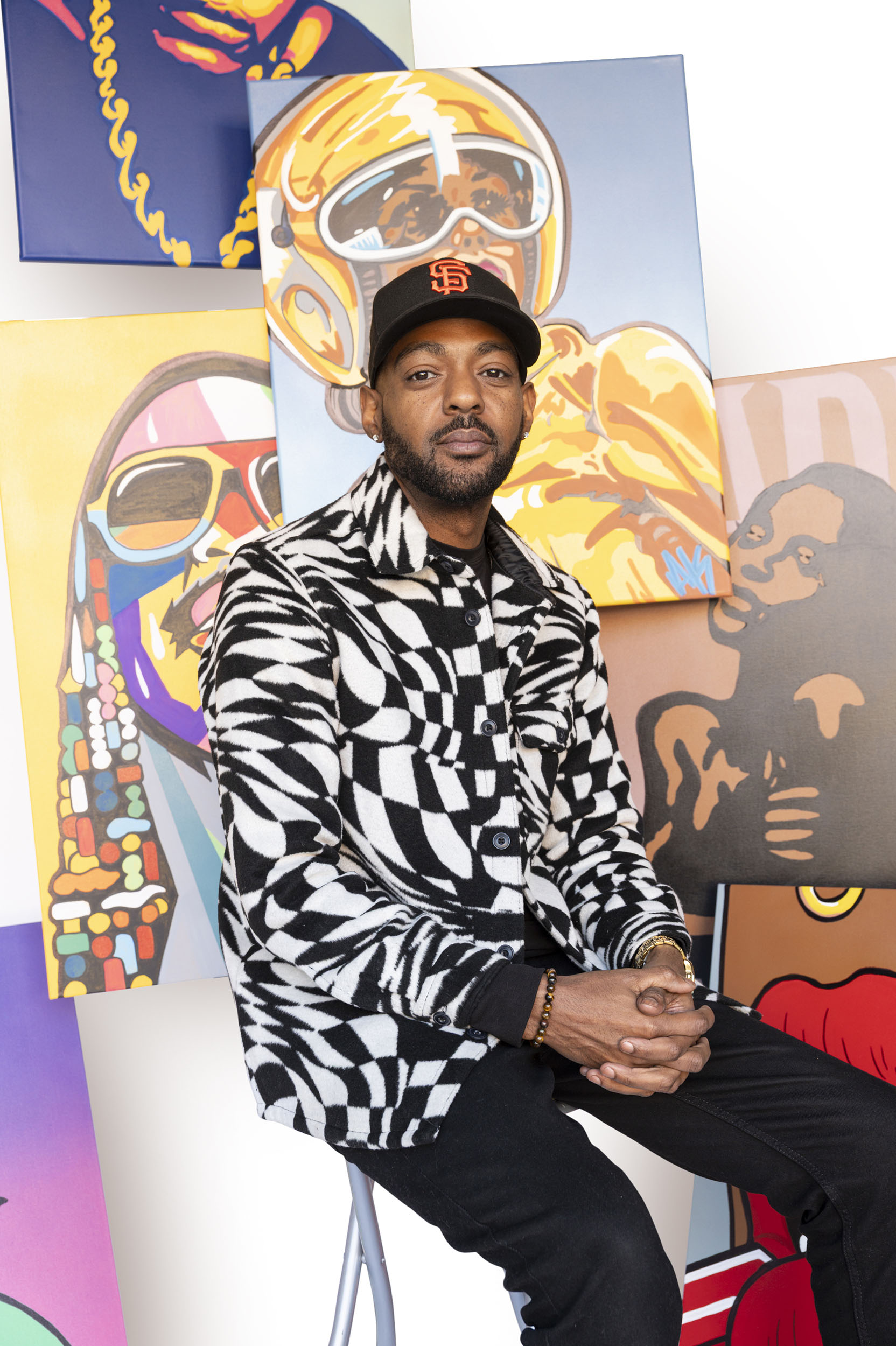
When Akeem Raheem paints, you can sense the hum of the city. The hiss of aerosol through a nozzle, the thumping bass from a passing car, and the shockwaves of a culture that shaped generations pulse through his work. His canvases feel alive with rhythm because he always remembers that art and culture are inseparable.
For Akeem, hip-hop has always been more than music—it’s a culture. “I want my paintings to remind people that hip-hop wasn’t just something you listened to; it was something you saw,” he said. Adding, “A lot of your favorite music had visual things that came with it. We had album covers and they’d be iconic. We’ve lost physical albums.”
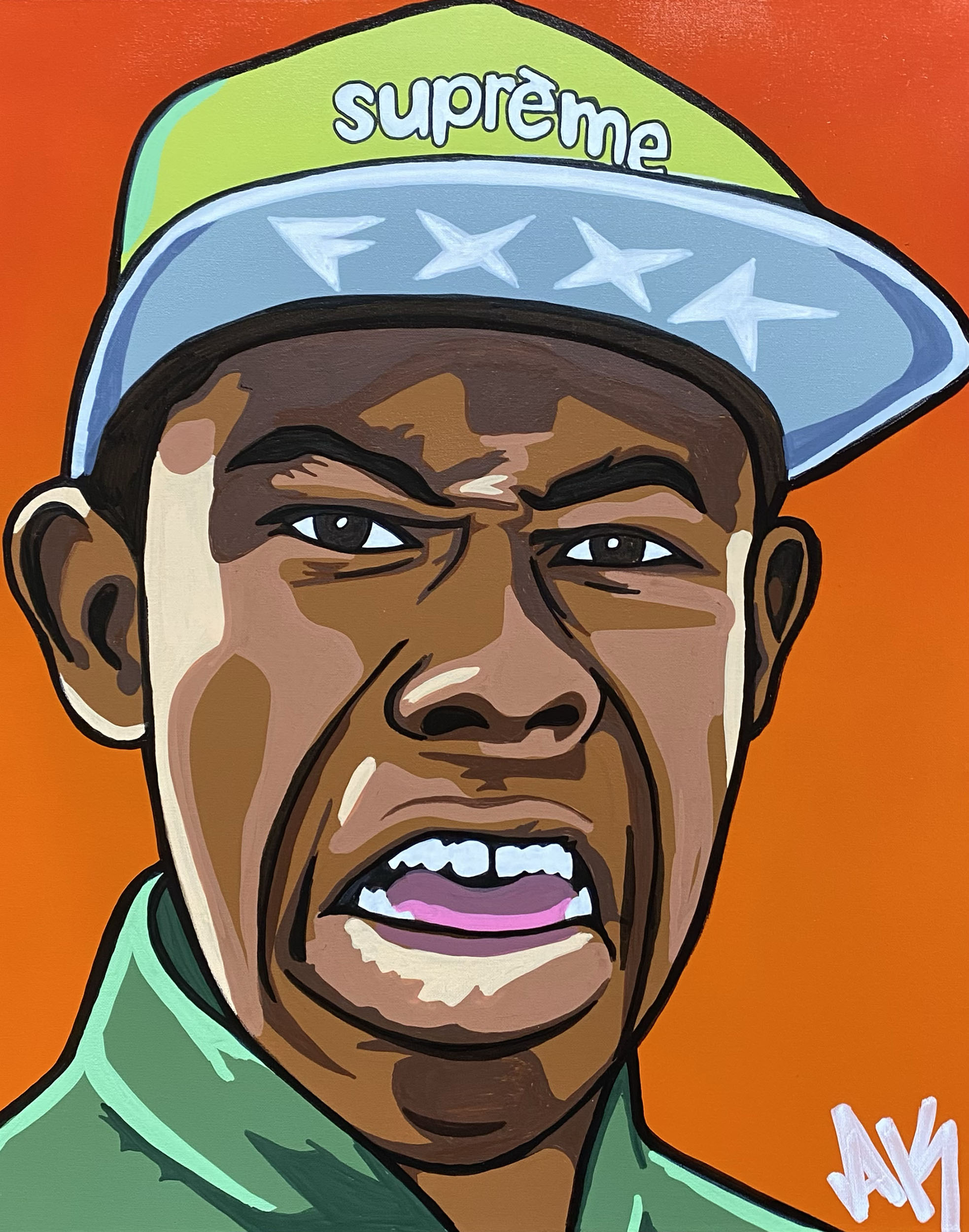
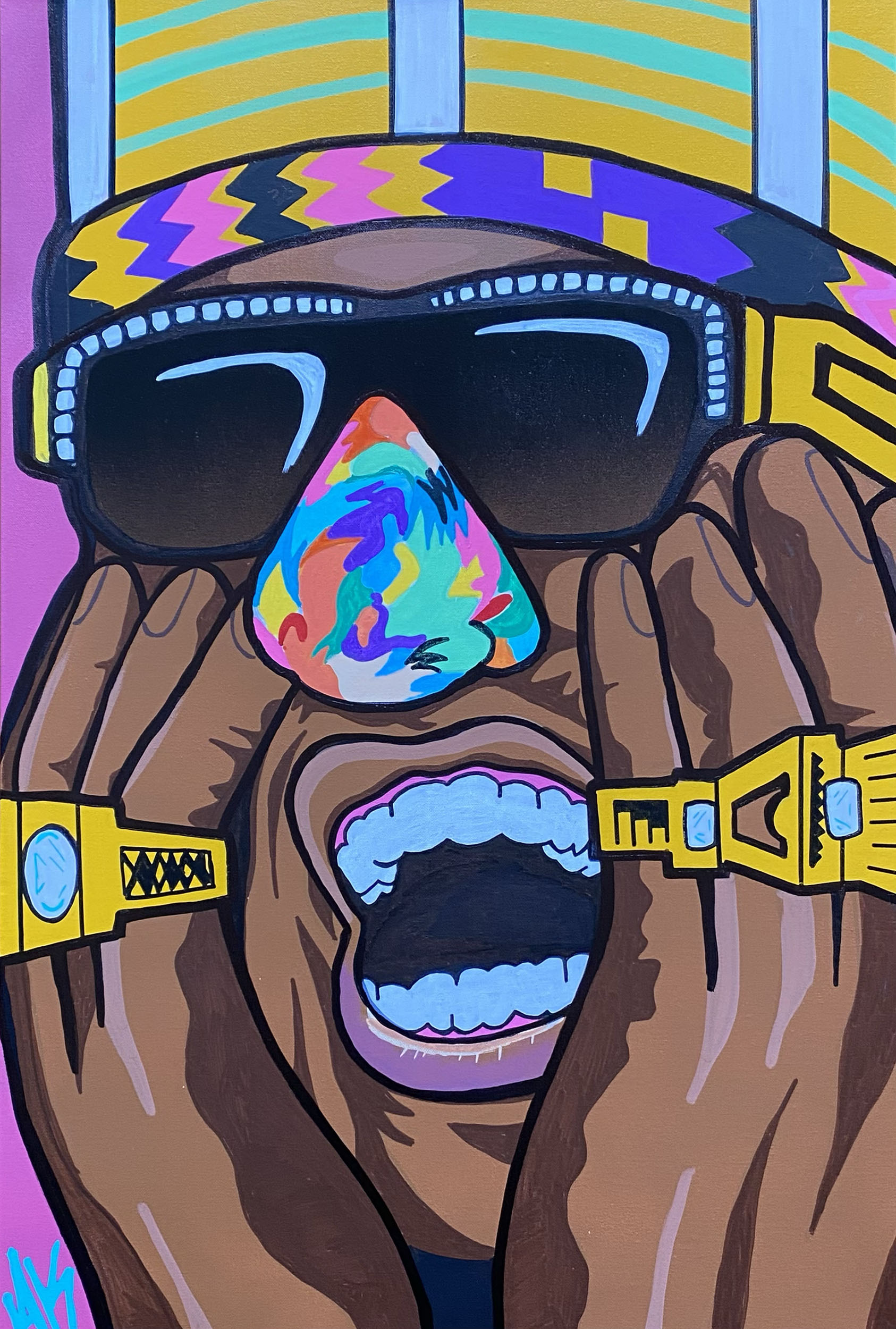
Through portraits of artists like Notorious B.I.G. (Biggie), MF DOOM, and Humpty Hump, Akeem connects his memories to the heartbeat of hip-hop that still drives culture today. “I want my work to be graffiti at heart but also to have that pop feel, something people could take home. People want something posi-tive to hold onto,” said Akeem.
That conviction runs through his paintings, including one of his best-known works, Keep Your Head Up, which frames Tupac Shakur in a powerful and af-firming stained-glass motif. “That’s my favorite version of Tupac, before Death Row Records. Before his spiral downwards,” said Akeem. Another piece, titled Today Was a Good Day and featuring Ice Cube, captures the essence of the mid-1990s when hip-hop was at its peak.
Akeem grew up between Detroit and California. Detroit gave him grit, and California gave him sunshine. His upbringing shaped a unique style, where the metallic edges of the city glow with sun-drenched warmth. During those forma-tive years, he discovered hip-hop’s visual world through film. “Two noteworthy movies for me were Beat Street and Breakin’ 2: Electric Boogaloo. Those movies were based around break dancers, but everything about those movies visually was like graffiti art, on the walls everywhere and vibrant colors. The type of visual expression stuck with me,” he said. Akeem realized that hip-hop’s soul wasn’t confined to music. It lived in murals, movement, and in the people who made it thrive.
Studying sociology and history at San José State University deepened his understanding of how culture forms. Akeem shared, “I’m a big history buff, and it’s interesting to me to see groups of people form culture. History and sociol-ogy fit together in a way. It kind of explains mankind to me and how and why people operate.”
His art career began almost by accident at a friend’s day party in Oakland, where his art table turned into the party’s unofficial photo booth. People took pictures and tagged him on social media, and before long his name was circulating through Oakland’s art scene. Soon he was showing at First Fridays on Telegraph Avenue and selling work through a vintage shop in downtown Oakland.
Momentum built quickly as small shows evolved into full installations, and in 2019 Akeem landed a temporary storefront in San Francisco’s Haight-Ashbury district. “It felt like I had my own gallery,” he said. “Half the people who came through weren’t even from the US. That’s when I realized how far it could reach.”
Even as his audience grew, Akeem stayed grounded. “Being an artist and creating art in a society where we’re largely a consumer culture, where people don’t make things anymore, it makes me feel truly lucky to have something I can call mine,” he said. “The art is mine; I make it, and it’s something that belongs to me, and it comes out of me. It allows me to feel like my work will transcend me.”
Today his canvases fill popular Bay Area cafés, pop-ups, and galleries, but they still carry the raw energy of a freeway underpass. Akeem’s paintings bridge the gap between street and pop art, between nostalgia and renewal, and between what hip-hop was and where it might go next. The vivid colors of his iconic portraits carry the past forward for new generations who keep the culture alive.
A recent meeting with artist Emory Douglas, the creative force behind the Black Panther Party’s iconic posters and flyers, reshaped the purpose of Akeem’s art. He shared, “It influenced me. It made me feel that art can be a part of a bigger movement. The pharaohs didn’t make all of the inscriptions, art, and artifacts that we find in Egypt. An artist made those things. It clicked with me that every idea needs a visual component to go with it.”
What matters most to Akeem now is using his art to spread positivity. “I’ve had people tell me that we’re living through some tough times,” Akeem reflected, adding, “I want my art to be a ray of sunshine. I’d like my work to be that bright spot in a person’s life, or their home, or their consciousness.”
Instagram: akeemraheem
Website: akeemraheemdream.com
Image 2: Creation, 2024, spray paint and paint pen, 24”x30”
Image 4: Humpty Hump, 2025, spray paint and paint pen, 24”x36”