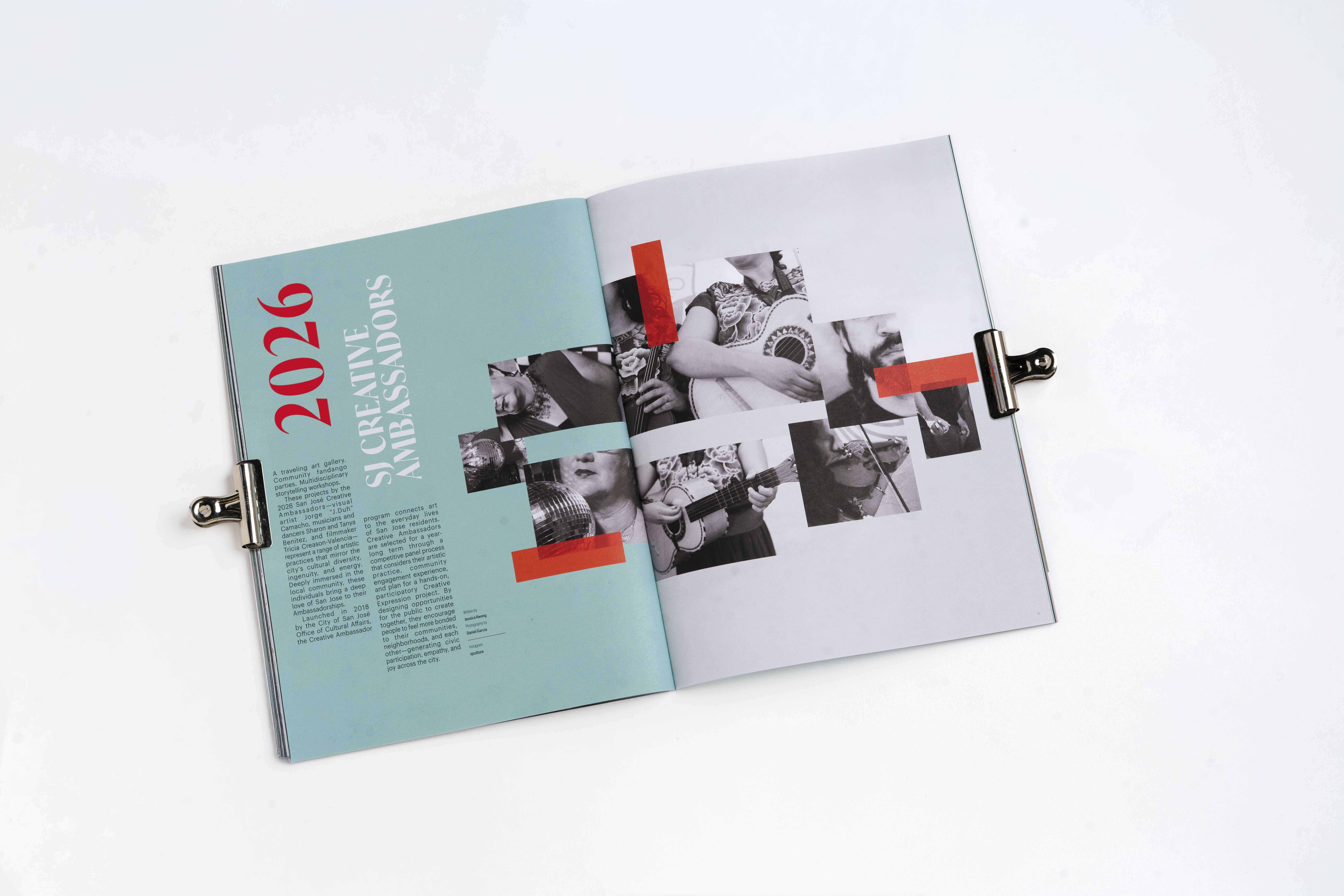
A traveling art gallery. Community fandango parties. Multidisciplinary storytelling workshops.
These projects by the 2026 San José Creative Ambassadors—visual artist Jorge “J.Duh” Camacho, musicians and dancers Sharon and Tanya Benitez, and filmmaker Tricia Creason-Valencia—represent a range of artistic practices that mirror the city’s cultural diversity, ingenuity, and energy. Deeply immersed in the local community, these individuals bring a deep love of San Jose to their Ambassadorships.
Launched in 2018 by the City of San José Office of Cultural Affairs, the Creative Ambassador program connects art to the everyday lives of San Jose residents. Creative Ambassadors are selected for a year-long term through a competitive panel process that considers their artistic practice, community engagement experience, and plan for a hands-on, participatory Creative Expression project. By designing opportunities for the public to create together, they encourage people to feel more bonded to their communities, neighborhoods, and each other—generating civic participation, empathy, and joy across the city.
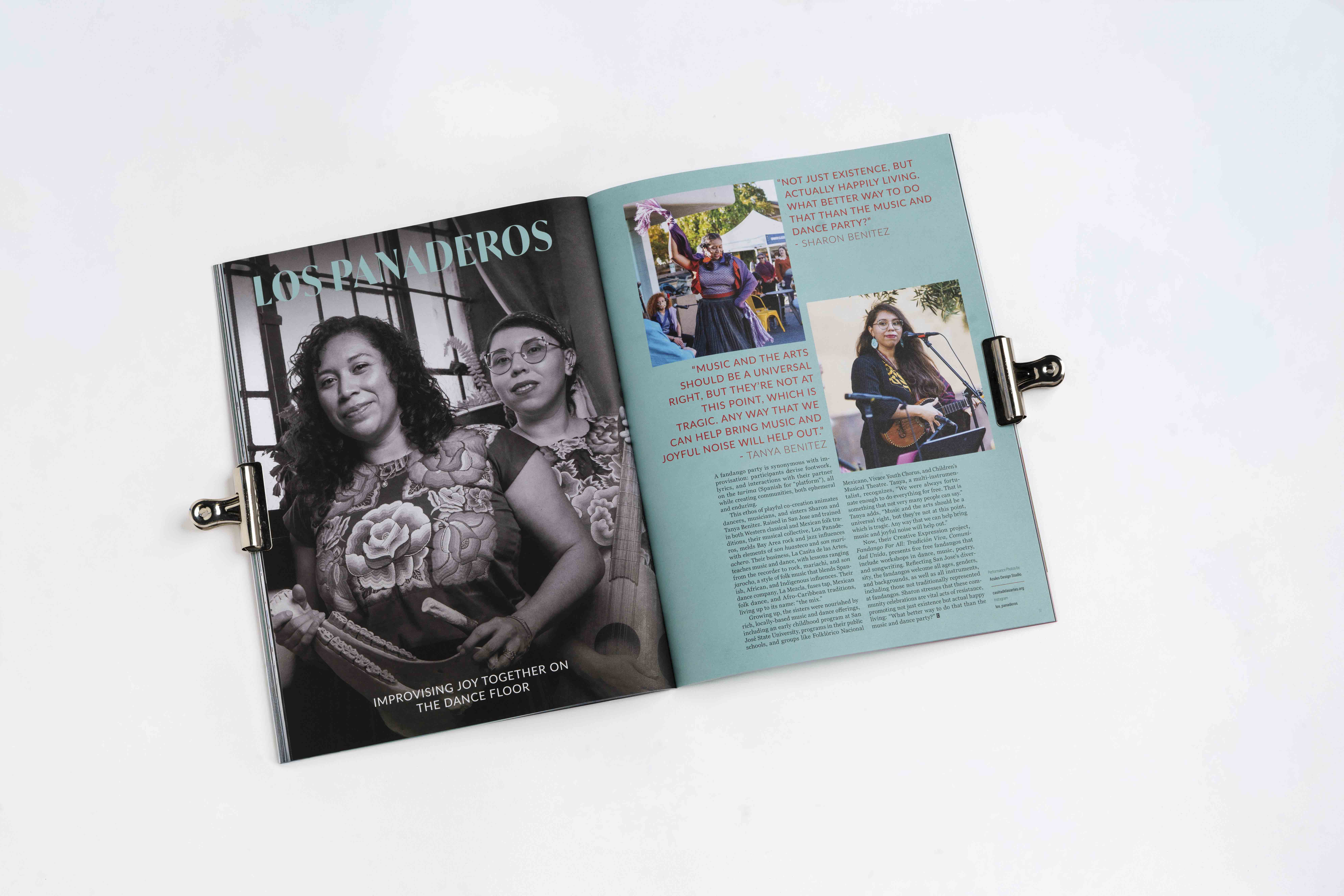
LOS PANADEROS
Improvising Joy Together on the Dance Floor
A fandango party is synonymous with improvisation: participants devise footwork, lyrics, and interactions with their partner on the tarima (Spanish for “platform”), all while creating communities, both ephemeral and enduring.
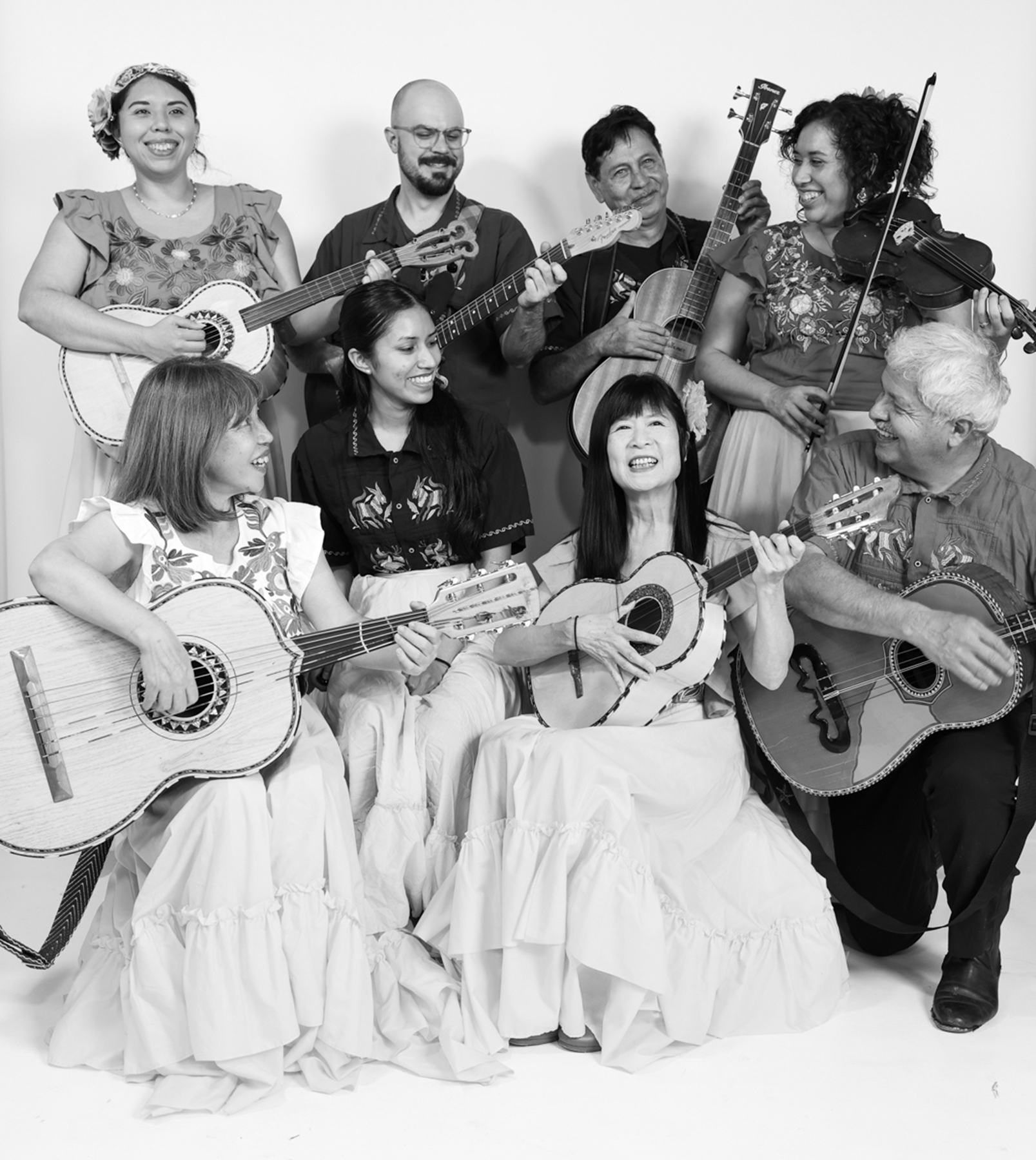
This ethos of playful co-creation animates dancers, musicians, and sisters Sharon and Tanya Benitez. Raised in San Jose and trained in both Western classical and Mexican folk traditions, their musical collective, Los Panaderos, melds Bay Area rock and jazz influences with elements of son huasteco and son mariachero. Their business, La Casita de las Artes, teaches music and dance, with lessons ranging from the recorder to rock, mariachi, and son jarocho, a style of folk music that blends Spanish, African, and Indigenous influences. Their dance company, La Mezcla, fuses tap, Mexican folk dance, and Afro-Caribbean traditions, living up to its name: “the mix.”
Growing up, the sisters were nourished by rich, locally-based music and dance offerings, including an early childhood program at San José State University, programs in their public schools, and groups like Folklórico Nacional Mexicano, Vivace Youth Chorus, and Children’s Musical Theatre. Tanya, a multi-instrumentalist, recognizes, “We were always fortunate enough to do everything for free. That is something that not very many people can say.” Tanya adds, “Music and the arts should be a universal right, but they’re not at this point, which is tragic. Any way that we can help bring music and joyful noise will help out.”
Now, their Creative Expression project, Fandango For All: Tradición Viva, Comunidad Unida, presents five free fandangos that include workshops in dance, music, poetry, and songwriting. Reflecting San Jose’s diversity, the fandangos welcome all ages, genders, and backgrounds, as well as all instruments, including those not traditionally represented at fandangos. Sharon stresses that these community celebrations are vital acts of resistance, promoting not just existence but actual happy living: “What better way to do that than the music and dance party?”
casitadelasartes.org
Instagram: los_panaderos
2. Los Panaderos group portrait, provided by artist, photography by BYME.
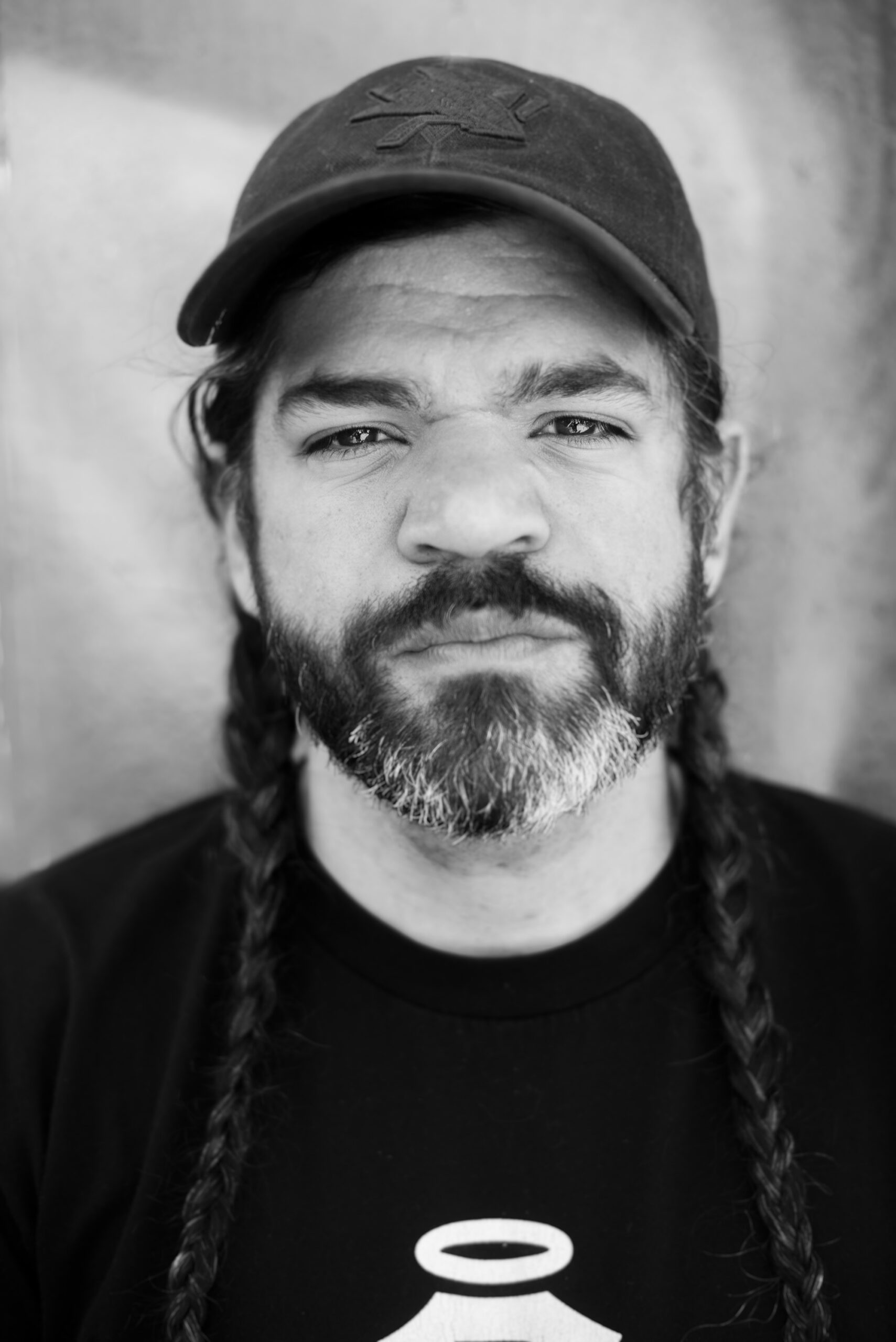
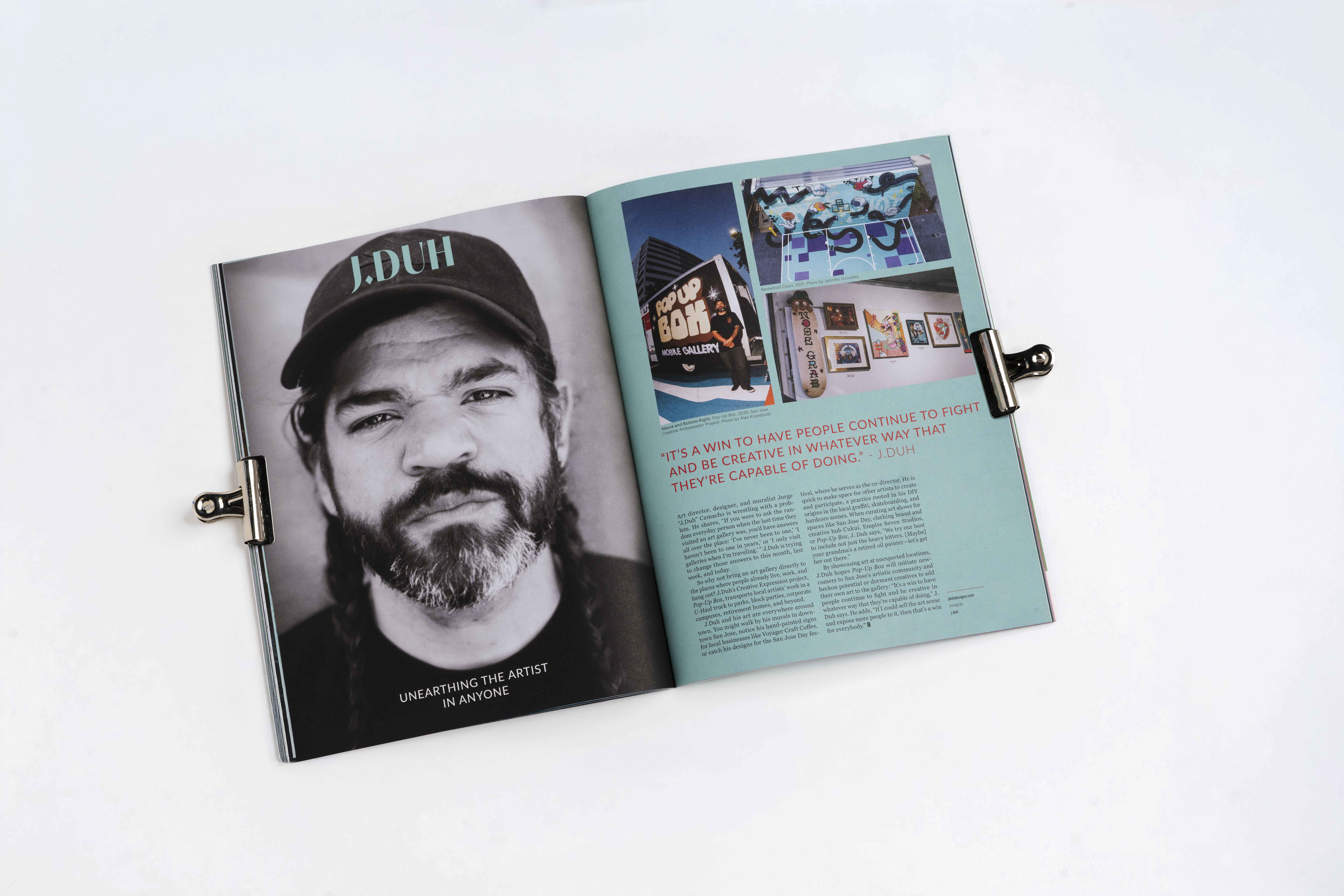
J.DUH
Unearthing the Artist in Anyone
Art director, designer, and muralist Jorge “J.Duh” Camacho is wrestling with a problem. He shares, “If you were to ask the random everyday person when the last time they visited an art gallery was, you’d have answers all over the place: ‘I’ve never been to one,’ ‘I haven’t been to one in years,’ or ‘I only visit galleries when I’m traveling.’ ” J.Duh is trying to change those answers to this month, last week, and today.
So why not bring an art gallery directly to the places where people already live, work, and hang out? J.Duh’s Creative Expression project, Pop-Up Box, transports local artists’ work in a U-Haul truck to parks, block parties, corporate campuses, retirement homes, and beyond.
J.Duh and his art are everywhere around town. You might walk by his murals in downtown San Jose, notice his hand-painted signs for local businesses like Voyager Craft Coffee, or catch his designs for the San Jose Day festival, where he serves as the co-director. He is quick to make space for other artists to create and participate, a practice rooted in his DIY origins in the local graffiti, skateboarding, and hardcore scenes. When curating art shows for spaces like San Jose Day, clothing brand and creative hub Cukui, Empire Seven Studios, or Pop-Up Box, J. Duh says, “We try our best to include not just the heavy hitters. [Maybe] your grandma’s a retired oil painter—let’s get her out there.”
By showcasing art at unexpected locations, J.Duh hopes Pop-Up Box will initiate newcomers to San Jose’s artistic community and beckon potential or dormant creatives to add their own art to the gallery: “It’s a win to have people continue to fight and be creative in whatever way that they’re capable of doing,” J. Duh says. He adds, “If I could sell the art scene and expose more people to it, then that’s a win for everybody.”
jduhdesigns.com
Instagram: j.duh
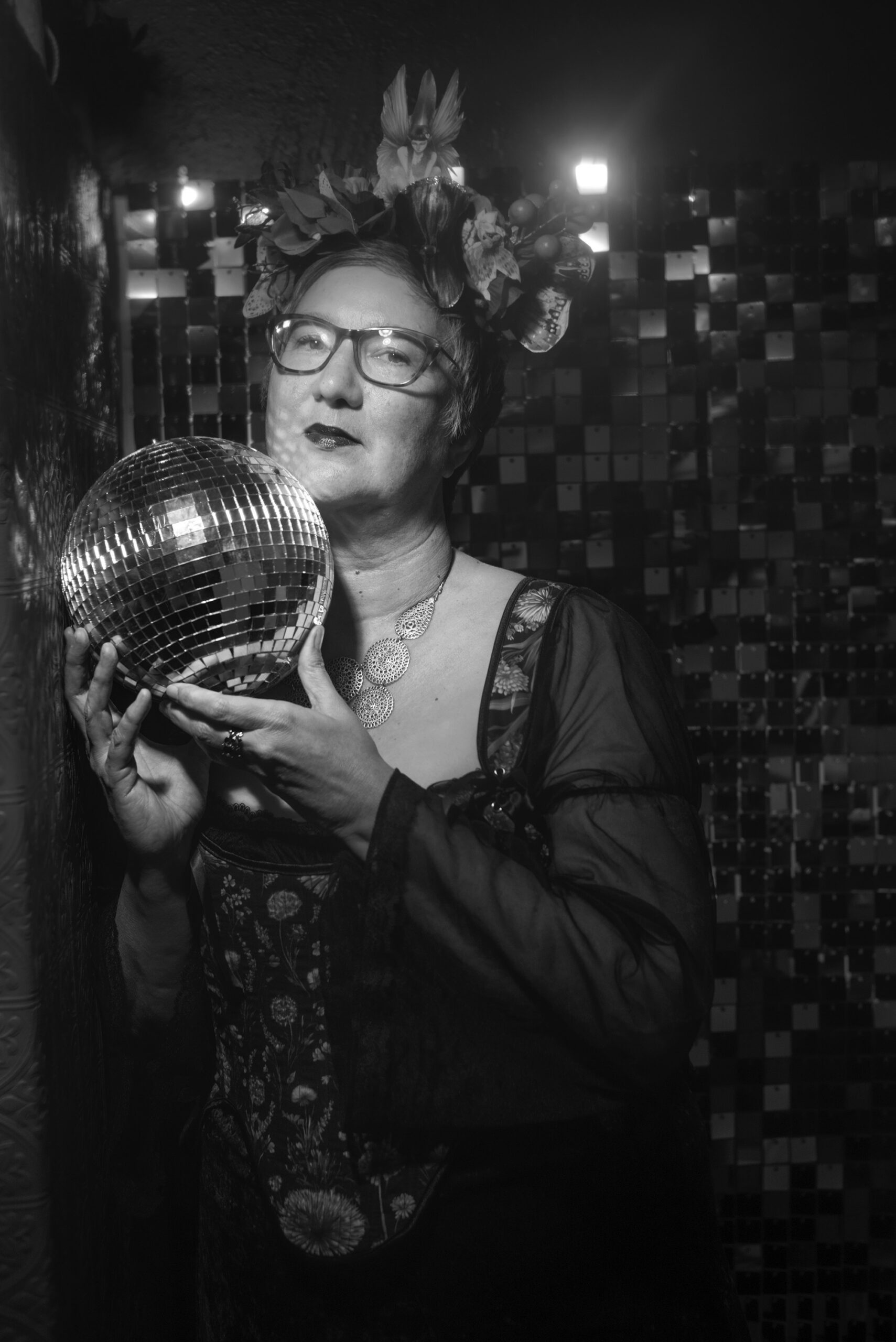
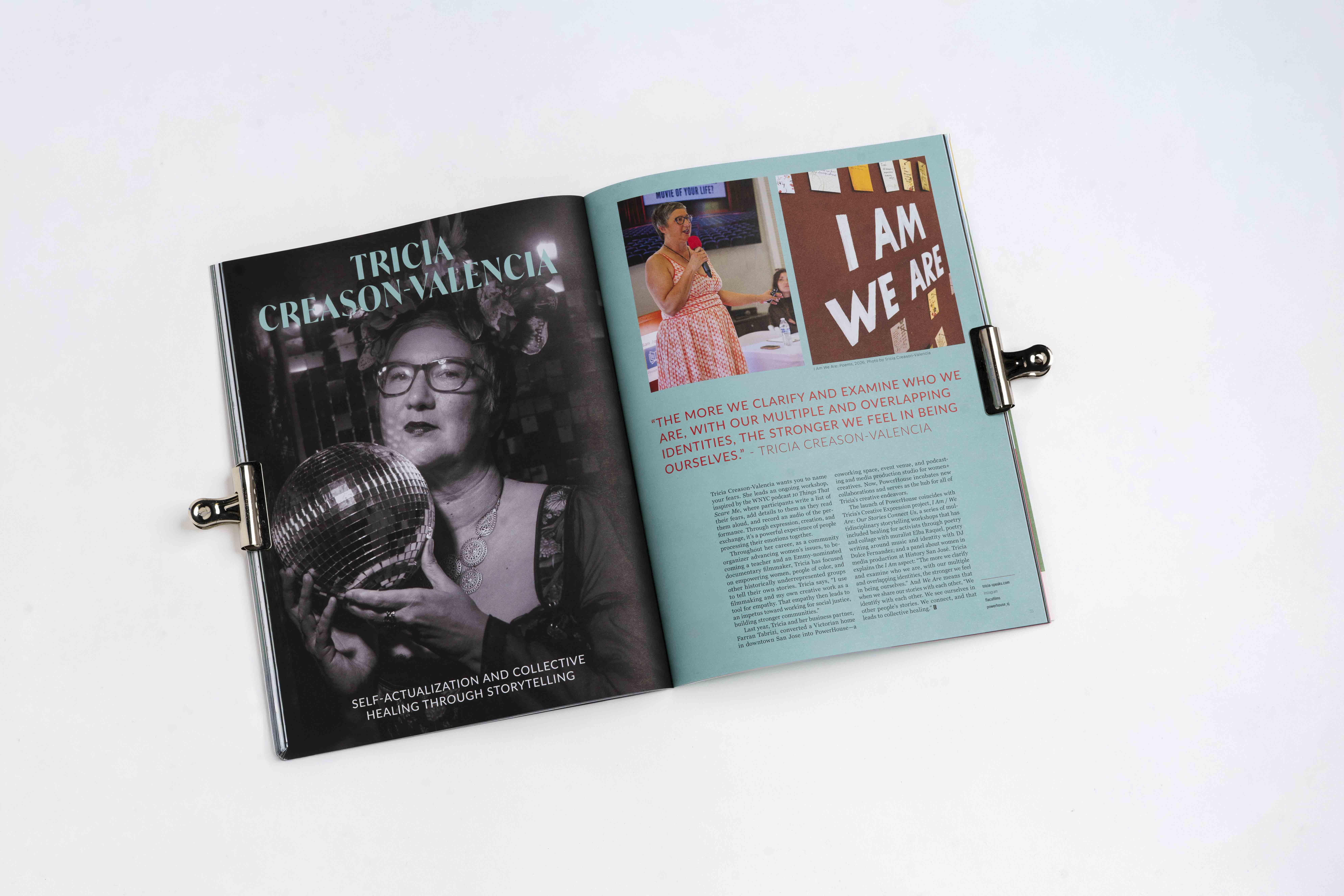
Tricia Creason-Valencia
Self-Actualization and Collective Healing Through Storytelling
Tricia Creason-Valencia wants you to name your fears. She leads an ongoing workshop, inspired by the WNYC podcast 10 Things That Scare Me, where participants write a list of their fears, add details to them as they read them aloud, and record an audio of the performance. Through expression, creation, and exchange, it’s a powerful experience of people processing their emotions together.
Throughout her career, as a community organizer advancing women’s issues, to becoming a teacher and an Emmy-nominated documentary filmmaker, Tricia has focused on empowering women, people of color, and other historically underrepresented groups to tell their own stories. Tricia says, “I use filmmaking and my own creative work as a tool for empathy. That empathy then leads to an impetus toward working for social justice, building stronger communities.”
Last year, Tricia and her business partner, Farran Tabrizi, converted a Victorian home in downtown San Jose into PowerHouse—a coworking space, event venue, and podcasting and media production studio for women+ creatives. Now, PowerHouse incubates new collaborations and serves as the hub for all of Tricia’s creative endeavors.
The launch of PowerHouse coincides with Tricia’s Creative Expression project, I Am / We Are: Our Stories Connect Us, a series of multidisciplinary storytelling workshops that has included healing for activists through poetry and collage with muralist Elba Raquel, poetry writing around music and identity with DJ Dulce Fernandez, and a panel about women in media production at History San José. Tricia explains the I Am aspect: “The more we clarify and examine who we are, with our multiple and overlapping identities, the stronger we feel in being ourselves.” And We Are means that when we share our stories with each other, “We identify with each other. We see ourselves in other people’s stories. We connect, and that leads to collective healing.”