Mauricio Rodriguez redefines the musical score as a visual representation, experimental movement, and embodied sound.
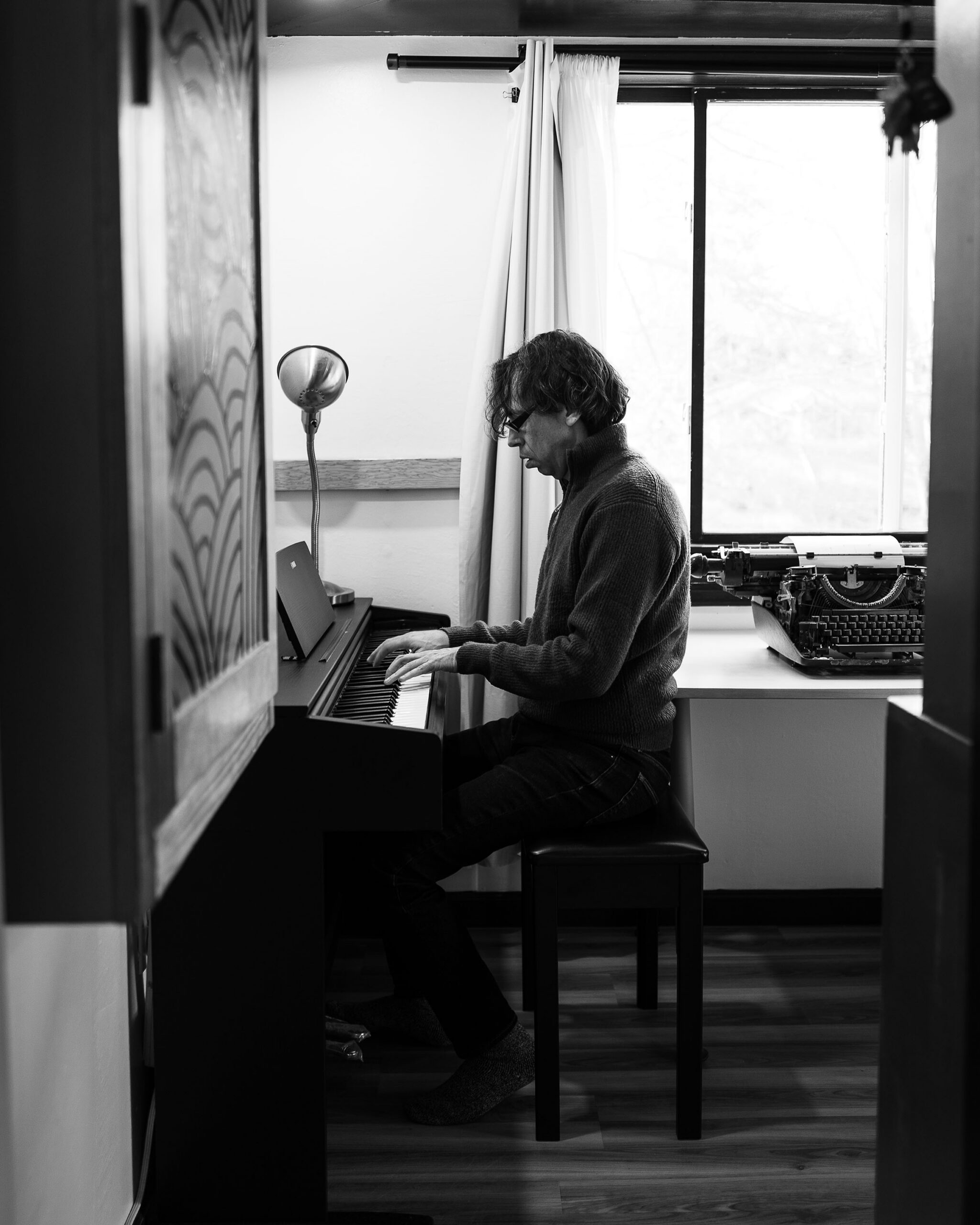
In a small but neatly kept second-floor studio in Palo Alto, the mechanics of a rare musical typewriter punctuate the suburban quiet with sharp taps and clacks. These are strange and largely unfamiliar noises in Silicon Valley, drawing a distinct contrast to the soft and muted ticks of the MacBook keyboard positioned next to this old, antiquated typewriter. Yet the man sitting between them seems not only comfortable, but also invigorated by the contrast of these two machines. In his studio, the boundaries between body and instrument, music and pictorial gesture, and ancient and contemporary quickly blur into a creative world that is bold, exciting, and entirely his own.
Composer Mauricio Rodriguez has spent years exploring and redefining the boundaries of what a musical score has been, is, and can be, moving beyond traditional musical compositions to incorporate choreography, digital interactions, and visual interpretations in his work. His pieces are often unrehearsed and presented as real-time collaborations between body, instrument, composer, performer, and even computer. “The score can be found within the body, right?” Rodriguez offers with a rhetorical shrug.
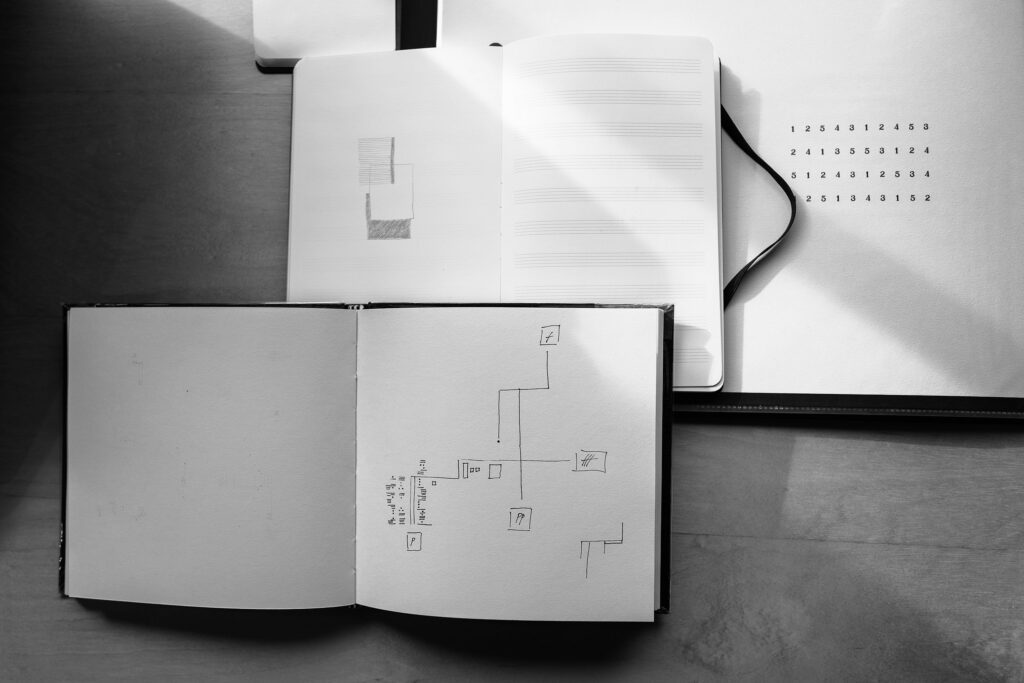
The Mexico City–born composer began his musical journey early, and with the conventional tools of a musician: Pencil, paper, and piano formed the basics of his training. As a child, his creative impulses would (and still do) originate from dreams, manifesting as ideas and sounds that compelled him to intently scrawl into a musical diary of sorts. Even at a young age, he sensed there was always something more to tackle, creatively speaking: “Imagination, at a very subconscious level, is doing some of the job for you. But the real challenge is how to translate that into reality using the
right technologies.”
Formally educated as a musician and composer, Rodriguez earned his doctor of musical arts in composition from Stanford University and both a master of arts in sonology and bachelor of arts in composition at the Royal Conservatory at The Hague in the Netherlands. His traditional chamber and orchestral works are frequently played across the United States and Europe, and in 2016, he was named as a fellow for Mexico’s National Endowment for the Arts. He’s been an adjunct lecturer at numerous universities throughout the greater Bay Area, while also conducting research and continuing to compose and perform. Currently, Rodriguez teaches both music theory and music technology at the Community School of Music and Arts, as well as piano performance at San José City College.
It was at The Hague where he realized that computer programming could be an asset in his toolbox as a composer. A deep dive into computer-assisted composition (CAC) came next, as he explored what technology and music could do in tandem. This reached a crescendo after Rodriguez successfully developed an A.I. model that could, in essence, compose music as himself. What followed was a feeling of “digital disillusionment.” He realized he had to return to the basics as his point of entry, to realign musical composition with the physicality of making.
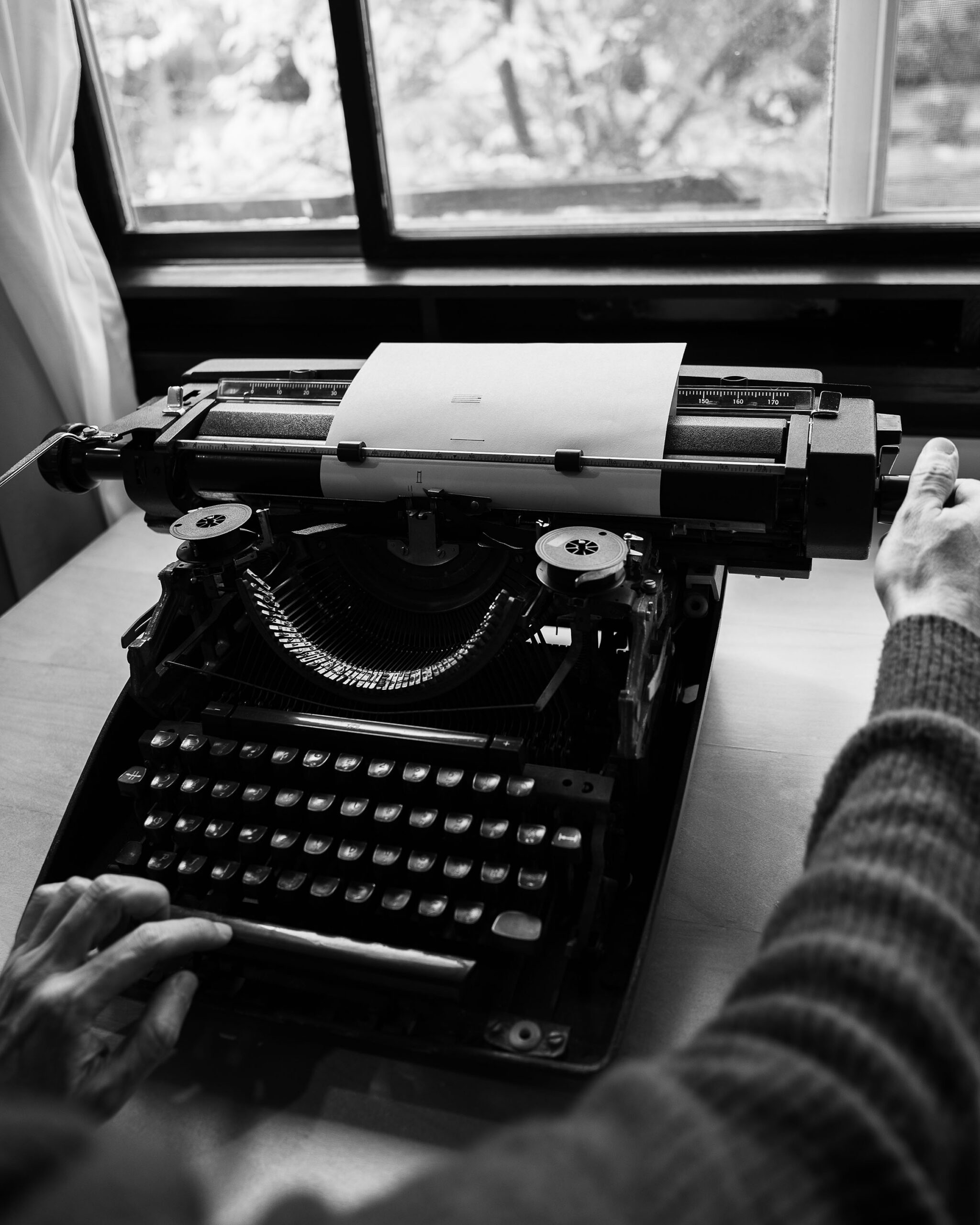
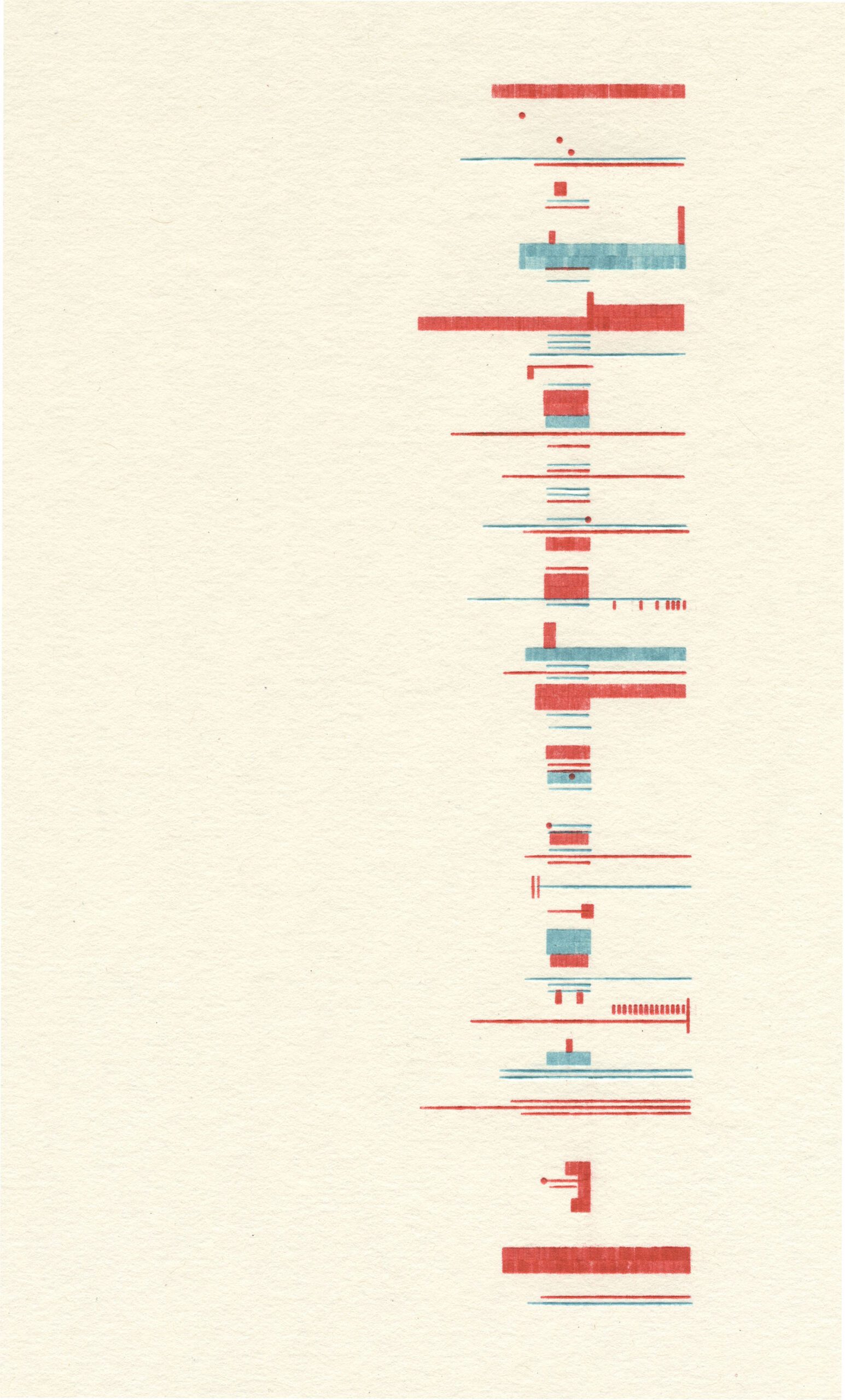
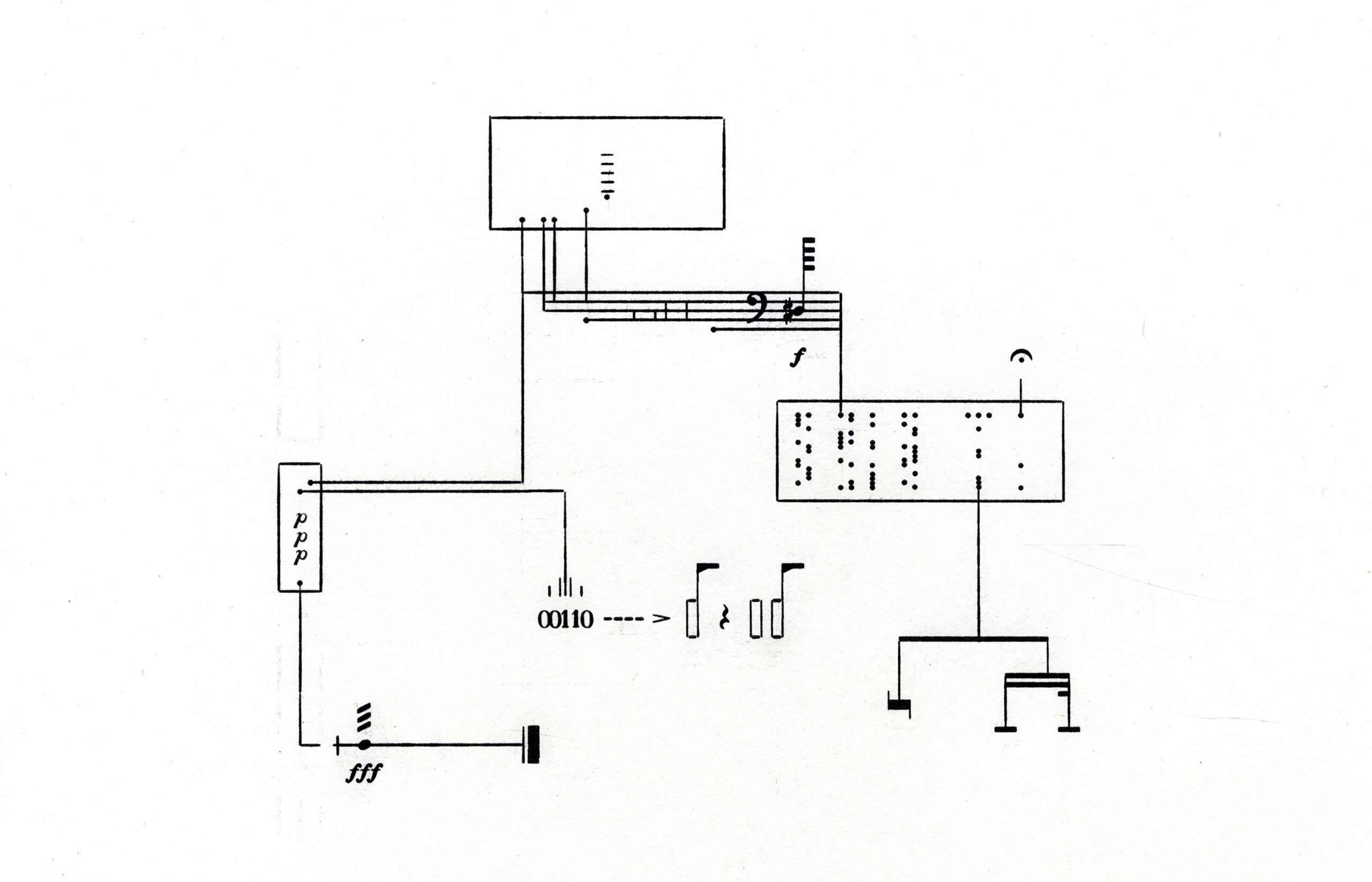
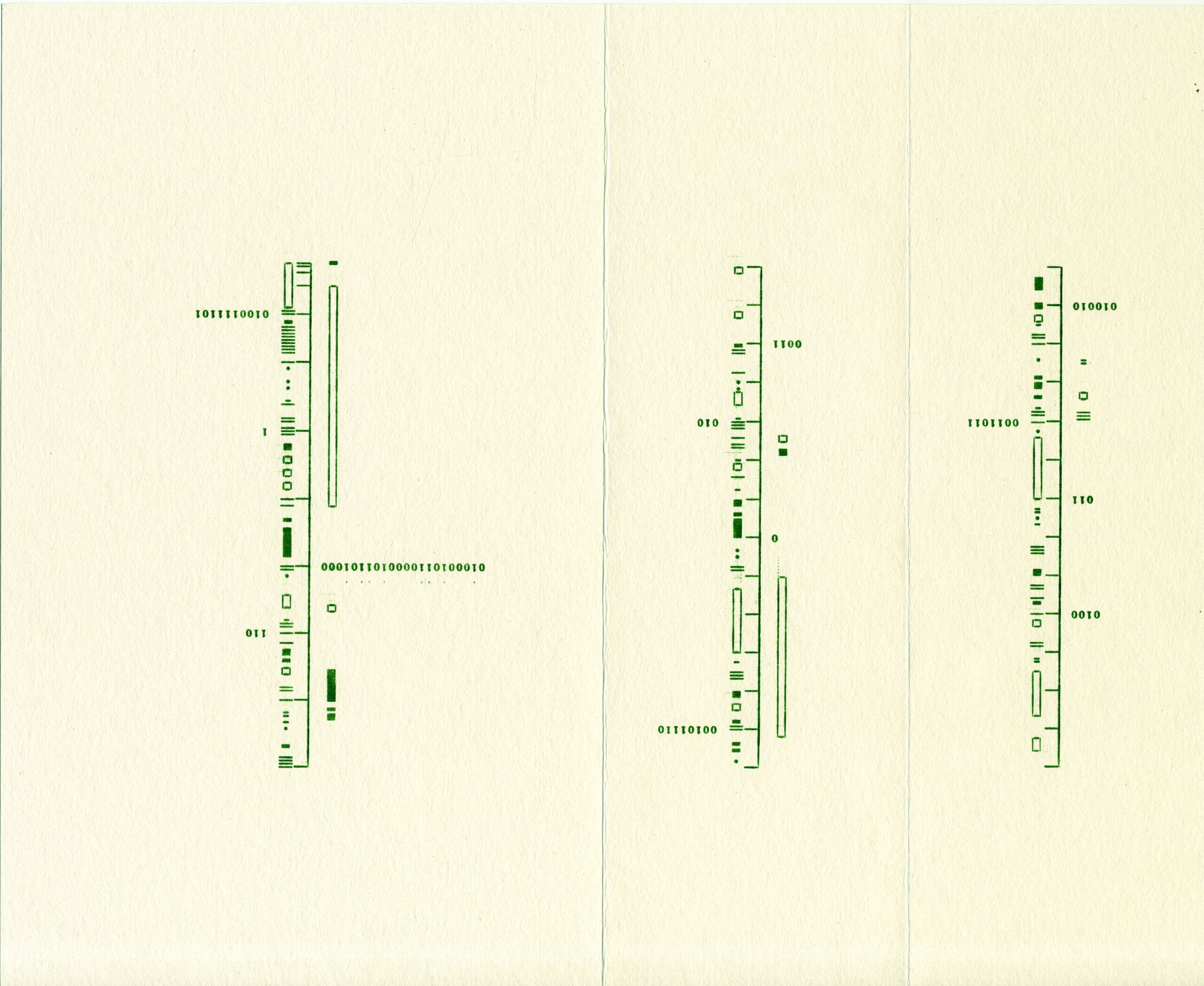
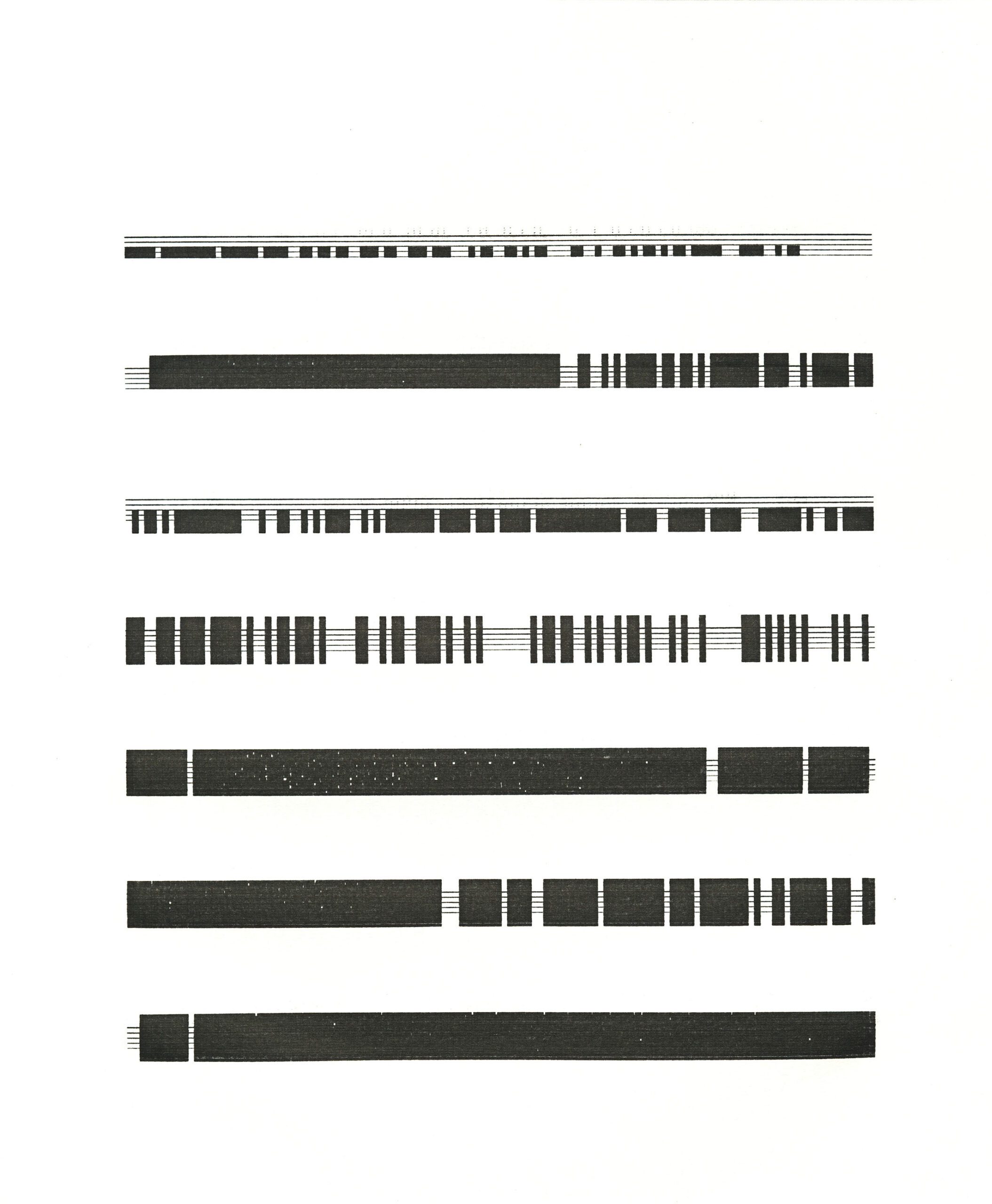
This breakthrough first began around 2018 when a friend gifted him with an old and rare mechanical device called an Olympia SG-3 (essentially, a musical typewriter) outfitted with keys, each with a different musical symbol in place of letters. Every touch of the human hand yields a literal and physical notation of music—no need for digital transcription technologies. He soon fell in love with the physicality of this tool, which he now “plays” as a musical instrument, composing in real time along to percussive, mechanical sounds. The result of these collaborations between man and machine appear almost as topographical renderings of sounds and gestures that are printed on paper through each painstaking, meditative keystroke. They are blueprints for sound, or “tyscores” as he calls them, visually abstract, but still fully playable as music. A single page may take 10,000 strokes of the typewriter to complete, and the making is slow, physical, “like building something.”
“A symbol holds musical energy, and I love that tension between sound and image, between symbol and gesture,” he offers. “For me, it’s all one language.” For Rodriguez, a musical score transcends beyond that which the performer reads. His work has expanded to incorporate print scrolls that take up pictorial and physical space, depicting annotated gestures and spatial movements which musicians “act out,” and recent collaborations include musicians reacting to notation, emitted in real time from gestures and sounds made by Rodriguez’s new instrument, the Olympia SG-3.
This highly experimental work falls somewhere within the elusive and ever-evolving intersection of human biology, mechanical action, and digital logic models. In one project, each blink of a performer’s eye can be detected in real time by a computer program, triggering a piano sequence that then plays for the viewer. Future iterations of this, as he imagines them, might prompt pre-determined sounds through a microscopic detector temporarily embedded within a performer’s physical body. “Just imagine performing a piano with your esophagus,” Rodriguez offers excitedly.
He draws heavy inspiration from radical and experimental works of the 1960s and ’70s—pieces that blurred the lines between visual art and live performance amidst a movement founded upon an ethos of shock and boundary pushing—but his unique approach to composition functions within a more contemporary framework. As an artist working at the far reaches of art and technology, he considers both context and collaboration quite seriously. In fact, this is one of Rodriguez’s primary artistic concerns, because public performance (and the role of the audience) remains a crucial element to his work, whether manifested as visual representations of the score or as experiential offerings that the spectator must witness. He envisions future exhibitions where folks are invited to experience, rather than hear, a score evolve in real time, both visually, sonically, and spatially, where the boundaries between audience and performer fade, and the score may become shared territory.
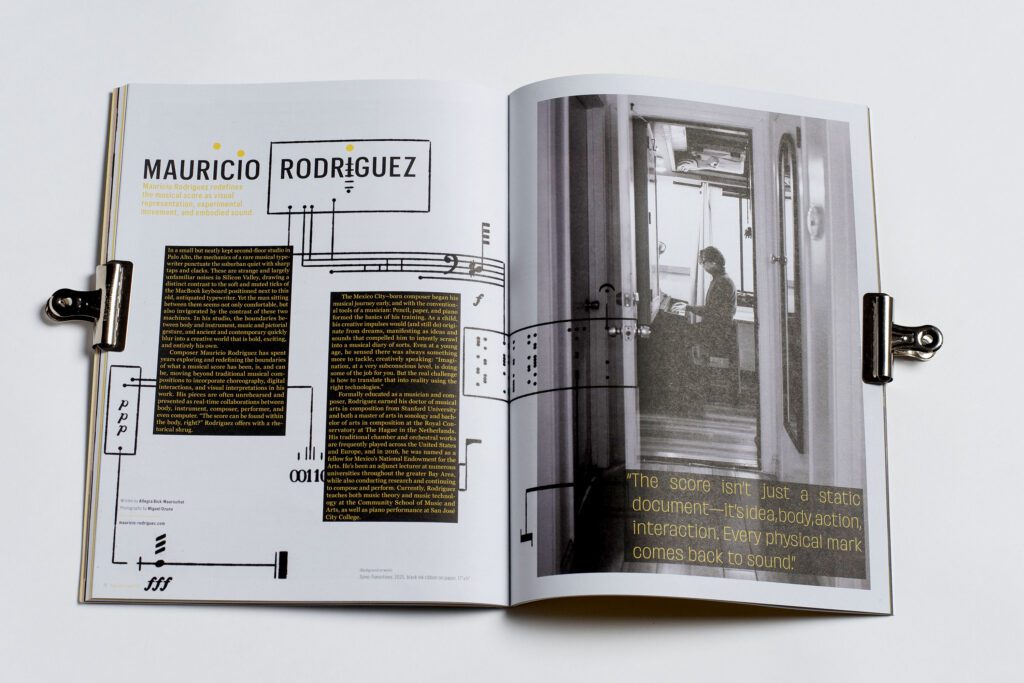
Friends, colleagues, and collaborators have summarized his steadfast commitment to authenticity, process, and experimentation in a single word: uncompromising. “Authenticity and discomfort—they go together,” he states. As for the next step in his creative journey? Rodriguez explains that everything is transitional right now. He is currently teaching, composing, and traveling, but one thing that remains constant is his commitment to expanding the notion of what a musical score can be, how it can be experienced in the body, and what limits it may (or may not) present within the confines of present technologies: “The score isn’t just a static document—it’s idea, body, action, interaction. Every physical mark comes back to sound.”
Back within the confines of his unassuming studio, a floor-to-ceiling bookshelf holds a diverse collection: Writings on music theory, computer science, and sound-based poems sit comfortably alongside a copy of the I Ching and other philosophical texts. Inhabiting a self-described “monastic” solitude for creation, Rodriguez can be found embracing the smell of ink and the sound of type-setting, keystroke by keystroke—and that’s just as much the current project as any public performance.
ARTWORK:
1. Stonewave, colored ink ribbon on paper, 11″x14″, 2024
2. Sono-Transitions, black ink ribbon on paper, 17″x11″, 2025
3. Primal Formations, colored ink ribbon on paper, 14″x11″, 2024
4. Organum, black ink ribbon on paper, 14″x17″, 2020